
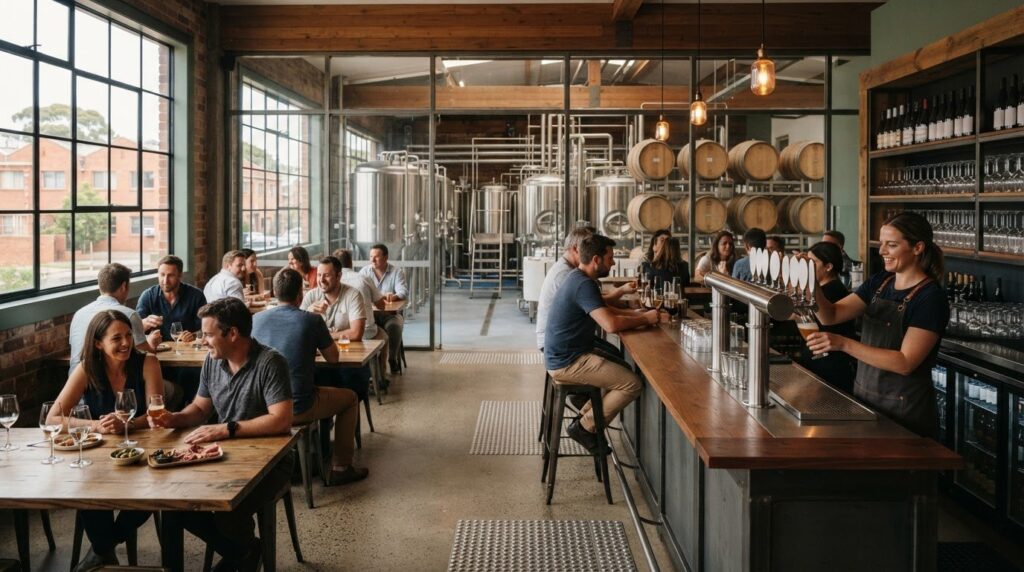
A busy taproom can turn a great brew day into a liability claim. Brewpub public liability insurance can help protect your business against claims for third-party injury or property damage arising from its operations. Beer-related claims may also require product liability cover, and every policy has its own terms and exclusions.
A packed tasting room, brewery tour or fresh pour across the bar is part of a brewpub’s appeal. But serving guests, food and alcohol brings risks that production-only cover may not address.
This guide explains what to consider for taproom and tasting claims, alcohol service, guest injuries, food service and brewery stock. You’ll also learn what can shape your insurance needs, where policy wording matters and how specialist advice can help match cover to the way your brewpub operates.
Key Takeaways
- Match cover to the way your taproom operates, including tastings, tours, food service and the areas guests use.
- Understand how public and product liability may respond to guest injuries, property damage and claims linked to beer, including legal costs.
- Review liquor-related risks alongside your alcohol service practices, especially incidents involving intoxicated guests.
- Separate guest liability from stock risks such as contamination, spoilage, leakage and damage to beer or ingredients.
- Read the policy wording for exclusions and limits, then make sure the cover reflects your brewpub’s actual activities and assets.
Does brewery insurance cover my taproom and tastings?
Yes, brewery insurance can cover taproom and tasting-related claims for visitor injury or property damage, subject to policy terms. In Australia, compare how each policy treats your actual activities, from seated tastings to guided brewery tours.
Legal defence costs
A guest who slips on a wet taproom floor may make a claim, even if staff dispute responsibility. Public liability insurance can respond to covered claims and associated legal costs, subject to the policy wording, exclusions and limits. Check whether defence costs are included within the policy limit or paid in addition, and how the wording applies to tastings and tours. That distinction can affect the amount left available for a settlement or judgment.
Settlements and judgments
A settlement resolves a claim by agreement; a judgment follows a court decision. Public liability cover may respond to covered compensation for a visitor’s injury or damaged property, subject to the policy terms. For example, a tasting-room visitor might seek compensation after a fall. Look for wording that clearly explains compensation, legal expenses and the limit applying to each claim. A low premium alone won’t tell you whether these elements suit your exposure.
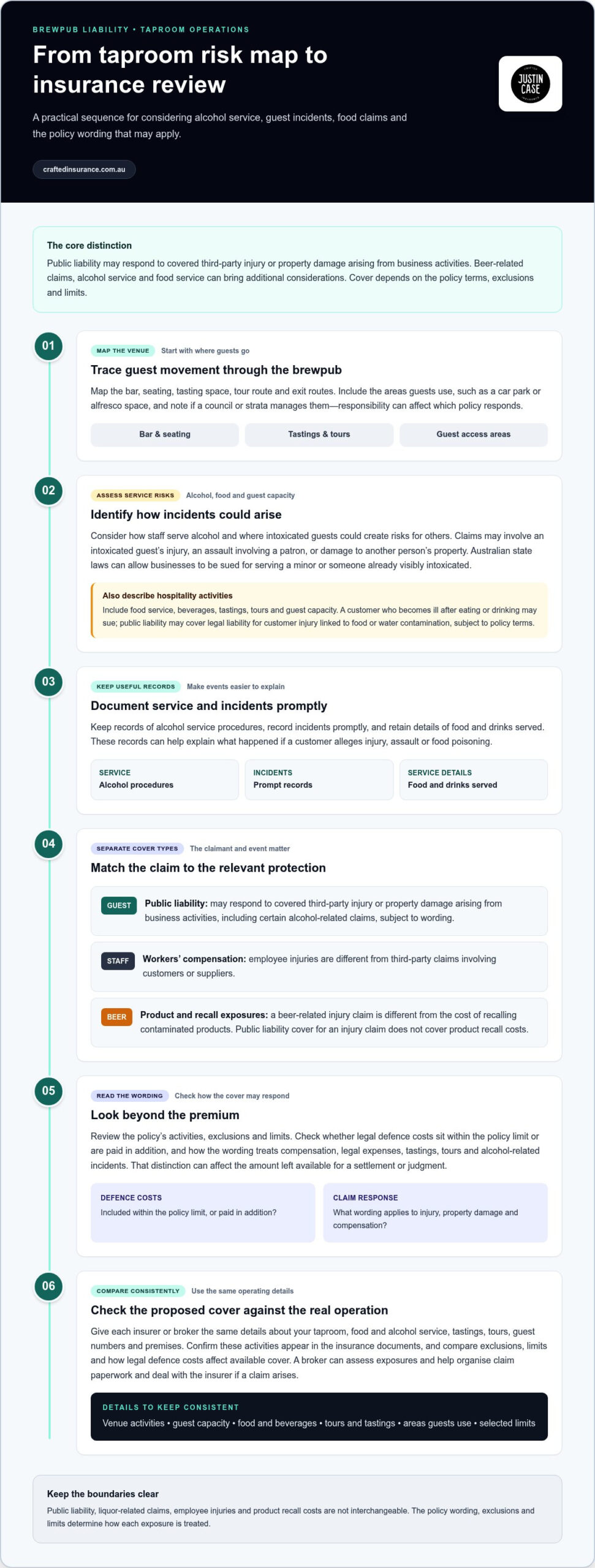
Separate risks to customers and their property from employee injuries. Public liability insurance covers third parties such as customers and suppliers, while workers’ compensation covers employee injuries. A customer hurt during a tasting and a staff member injured while serving therefore involve different types of cover. Map the areas guests use, including the bar, tasting space and tour route. If a car park or alfresco area is managed by a council or strata, responsibility for that space can affect which policy responds.
Insurance costs vary according to the brewpub’s size, nature, location, claims history, risk exposures and level of cover. A venue serving food and alcohol to larger groups may present different exposures from a production site with occasional tastings. Insurers also consider the activities on the premises and the limits selected. Describe your setup accurately, including guest numbers, food service and tours. These details help shape cover around your actual operation, rather than a generic brewery description.
When comparing policies and brokers, give each the same details about your taproom, tastings, food service and tours. Compare policy wording, exclusions and limits, including how legal defence costs affect the available cover. Ask how the proposed policy responds to visitor injury, property damage or a claim connected with a tasting. Check that the activities you described appear in the insurance documents. This makes differences clear before you choose, rather than leaving you to judge on premium alone.
Liquor-related guest injury and assault claims
Alcohol service brings risks beyond spills at the bar. A guest injured after becoming intoxicated, an assault involving a patron or illness linked to beer can all lead to claims against a brewpub.
Liquor-related injuries and assaults
Brewery liquor liability insurance can protect against claims connected with alcohol sales or service, including incidents involving intoxicated customers. For example, a patron could be injured after drinking at your venue, or another guest could claim an assault occurred on the premises. Australian state laws can allow businesses to be sued for serving a minor or someone already visibly intoxicated. Review how your policy treats alcohol-related claims, exclusions and limits.
Injury and property damage claims
Alcohol-related claims can involve personal injury or damage to someone else’s property. A customer might fall into another patron’s belongings, or an intoxicated guest could damage property inside the venue. Public liability insurance can respond to third-party injury or property damage arising from business activities, subject to the policy wording. When arranging cover, describe your bar service and how alcohol is served so the policy reflects the operation.
Risk analysis and claims support
Risk analysis starts with how guests move through the venue and how staff serve alcohol. Map the bar, seating, tasting area and exit routes, then identify where intoxicated guests could create risks for others. A broker can assess exposures based on guest capacity and the food and beverages served. If a claim arises, a hospitality insurance broker can help organise claim paperwork and deal with the insurer on the business’s behalf.
Food service brings a separate set of potential claims. A customer who becomes ill after eating or drinking at a food premises may sue the business. Public liability insurance can cover legal liability for customer injury linked to food or water contamination, subject to policy terms. For instance, a customer might claim illness after eating a meal served with a tasting flight. Describe food and alcohol service clearly in your business details rather than assuming brewery insurance automatically addresses every hospitality activity.
Contamination claims and product recalls are different exposures. Public liability cover for an injury claim does not cover the cost of recalling contaminated products. A contaminated batch could require a recall for health or safety reasons, bringing costs beyond a customer’s claim. When comparing policies, look at how the insurance package separates third-party injury claims from recall costs and alcohol-related incidents. The wording, exclusions and limits show where each type of cover applies.
Owners can take three practical steps: document alcohol service procedures, record incidents promptly, and keep details of food and drinks served. Those records help explain what happened if a customer alleges injury, assault or food poisoning. For a closer look at operational exposures, consider a brewery risk analysis that accounts for alcohol service, guest activity and food operations.
Spoilage, leakage and contamination of stock
A faulty chiller, power outage or contaminated batch can leave saleable beer unusable. Brewery insurance may include stock and deterioration cover, but the policy wording determines which events are covered. Map stock risks across your premises, from ingredients awaiting brewing to packaged beer ready for sale. This gives you a clearer basis for reviewing the contents and stock sections of your business insurance.
Stock deterioration cover can respond to beer spoiled by a breakdown or power outage, subject to policy terms. For example, refrigeration failure could affect kegs stored for a weekend tasting. The loss may involve more than the beer itself, so check how the wording defines stock, deterioration and the insured event. Also look for relevant conditions about equipment maintenance, temperature control or evidence of the loss.
Accidental contamination, spoilage or an unsatisfactory batch can make beer unsuitable for sale. Contamination and spoilage insurance may help with the financial loss when a batch must be discarded. Product recall cover addresses recalls for health and safety reasons. Product withdrawal cover can apply to non-health and safety issues, such as taste or presentation. Keep these distinctions in mind when reviewing cover for a batch that fails quality checks.
Leaks can damage beer, ingredients, packaging and other contents. Bursting bottles or barrels can also cause property damage, depending on the policy. For example, a leaking keg may ruin nearby packaged stock, while broken bottles could damage stored materials. Check whether the wording covers the damaged stock and any resulting property damage. Record affected items, quantities and locations to help document a claim.
Stock may be stored away from the brewery. Hops, grain or malt could be held in a secure building at a supplier’s premises, and cover may extend to stock there if you own it or are responsible for it. Brewery insurance can also include stock kept away from the business premises. List each off-site location and identify who owns the ingredients. Then compare that information with the policy’s description of covered property and locations.
An insurance broker can help map these exposures against the policy wording. Start with an inventory of beer, ingredients, packaging and stock stored elsewhere. Note the likely loss event for each item, such as a power outage affecting chilled beer or contamination requiring disposal. Then review how the policy treats deterioration, leakage, bursting containers, recall and withdrawal. Clear records of stock values and storage locations help you explain what was affected and where it was held.
Food service, bar service, tastings and tours
Serving a meal alongside a tasting paddle changes the risks your brewery faces. Map each guest activity, then compare it with the public liability wording and exclusions.
A spilled drink or plate can cause a slip-and-fall incident during a busy service. A foreign object in food could lead to dental or health problems, while a customer who becomes ill after eating or drinking may bring a claim. Public liability insurance may cover legal liability for customer injury linked to food or water contamination. It does not cover the cost of recalling contaminated products, so consider recall cover separately.
Build a clear picture of your service before reviewing commercial insurance. Note whether staff serve meals, snacks or tasting flights, and whether guests eat at tables or stand at the bar. Include food preparation, water service and areas where spills could reach customers. Restaurants and cafés face a higher risk of public liability incidents than most business types. A brewpub that combines food service and brewing should describe both activities accurately.
Bar service brings another set of exposures. A guest may become intoxicated, suffer an injury or damage property during an incident. Brewery liquor liability insurance can protect against claims related to alcohol sales or service, including incidents involving intoxicated customers. Compare how the policy wording addresses alcohol service, guest injuries and exclusions. Bars and pubs may need specialist cover, sometimes arranged through insurance partners.
Tours add moving guests and production spaces to the risk picture. A visitor route may pass tanks, hoses or a wet floor before reaching the tasting room. Record the route, where tastings take place and how guests are supervised. The suitable limit depends on your operations and the policy terms.
Tour-related alcohol rules also vary by jurisdiction. Queensland exempts a tour operator’s sale of up to 2 standard drinks per adult per day when the tour is booked with that operator, subject to restrictions. In the ACT, the exemption applies to tours with no more than 12 adults and allows up to 2 standard drinks per adult at no charge. These are liquor exemptions, not insurance cover. Keep the tour format and service details clear in your insurance information.
- List every activity: dining, bar service, tastings and guided tours.
- Mark guest areas, including any alfresco space or car park.
- Compare policy wording for food-related injury, alcohol claims and tour activity.
For a car park or alfresco area, responsibility matters. If a council or strata manages the space, its policy may apply instead. Identify who controls each area and include that in your insurance details. Keep brewing equipment breakdown separate from guest liability: machinery cover addresses a different business risk.
What does public liability insurance cover for an Australian brewpub?
For a brewpub, public liability insurance covers third-party claims involving customers or suppliers, including personal injury or property damage linked to business activities. The policy wording sets the scope, exclusions and limits. Assess the cover against the work happening across your venue, not just the beer-making side.
A customer who trips in the tasting room or a supplier whose property is damaged during a delivery may bring a claim. Public liability insurance can respond to covered claims and associated legal costs, subject to policy terms. Claims might arise from a spill, a visitor’s contact with brewery equipment or damage during service. Check that the policy describes the activities that actually take place on your premises.
Public liability is for third parties, not employees. Employee injuries are covered by workers’ compensation. That distinction matters if a staff member is hurt carrying a keg while a customer is injured nearby. These incidents involve different people and different types of cover. Keep the distinction clear when reviewing a brewpub business insurance package.
Alcohol service and products need close attention in the policy wording. Restaurant public liability insurance may cover claims related to serving alcohol, subject to the policy’s terms, conditions and exclusions. Brewery public and product liability address different exposures: a guest’s injury linked to business operations, or an injury claim connected with a beer product. Compare what each section covers and check exclusions that could affect your brewpub.
Responsibility for surrounding areas also matters. A customer’s car damaged by a falling tree in the car park could lead to a property damage claim. Whether the brewpub’s cover applies depends on who is responsible for that area. A council- or strata-managed car park may fall under its own policy. Map the boundaries of your premises, including alfresco areas, and identify who controls each space.
Commercial landlords often require restaurant tenants to hold public liability insurance as a condition of leasing premises. Treat the lease requirement as a starting point, not a complete assessment of your exposure. Compare the required cover with your venue’s operations, guest areas and selected limits. Read the policy wording and Product Disclosure Statement carefully. Check how the documents handle legal costs, exclusions and activities such as alcohol service.
Use this review process before selecting or renewing cover:
- List customer, supplier and product-related exposures.
- Separate employee injury cover from third-party liability.
- Match policy wording and limits to your actual premises and operations.
For cover shaped around a brewpub’s production and public service risks, discuss brewpub insurance options.
Crafted Insurance: Nano Brewery
Crafted Insurance helps Australian craft breweries and brewpubs assess cover for production, sales and public service risks. Its specialist brokerage work can connect policy details with the way your business operates, from brewing and stock to serving guests.
Turn to Crafted Insurance when reviewing cover for a nano brewery, micro brewery, local craft brewery or brewpub. Risk audits and ongoing risk management can help identify exposures, while claim advocacy can support you with the paperwork if a claim arises. The aim is practical guidance to help you understand risks and make informed insurance decisions.
Ready to discuss your operation? Contact Crafted Insurance to talk through your brewery insurance needs.
Make your next insurance review count
Your next renewal is a good opportunity to check whether your insurance still reflects how your brewpub operates. A new tasting format, expanded food service or change in production can alter the risks to account for. Keep an up-to-date picture of your business activities and use it to guide a focused conversation about cover.
Choosing brewpub public liability insurance is easier when the discussion starts with your actual operation, not a generic hospitality template. Crafted Insurance works with Australian craft businesses through its Nano Brewery, Micro Distillery and BrewPub offerings, connecting specialist insurance advice with production and public service risks.
If you’re ready to talk through your operation and insurance needs, contact Crafted Insurance. Take the next step with a clear view of how your business works, and get back to the good stuff: making and sharing great beer.
Frequently Asked Questions
What insurance should I consider for my craft brewery?
Consider cover for public and product liability, property, stock, machinery breakdown and business interruption. If you employ staff, workers’ compensation addresses employee injuries, unlike public liability cover for third parties. A brewery shipping packaged beer can also consider transit cover for beer or raw materials in transport. Start by listing equipment, stock, products, staff and sales channels, then compare those exposures with the policy wording.
What risks can Breweries Insurance Protect against?
Brewery insurance can address risks across production, storage and sales, depending on the policy. Machinery breakdown cover, for example, can help with repair or replacement costs and business interruption after production stops. Transit cover can apply to beer or ingredients in transport. Recall cover addresses health and safety recalls, while withdrawal cover can relate to issues such as taste or presentation. Check each section’s terms and exclusions against your operation.
Am I covered for expansion of my business?
Tell your broker about planned changes before they become part of daily operations. Adding a kitchen, extending tours, selling through new channels or installing major brewing equipment can change the risks and values described in your insurance arrangements. Prepare an updated list of activities and assets, including new stock, locations and services. This gives your broker a clear basis for reviewing whether existing cover and limits still fit.
Am I covered if a guest drinks too much on my brewery tour and gets hurt?
Alcohol-related guest injury claims can fall within liquor liability or public liability cover, depending on the policy wording and circumstances. For a brewery tour, describe how alcohol is served, where tastings take place and how guests move through production areas. Keep incident records and details of the service provided. Review exclusions and limits for intoxication-related claims rather than assuming ordinary visitor cover addresses every alcohol-related situation.
Am I covered if the incident happens outside my premises, like in the car park or alfresco area?
Cover depends on who controls and is responsible for the area where an incident occurs. A customer’s injury in an alfresco space or damage to a car in a car park can involve different responsibilities if a council or strata manages that area. Map the spaces customers use, note who maintains them and include those details in your insurance information. Your lease or site arrangements can also clarify responsibility.
How much public liability insurance should an Australian brewpub have?
Choose limits by weighing your guest activities, premises, contracts and any accreditation requirements. Accreditation requirements can vary, so check whether your business needs public liability cover and evidence of insurance. Those figures apply to specific contexts, not every brewpub. Compare your actual obligations and exposure before selecting a limit for your business.
How much does brewpub public liability insurance cost in Australia?
There isn’t one standard premium for every brewpub. The cost depends on the business’s size, nature, location, claims history, risk exposures and selected level of cover. A venue with brewing, food service and guided tours has a different risk profile from a production-only operation. Give your broker accurate business details and asset values so the quote reflects your activities and the protection you need.
What factors affect brewpub insurance premiums in Australia?
Insurers assess the scale and nature of your operation, its location, claims history, risk exposures and chosen cover. They may also consider how many people your premises caters for and the food and beverages you serve. Prepare those details alongside information about brewing, sales and tours. Compare premiums alongside exclusions and limits, because a lower premium can come with narrower cover.