
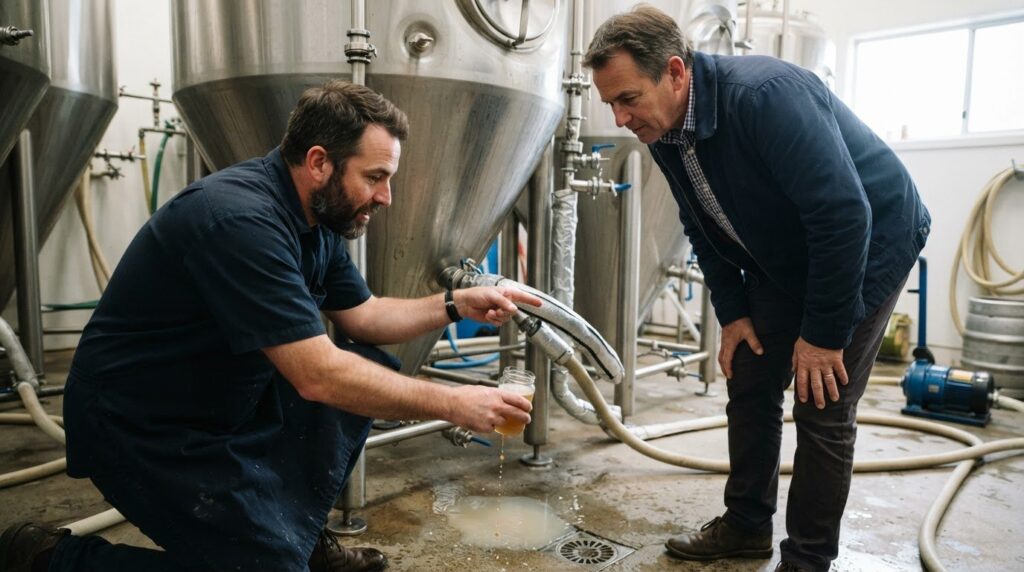
Brewery insurance claim advocacy helps you present a spoilage, leakage or contamination claim clearly, with relevant records to support it. A broker can review your policy wording, organise claim details and communicate with the insurer while you focus on getting production back on track.
A spoiled batch or leaking glycol line can put hard-won work and brewery income at risk. The pressure doesn’t end when the immediate problem is fixed: you may need to document what happened, explain the loss and understand how your policy responds. This guide explains how claim advocacy works, what evidence may help, and how equipment breakdown, stock and business interruption cover may come into play. It also explores risks facing Australian craft breweries, so you can see where preparation matters and when specialist broker support can help you manage a claim.
Key Takeaways
- Keep clear records of a spoilage, leak or contamination event to help explain what happened and support your claim.
- Review how equipment breakdown, stock and business interruption cover may respond to operational disruption.
- Map risks across production, taproom service, product delivery and supply chains so gaps are easier to spot.
- A specialist broker can help organise claim information, interpret policy wording and communicate with the insurer.
Spoilage, leakage and contamination
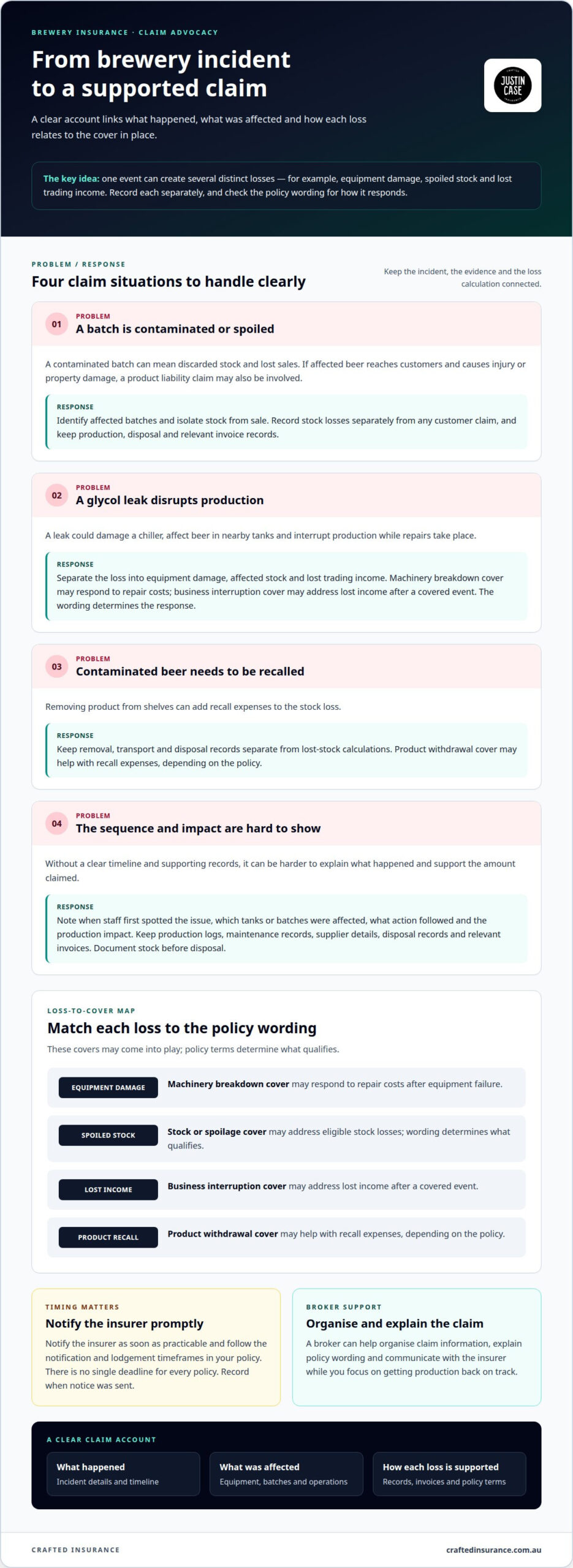
A contaminated batch can turn a full fermentation schedule into discarded stock and lost sales. Brewery policies may cover financial losses from accidental contamination, spoilage or unsatisfactory batches, but the wording determines what qualifies. A claim may also involve product liability if affected beer reaches customers and causes injury or property damage. Record stock losses separately from any customer claim.
Take a glycol leak: it could damage a chiller, affect beer in nearby tanks and interrupt production during repairs. One event may involve machinery damage, spoiled stock and lost trading income. Machinery breakdown cover may respond to repair costs, while business interruption cover may address lost income after a covered event. These are separate parts of a claim, and the policy wording determines the response.
Act promptly and keep a clear record. Note when staff first spotted the leak or quality issue, which tanks or batches were affected, and what action followed. Keep production logs, maintenance records, supplier details, disposal records and relevant invoices. Record affected alcohol stock separately from equipment damage. This information helps explain the sequence of events and support the amount claimed. Document stock before disposal.
- Identify affected batches and isolate stock from sale.
- Record the incident, response and production impact.
- Gather invoices, maintenance records and disposal details.
- Review policy wording for spoilage, breakdown and interruption cover.
A recall adds another layer of work. If contaminated beer must be removed from shelves, product withdrawal cover may help with recall expenses, depending on the policy. Keep removal, transport and disposal records separate from lost-stock calculations. A broker can organise the evidence and show how the leak, spoilage or recall led to each loss. That’s the practical value of brewery insurance claim advocacy: a clear account of what happened, what was affected and how the claim relates to the cover in place.
Craft beverage industry risks
Australian breweries commonly consider cover for property and stock, machinery breakdown, business interruption, public and product liability, product recall, transit and liquor liability. The right mix depends on brewing, sales, deliveries and taproom activities, rather than a standard package.
Common craft beverage risks
A refrigeration fault can halt production, while damaged stock or delayed ingredients can disrupt supply. A product recall may involve removal, transport, disposal and replacement expenses. At a brewpub, an incident involving an intoxicated customer creates a different exposure from a machinery failure. Map each risk to the activity, the people or property affected, and the possible interruption.
Include staff injuries, broken bottles, equipment failures and delivery accidents in your review. Check how stock moves between the brewery, storage and customers. A supplier delay can leave brewing plans short of key ingredients or replacement parts. Consider alternative suppliers when assessing how a disruption could affect orders and production.
Policies for brewery losses
Property or stock cover may address damage to business assets and inventory. Machinery breakdown cover may respond to sudden equipment failure, while business interruption and extra expense cover may help with lost income and ongoing costs after a covered event. Public and product liability, product recall, transit and liquor liability address other exposures. Compare the wording with your actual operations.
Look beyond policy names. Check which events trigger cover, which costs are included and how exclusions affect likely losses. A lower premium may come with more exclusions, so compare the policy wording and product disclosure statement, not just the quote.
Make the review practical: list each brewing, packaging, storage, delivery and customer-facing activity. Then match each activity to its likely loss, from damaged stock to a liability claim. That gives you a useful basis for discussing gaps and priorities. A focused brewery insurance review can help connect those exposures with the covers under consideration.
Insurance broker claims assistance and advocacy
A broker can help organise claim information, explain policy wording and communicate with the insurer. The support you need depends on the claim and the work involved.
Advocate roles and comparisons
A broker arranges insurance and may support claims by explaining cover and presenting your case. A claims advocate focuses on advancing the policyholder’s claim, while a loss adjuster investigates and assesses the loss, often for the insurer. A lawyer provides legal advice and representation. Ask each person to explain their role, scope and any conflicts of interest.
Before hiring an advocate, ask what licensing or authorisation applies to their service, how they meet it, and how fees are calculated. The price depends on the case and is given after a quote request. Claim complexity, work required and the agreed scope can affect fees.
For business interruption, a claim generally compares expected income with actual income during the disruption, then considers ongoing expenses and costs avoided. The policy wording sets the relevant terms.
Claim notification and lodgement
Australian breweries should notify their insurer as soon as practicable after an incident and follow the notification and lodgement timeframes in their policy. There is no single deadline for every policy, so check the wording and record when notice was sent.
Give the insurer a clear initial account, then provide supporting material as it becomes available. Keep copies of messages, claim forms and responses, including dates and names of insurer contacts. A broker can help organise communications and flag requests that need a timely response.
Starting a claim and required documents
Start by contacting the insurer or your broker. Describe the incident, affected property or stock, and operational impact. Gather the policy schedule, incident notes, photographs, invoices, repair estimates, production and sales records, and relevant maintenance documents. For contamination, include batch records and disposal details where available.
For business interruption, sales records and operating expenses help show the financial effect of downtime. Group documents by loss type, such as equipment repairs, spoiled stock and lost trading income, so each part of the claim has a clear paper trail.
Disputing an insurance decision
If you disagree with an insurer’s decision, ask for its reasons in writing and use its internal dispute resolution process. Insurers must provide internal dispute resolution and access to external dispute resolution through AFCA, Australia’s complaints body for financial services.
Set out the decision you dispute, explain why, and attach relevant policy wording and claim evidence. Keep the insurer’s response and your supporting records together. A broker can help present the issue clearly through the dispute process.
What does brewery insurance claim advocacy involve in Australia?
In Australia, claim advocacy connects a brewery’s policy wording, incident records and claimed losses. The broker helps build a clear account and supports communication with the insurer as the claim progresses.
Start by matching the event to the relevant section of the policy. A chiller failure, for example, may involve machinery damage and a pause in production. The broker can help separate repair costs, damaged stock and interrupted trading, then identify the evidence supporting each part. That structure makes the claim easier to follow.
Next, assemble a timeline. Record when the issue began, when staff noticed it and what happened next. Link each item to a document, such as a maintenance log, supplier invoice, production record or sales report. For a contaminated batch, connect the affected stock to the relevant batch records and disposal documents.
- Group losses by type, such as equipment, stock and interrupted trading.
- Label documents with dates and the event they support.
- Keep insurer requests and responses together in one claim file.
- Update the file when new repair or production information arrives.
Clear communication matters. If an insurer asks how long the brewery could not operate, provide the affected production dates and explain what work resumed first. If a repair estimate changes, submit the updated document and explain the difference. A broker can coordinate those details and keep the claim focused on the policy terms and evidence.
Advocacy also means tracking unresolved questions. Keep a list of decisions, requested documents and next actions. Before accepting a settlement, compare its breakdown with the losses claimed and the policy response. For help organising a brewery claim, discuss claim support.
Crafted Insurance: Nano Brewery
Crafted Insurance helps Australian craft breweries understand insurance risks and claim processes. Its NANO BREWERY package sits alongside support for LOCAL CRAFT BREWERY and BREWPUB operations, with risk management and claim advocacy for brewery businesses.
Turn to Crafted Insurance when a spoilage, equipment or interruption claim leaves you sorting through policy wording, records and insurer questions. Its specialist brokerage support helps organise claim information and present your brewery’s circumstances clearly. Risk management can also help identify operational exposures before a loss.
Every brewery has its own setup, from production and stock to taproom service. Start with how your operation works and where a claim or cover question is creating pressure. Contact Crafted Insurance to discuss your brewery’s needs.
Make your next step a clear one
The best time to organise your insurance is before an incident puts production under pressure. Map how your brewery operates, identify the records you would need after a loss and note any policy questions you want answered. That groundwork can make a future claim easier to explain and give you a clearer picture of the support you need with brewery insurance claim advocacy.
Crafted Insurance supports Australian craft beverage businesses, including nano breweries, micro distilleries and brewpubs. If you’re reviewing your cover or need support with a brewery claim, start a conversation about your operation and the risks you’re working through.
Contact Crafted Insurance to discuss your next step. You’ve got a brewery to run. Make room to focus on the good stuff.
Frequently Asked Questions
Can an Australian brewery appoint a public insurance claims advocate or loss assessor?
Yes. A brewery can engage a representative to help with its claim, such as a broker or claims advocate. A loss adjuster typically assesses a loss for the insurer, so their role differs from someone engaged by the brewery. Before appointing anyone, agree in writing on their role, authority to communicate, fees and any conflicts of interest. Keep control of key decisions and copies of all claim correspondence.
What should breweries do if an insurer delays or denies a claim in Australia?
Ask the insurer for a written update or decision, including its reasons and any outstanding information it needs. Reply with relevant documents and keep a dated record of communications. If the issue remains unresolved, make a formal complaint through the insurer’s internal dispute resolution service. Insurers must provide internal dispute resolution and access to external dispute resolution through the Australian Financial Complaints Authority (AFCA).
What are common reasons brewery insurance claims are underpaid or rejected?
Claims can be reduced or declined if the event falls outside the policy wording, an exclusion applies or the loss amount is not supported by adequate records. For example, gradual wear and tear may be treated differently from sudden, accidental machinery damage. A mismatch between the brewery’s actual activities and the information used to arrange cover can also complicate a claim. Compare the insurer’s decision with the wording and evidence submitted.