
Product liability insurance won’t cover every beer problem. For craft breweries in Australia, product recall insurance can address eligible costs of removing an affected batch from sale, while product liability cover addresses claims involving injury or property damage. These are separate protections, not interchangeable ones.
It’s easy to assume liability cover is a safety net for anything that goes wrong with packaged beer. But a batch may need to be recalled before anyone makes a claim, while a taste or presentation issue may call for product withdrawal cover rather than a health or safety recall.
This guide explains which insurance may suit your brewery and how recall cover differs from liability, contamination, spoilage and leakage cover. You’ll learn which exposures to consider, what can affect cover and how specialist insurance advice can help match protection to the way you brew, package and sell.
Key Takeaways
- Separate health and safety recalls from withdrawals for issues such as taste or presentation, as they can involve different cover.
- Map contamination, spoilage and leakage to their specific causes; refrigeration failure, for example, may involve machinery breakdown and spoilage cover.
- Keep product liability and recall cover distinct: one addresses injury or property damage claims, while the other can respond to the costs of pulling back a batch.
- Review how recall cover is arranged and what the policy wording includes so the protection fits your brewing, packaging and sales risks.
What insurance should I consider for my craft brewery?
For packaged beer, consider product recall and withdrawal cover alongside protection for stock, machinery and business interruption. Product recall insurance for craft beer in Australia should reflect what you brew, where stock is held and what could trigger a batch removal.
Packaged beer recall cover
Product recall cover may respond to eligible costs of removing affected packaged beer from sale. Possible expenses include consumer notices, testing, transport, storage and disposal. Withdrawal cover addresses non-health-and-safety issues, such as taste or presentation. Read the policy wording for covered triggers, eligible expenses and limits.
Assess product recall insurance for craft beer in Australia alongside stock cover. Consider beer in tanks and packaged stock, as well as ingredients held for production. Their value and exposure differ from finished beer ready for dispatch.
Contamination and packaging issues
Contamination, undeclared allergens, mislabelling and packaging defects can each prompt a withdrawal or recall. Whether a policy responds depends on its wording and the event’s circumstances. Undeclared allergens accounted for 41% of Australian food product recalls in 2023, so label controls deserve attention.
For example, an omitted allergen on a label presents a different issue from a can with a faulty seam. Keep batch records linked to customer orders so affected packaged beer can be traced.
Policy exclusions and conditions
Check exclusions, notification requirements, deductibles and the definition of a covered recall before choosing cover. Process errors and wild yeast infections are often outside standard insurance sections for Australian breweries. Beer spoiled by glycol or refrigeration failure generally needs both machinery breakdown and spoilage sections.
Stock cover should reflect ingredients, beer in tanks and packaged products. Check how the wording treats each production stage and whether machinery failure affects business interruption cover. Conditions can change what responds, even when the loss involves the same batch.
Recall compliance and preparation
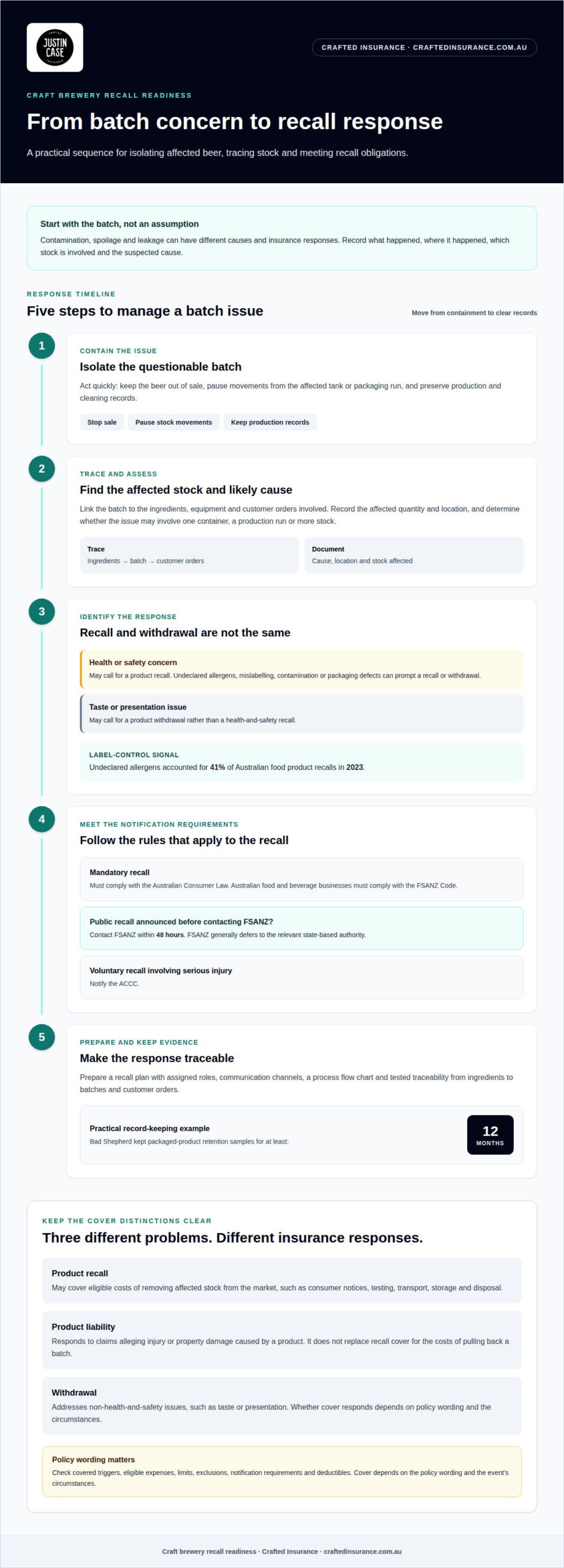
Australian food and beverage businesses must comply with the FSANZ Code. Mandatory recalls must comply with the Australian Consumer Law. If a brewery announces a public recall before contacting FSANZ, it must contact FSANZ within 48 hours; FSANZ generally defers to the relevant state-based authority.
For a voluntary recall involving serious injury, notify the ACCC. Prepare a plan with assigned roles, communication channels, a process flow chart and tested traceability from ingredients to batches and customer orders. Bad Shepherd kept packaged-product retention samples for at least 12 months, illustrating one practical record-keeping step.
Beer contamination, spoilage and leakage
A compromised batch can result from a manufacturing problem, damaged packaging or a leak during storage. The insurance response depends on what happened, which stock was affected and which policy section applies. A quality issue does not automatically count as an insured product recall or stock loss.
Contamination means something unwanted has entered the beer, such as cleaning residue or foreign material. Spoilage describes beer that has deteriorated and is no longer suitable for sale. A leak is a physical loss from a tank, line, keg or can. These events can overlap, but raise different questions when making a claim.
For example, a leaking transfer line could mean lost beer and interrupted production. A damaged can could cause product loss after packaging. Record the affected batch, where the loss happened, the suspected cause and the amount of stock involved. These details help distinguish contamination from spoilage or leakage.
Cover depends on the cause and policy wording. A policy can treat contaminated product, accidental stock damage and machinery-related loss under different sections. Check how it defines stock, insured locations, exclusions, deductibles and notification conditions. Don’t assume beer in a tank receives the same treatment as packaged stock in a warehouse.
Act quickly when a batch looks wrong. Isolate it from sale, pause movements from the affected tank or packaging run, and preserve production and cleaning records. Trace which ingredients and equipment came into contact with the batch. This helps clarify whether the issue affects one container, a production run or more stock.
Leaks can also create damage beyond the beer itself. A spill from a keg in a serving area, for instance, differs from a loss inside a production tank. Note the location, equipment involved and damaged property. Brewery risk management can help map these exposures to the way your operation stores and moves beer.
Product liability versus product recall insurance
For packaged beer sold in Australia, these covers address different losses. Product liability insurance responds to claims alleging injury or property damage caused by a product. Product recall insurance addresses eligible costs of removing affected stock from the market. One concerns harm and resulting claims; the other covers the recall operation itself.
Imagine a customer reporting illness after drinking packaged beer. A product liability claim may involve alleged injury, medical costs or related legal expenses, depending on the policy wording. The brewery’s response may include preserving batch records, identifying the product and documenting the complaint. Recall cover doesn’t replace liability cover for that claim.
Now consider a batch with a labelling error discovered before anyone reports an injury. The brewery may need to stop sales, contact retailers and retrieve cans already distributed. These actions can create recall expenses even if no customer brings a liability claim. Potential recall costs include consumer notices, testing, transport, storage and disposal.
Both exposures can arise from the same batch. If packaged beer causes property damage and the brewery also withdraws remaining stock, the policies address different parts of the event. Keep this distinction clear when reviewing limits, triggers, exclusions and claim notification conditions. The policy wording determines which expenses and claims fall within each section.
To map the covers, follow the event from detection to resolution. Record the affected batch and the first known issue. Separate costs related to consumer injury or property damage from costs of stopping sales and retrieving stock. Then document communications, testing, transport and storage. Clear records help show how each expense connects to the incident.
Breweries that operate taprooms or distribute packaged beer should also consider where exposure arises. A service-related incident at a venue differs from a defect in a can sold through retail. Review how the policy describes products, activities and covered claims so the protection reflects how the brewery makes and sells beer.
Is product recall insurance available as a standalone policy or an add-on to product liability insurance in Australia?
Australian brewery policies may present product recall cover separately or package it alongside product liability cover. The structure matters less than the wording: check whether recall expenses are insured, what triggers cover and which costs are included.
A standalone arrangement makes recall protection a distinct part of the insurance program. A packaged arrangement places it alongside other covers, such as product liability. In either case, don’t assume a product liability section automatically includes the cost of retrieving beer from retailers. The schedule and policy wording show which protections apply.
Use a real batch scenario to compare the options. If a labelling problem affects packaged beer, the brewery may need to notify retailers, arrange testing and move stock for storage or disposal. Check whether those expenses are covered and whether the policy responds to a withdrawal for a non-health-and-safety issue.
Then examine how the policy defines a recall and a withdrawal. A health or safety concern may trigger recall cover, while a taste or presentation issue may fall under withdrawal cover. Also read the exclusions, notification conditions, deductibles and limits. These details can change how the same incident is treated.
For a brewery selling through its own taproom and independent retailers, review how the wording applies across sales channels. Check whether it covers packaged products, affected batches and costs such as consumer notices, testing, transport, storage and disposal. These are potential recall expenses.
To compare structures, map each likely incident to the policy section that would respond. Separate injury or property damage claims from the operational costs of removing stock. Then check for gaps between the recall and product liability wording. This exercise can reveal whether the proposed arrangement matches the brewery’s products and distribution.
Review brewery insurance options with a specialist who can assess how recall and liability cover fit together.
Crafted Insurance
Crafted Insurance helps Australian breweries assess how product recall cover fits alongside liability, stock and machinery protection. Its specialist insurance advice considers how you brew, package and sell, helping match policy wording to your operation’s risks.
Whether you run a nano brewery, microbrewery, brewpub or local craft brewery, a risk audit and ongoing risk management can help identify gaps before an incident. If a claim arises, Crafted Insurance provides claims advocacy to help you navigate the process and understand the cover involved.
Turn to Crafted Insurance when reviewing an existing policy, adding packaged beer to your range or reassessing how a recall could affect your business. Contact Crafted Insurance to discuss your brewery’s insurance needs.
Make your next insurance review count
Your next step is to turn the risks specific to your brewery into a clear insurance brief. Note how you make and package beer, where it’s sold and what could interrupt production. This gives the cover discussion a practical starting point based on how your business runs.
Choosing product recall insurance for craft beer in Australia means looking beyond a policy label. Consider how the wording fits your products, operations and likely response costs. Specialist advice can connect those details to the way your brewery works.
Reviewing product recall insurance for craft beer in Australia is also a chance to revisit your risk plan as production or distribution changes. Crafted Insurance supports breweries and related operations, including Nano Brewery, Micro Distillery and BrewPub businesses.
Contact Crafted Insurance to discuss cover, and take a clear next step towards protecting the work you’ve put into your brewery.
Frequently Asked Questions
Does brewery insurance cover contaminated batches?
Sometimes, but contamination isn’t automatically covered by standard brewery insurance. Process errors and wild yeast infections are often excluded from standard insurance sections. If beer spoils after glycol or refrigeration failure, cover generally requires both machinery breakdown and spoilage sections. For example, contamination during fermentation differs from stock spoiled after a cooling system fails, so the cause matters.
Low Recovery Rates: Are Recalls Enough?
No. A recall can tell customers and retailers to stop handling affected beer, but it can’t guarantee every can or bottle will be returned. Make the response traceable: record which retailers received each batch, log their replies and reconcile returned or disposed stock against dispatch records. These steps help show what action has been taken and where affected products may remain.
What happens if I have to recall a batch of packaged beer?
First, identify the affected product and batch, then stop dispatch and isolate stock still under your control. Coordinate communications with retailers, customers and the relevant authority. Keep a record of decisions, notices, returned stock and disposal. For example, give retailers clear product details so they can remove cans from shelves and prevent further sales while the brewery investigates.
What should I look for in comparing policies and quotes?
Compare the policy wording and Product Disclosure Statement, not just the premium. Check covered recall triggers, withdrawal cover, eligible expenses, exclusions, limits, deductibles and notification conditions. A lower premium can come with more exclusions. For a fair comparison, assess each policy against the same scenario, such as a labelling issue discovered after packaged beer reaches retailers.
What does product recall insurance cover for craft breweries in Australia?
It may cover eligible expenses involved in removing affected packaged beer from sale, subject to the policy wording. Cover can distinguish a health or safety recall from a withdrawal for a non-safety issue, such as taste or presentation. For instance, a brewery may need to act on a batch before customers report harm, making the covered trigger central.
What recall expenses are covered, such as testing, notification, transport, disposal and replacement?
Potential expenses include testing, consumer notices, transporting and storing affected beer, and its destruction or disposal. Whether each cost is covered depends on the policy wording and recall circumstances. Don’t assume replacement beer or lost sales are included simply because recall expenses are covered. Check how the policy treats each cost category before relying on it for a particular batch.