
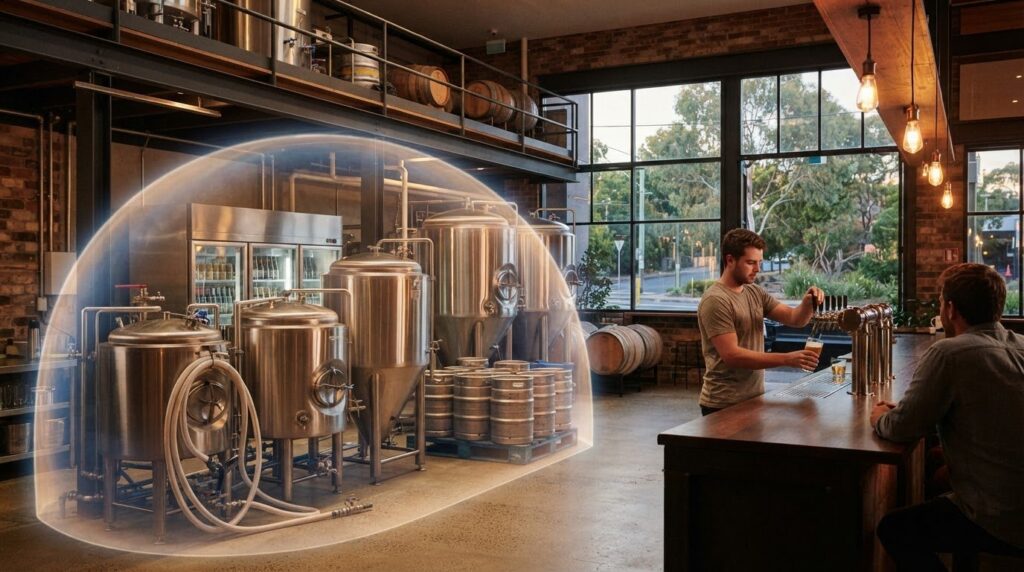
Brewpub business insurance should consider public and products liability, property, machinery breakdown and business interruption, with added attention to product recall and spoilage. The right combination depends on how you brew, serve customers and sell your products. There is no one-size-fits-all setup.
It is easy to focus on brewing equipment and beer. But a breakdown, contaminated batch or customer injury can disrupt service and put income under pressure. Policy wording matters too: a lower premium may come with exclusions that affect what is covered.
This guide explains the types of cover to consider, how wording and exclusions can affect premiums, and which details shape costs, from your location and claims history to your services and risk exposures. It also shows how to assess risks across production, hospitality and deliveries, helping you build a clearer picture of the protection your business needs.
Key Takeaways
- Check whether equipment breakdown cover addresses repair costs and the financial hit from interrupted production.
- Review how spoilage, leakage and contamination affect stock cover, including batches that must be discarded.
- Assess business interruption cover against lost income and ongoing expenses after a covered disruption.
- Compare policy wording and exclusions, not just premiums, and make sure your actual brewing and hospitality activities are reflected.
- Map risks across production, bar service, tastings, tours and deliveries to identify where cover and risk management need attention.
Is insurance for machinery breakdown really necessary to consider?
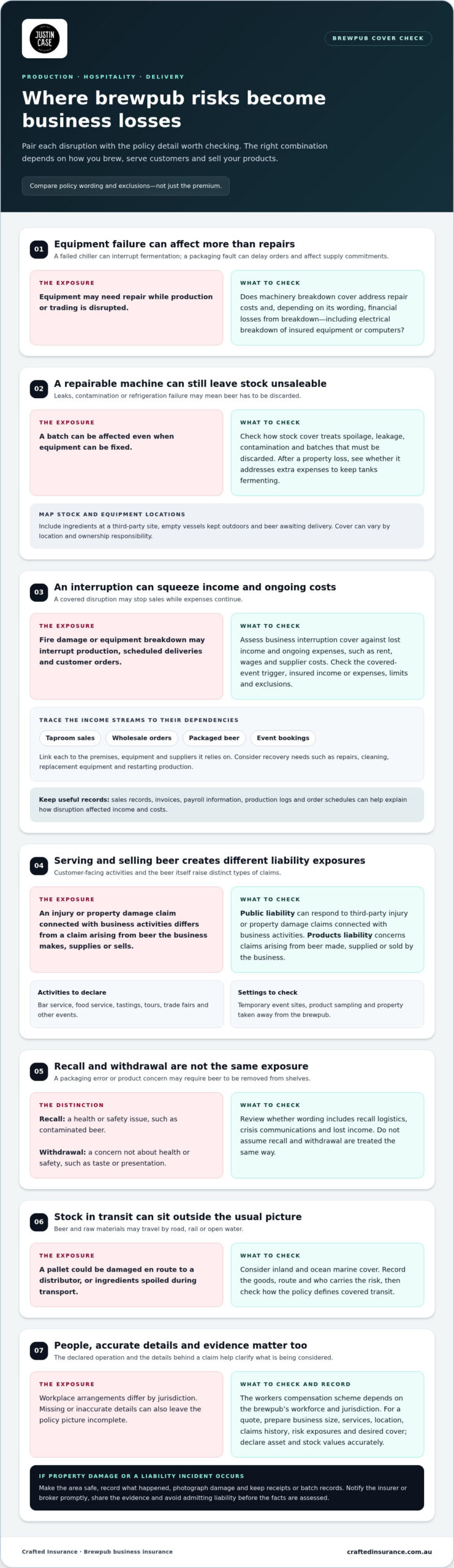
For a brewpub that relies on brewing, packaging or refrigeration equipment, machinery breakdown cover deserves careful consideration. A failed chiller can interrupt fermentation, while a packaging line fault can delay orders and affect supply commitments. Depending on the wording, cover may address repair costs and financial losses from a breakdown, including electrical breakdown of insured equipment or computers.
Stock can be affected even when the machinery is repairable. A leaking tank, contaminated batch or failed refrigeration system may leave beer unsaleable. Check whether the policy covers spoilage, leakage and contamination, and how it treats stock that must be discarded. Brewery stock cover may also address extra expenses to keep tanks fermenting after a property loss disrupts operations.
Map where your stock and equipment are kept. Note, for example, hops or malt stored at a third-party site, empty vessels kept outdoors and beer awaiting delivery. Cover can vary by location and ownership responsibility. A brewpub insurance broker can compare these details with the policy wording, rather than relying on a broad label such as “stock cover”.
Transit is another potential gap. Inland and ocean marine cover may protect beer or raw materials while they travel by road, rail or open water. Consider a damaged pallet en route to a distributor or ingredients spoiled during transport. Record the goods, route and who carries the risk, then check how the policy defines covered transit.
Trade fairs, tastings and other events bring stock, equipment and customers into new settings. Confirm how the policy treats temporary event sites, product sampling and property taken away from the brewpub. Public liability can respond to third-party claims involving injury or property damage connected with business activities. Products liability concerns claims arising from beer the business makes, supplies or sells.
Product recall and product withdrawal are different exposures. Recall cover applies to health and safety issues, such as contaminated beer. Withdrawal cover relates to concerns that are not about health or safety, such as taste or presentation. A packaging error may require products to be removed from shelves and lead to other costs, so check whether the wording includes recall logistics, crisis communications and lost income.
Workers compensation arrangements differ across Queensland, New South Wales, Victoria, Tasmania, South Australia, Western Australia, the Australian Capital Territory and the Northern Territory. Brewery cover for workers compensation is described as Australia-wide and may provide medical care and lost wages for work-related injury or disease. The applicable scheme depends on the brewpub’s workforce and jurisdiction.
For a quote, prepare details of the brewpub’s size, services, location, claims history, risk exposures and desired cover. Declare asset and stock values accurately, including equipment, ingredients and finished beer.
After property damage or a liability incident, make the area safe, record what happened, photograph the damage and keep receipts or batch records. Notify the insurer or broker promptly, share the evidence, and avoid admitting liability before the facts are assessed.
What insurance should I consider for my craft brewery?
Business interruption cover can help replace lost income and meet ongoing expenses when a covered event disrupts a brewery. For example, fire damage that closes a production area may stop beer sales while rent, wages and supplier costs continue. The policy wording sets out which events trigger cover and which losses it may address.
Machinery breakdown can also interrupt production. If a failed refrigeration unit stops production, assess two separate pressures: the cost of repairing equipment and the income lost while trading is disrupted. Business interruption insurance may help with lost income, wages and ongoing expenses after a covered event such as fire or equipment breakdown.
Build a practical picture of potential interruption before comparing cover. List each income stream, including taproom sales, wholesale orders, packaged beer and event bookings. Then map the equipment or premises each stream depends on. If one packaging line serves every wholesale order, its failure could affect several revenue sources at once.
Next, consider how long recovery could take. A damaged brewing area may need repairs, cleaning, replacement equipment or time to restart production. Even a short closure can affect scheduled deliveries and customer orders. Match the policy’s stated cover and limits to the business’s recovery needs, rather than relying on a general label.
Keep evidence that helps explain normal trading and the interruption. Sales records, invoices, payroll information, production logs and order schedules can show how disruption affected income and costs. For example, a cancelled distributor order and continuing staff wages illustrate different parts of the financial impact.
Map dependencies beyond the brewery floor too. A brewpub might rely on a cold room for bar stock, a point-of-sale system for hospitality sales and a packaging supplier for off-site distribution. An insurance broker can use this risk map to discuss which covered events and resulting losses the policy addresses.
Review the wording for the trigger, the income or expenses insured, and any exclusions that could affect a claim. A policy responding to a covered property loss may not address every interruption scenario. Make sure the declared business activities reflect both brewing and customer service, especially if the operation has added a taproom or wholesale channel.
For a clearer view of your exposures, a brewery risk management review can help connect production dependencies with the income they support. That groundwork makes it easier to compare brewery insurance options and discuss the practical impact of a breakdown before it happens.
Comparing policy wording, exclusions and premiums
A lower premium can come with more exclusions, so compare the policy wording and Product Disclosure Statement, not just the price. For Australian breweries, check how each document defines insured property, stock, liability and business activities. A broad label may sound reassuring, while a specific exclusion changes whether a loss is covered.
Start with the work happening on your premises. Does the declared activity include brewing, packaging, taproom sales and serving alcohol? If a brewpub adds tastings or food service, its risk profile changes. Accurate details help an insurance broker compare policies with the business’s actual operations, rather than a simplified description.
Next, compare how policies treat alcohol stock and ingredients. Brewery insurance may automatically include alcohol under stock cover. Hops, grain or malt held at a supplier’s secure premises may also be covered when they belong to the insured or remain its responsibility. Check the location and ownership wording against your supplier arrangements.
Use a simple comparison list for each quote:
- Stock: check alcohol, ingredients, finished product and stock held away from your premises.
- Liability: compare cover for injury or property damage connected with products and business operations.
- Exclusions: note wording that could affect your actual activities, locations or stock arrangements.
- Premium factors: compare how business size, location, claims history, risk exposures and chosen cover affect the quoted cost.
Customer intoxication deserves a separate check. Liquor liability can protect against claims connected with selling or serving alcohol, including incidents involving intoxicated customers. Compare how each policy describes bar service, tastings, events and customer activity on the premises. A policy focused only on manufacturing may not describe the whole brewpub operation.
Breweries also face risks beyond physical stock. A customer database breach or hacking incident can create financial losses and disrupt operations. Check whether cyber cover is included, optional or excluded, and read the policy’s definitions of a covered cyber event. Do not assume a general business policy automatically addresses a digital incident.
Finally, compare like with like. Check insured values, limits, excesses, exclusions and the activities listed on each policy schedule. Ask an insurance broker to explain differences in plain language, using examples such as supplier-held malt or an injury involving an intoxicated customer. Specialist expertise matters because a policy should reflect both brewing and hospitality exposures, not just the equipment inside the brewery.
Food service, bar service, tastings and tours
A brewpub’s risks change when customers move from the bar to a guided tour or tasting room. A wet floor near the taps, a trip along a tour route or an injury during a special event can lead to a third-party claim. Public liability addresses claims for death, injury or property damage connected with the business’s negligence.
Products liability is a separate part of the picture. It concerns claims where beer made, supplied or sold causes injury, death or property damage. For example, a customer may allege illness after consuming a product. Review how the policy describes products, service activities and the locations where customers consume them, including off-site events.
Serving alcohol creates another exposure. Liquor liability can protect against claims connected with selling or serving alcohol, including incidents involving intoxicated customers. Map the customer journey, from a tasting paddle at the bar to a guided facility tour, and compare it with the policy’s definitions and exclusions.
Food service adds practical risks that a brewery-only description may miss. A hot meal, spilled drink or crowded dining area can create different injury and property damage scenarios. List each activity accurately, including kitchen service, bar service, tastings, tours and private functions. Brewery insurance programmes can include these activities, but the wording should match the operation.
For every event, record where it takes place and what the business provides. A tap takeover at another venue, a festival stall and a tour through the production area involve different settings. Check how cover responds to temporary locations, equipment brought along, samples served and products consumed away from the brewpub.
Use this short risk map when reviewing the schedule:
- Customer areas: note bar floors, dining spaces, toilets and outdoor seating where slips or trips could happen.
- Activities: record food service, tastings, tours, private functions and special events.
- Products: identify beer served on-site and products sold or consumed elsewhere.
- Transport: separate customer-facing liability from vehicles used for business deliveries or event equipment.
That distinction matters for Australian breweries and distilleries attending events. A vehicle incident during a delivery is not the same exposure as an injury during a tasting. Commercial motor and liability wording address different risks, so include business use of vehicles in the risk map.
Keep event plans, staff procedures and incident records together. If a customer injury leads to a claim, details such as the event location, activity, product served and witness accounts help explain what happened. Clear records also help match hospitality activities to the cover shown on the policy schedule.
Insurance cost and risk management
There is no standard premium for an Australian brewery. Cost depends on the business’s size, nature, location, claims history, risk exposures and chosen level of cover. A brewpub serving customers, making beer and delivering orders presents different exposures from a production-only operation.
Start with a clear inventory. Record buildings, brewing equipment, refrigeration, contents and stock, then use accurate values when arranging a quote. Understating the value of a fermenter or packaged beer can leave a gap between the protection selected and the assets at risk.
Location matters because property risks vary between sites. Map the premises, note nearby hazards and identify assets exposed to fire, storm or theft. Property cover can protect insured business assets against accidental loss or damage from unforeseen events, but the policy wording sets out which events and property are covered.
Claims history and operating practices also shape the risk picture. Gather incident records, equipment maintenance logs and details of changes to production or service. If you have added a taproom, outdoor seating or a delivery route, include those activities in the information used to assess cover.
Turn the assessment into a working risk plan. A practical review can connect each hazard with a prevention step and an insurance response:
- Brewing equipment: track maintenance and note which production stages rely on each machine.
- Stock: record where ingredients and finished beer are stored, including third-party sites.
- Customer areas: inspect floors, walkways and serving spaces for hazards that could cause injury.
- Business interruption: identify the income streams and ongoing expenses affected if a covered event stops trading.
- Deliveries: list business vehicles and goods in transit, then match them to the relevant policy sections.
Risk management is not just about reducing the chance of a loss. A documented assessment helps explain how the brewery operates and where its key exposures sit. An insurance specialist can use that information to compare cover options and identify gaps between production, hospitality and distribution.
Review the plan whenever the business changes. A new packaging line, supplier storage arrangement or tasting event can alter the exposure and the information used for a quote. Accurate declarations help insurers assess the operation and calculate its premium. Revisit insured values and activities as the brewery grows, rather than relying on outdated details.
Build a clearer picture of your exposures with brewery risk management support, then use that assessment to guide your cover decisions.
Crafted Insurance: Nano Brewery
Crafted Insurance helps Australian brewing businesses assess cover across production, sales and customer service. Its Nano Brewery and BrewPub offerings suit operators looking to bring equipment, stock, liability and hospitality risks into one insurance discussion.
If your operation is expanding, adding a taproom or changing how it sells beer, a risk audit can help identify exposures and inform your cover decisions. Crafted Insurance also provides claim advocacy and ongoing risk management, helping you review risks as the business evolves.
Ready to discuss the risks in your brewery or brewpub? Contact Crafted Insurance to start the conversation.
Make your next insurance review count
Treat cover as part of how the business grows. A new taproom, production change or event can shift the risk picture, so build insurance reviews into operational planning. This keeps decisions about brewpub business insurance connected to the way you make, serve and sell beer.
Crafted Insurance works with Australian craft operators through its Nano Brewery, Micro Distillery and BrewPub offerings. Bring your current policy details and a clear picture of your operation to discuss what you want your cover to protect. A focused review can turn insurance wording into practical questions and next steps.
Contact Crafted Insurance about brewery cover and take the next step with confidence. Keep building the business you love, with a clearer plan for protecting it.
Frequently Asked Questions
Am I covered for expansion of my business?
Expansion can change the activities, assets and risks your policy needs to reflect, so review cover as plans take shape. Adding a canning line, wholesale channel or outdoor dining area may affect what needs insuring. Update business details and asset values when operations change, then compare your revised needs with the policy schedule. This helps avoid relying on cover arranged for an earlier version of the business.
What risks can Breweries Insurance Protect against?
Brewery insurance can address risks involving property damage, equipment breakdown, spoiled or contaminated stock, product recall, liability and business interruption. For example, a storm may damage insured property, while a faulty batch could create product-related costs. The policy wording defines the events, property and losses covered. Map your operations, from brewing and storage to customer service, to see which risks need attention.
What should I look for in comparing policies and quotes?
Compare the activities insured, property and stock values, limits, excesses and exclusions across each quote. Check that the schedule reflects your actual operation, such as contract brewing, packaged sales or food service. Then read the Product Disclosure Statement for definitions that affect claims. A lower premium can come with more exclusions, so compare equivalent cover rather than choosing on price alone.
What types of business insurance does an Australian brewpub need?
Brewpub business insurance should reflect the operation’s production, hospitality and sales risks. Consider property, public and products liability, machinery breakdown and business interruption cover, then assess stock, product recall, transit and cyber risks. If you employ staff, consider the workers compensation arrangements applicable to your jurisdiction. A brewpub with a taproom may also need to address liquor liability and customer activities. The right mix depends on your premises, services, assets, staff and sales channels.
How much does brewpub insurance cost in Australia?
The cost of brewpub business insurance varies with the operation. Premiums depend on factors such as business size, nature, location, claims history, risk exposures and the cover selected. Services provided, annual revenue and declared asset values can also influence the quote. Set out your activities and values accurately, including equipment and stock. This gives insurers a clearer picture of the operation when assessing the premium.
What public liability insurance limits are recommended for Australian brewpubs?
There is no single limit that suits every brewpub. Consider the scale of customer visits, events, tours, premises and off-site activities, along with any requirements in venue or event agreements. A tasting room with regular public access presents a different exposure from a production site without customer visits. Compare available limits with those exposures and the possible financial impact of a third-party injury or property damage claim.
Does brewpub insurance cover liquor liability and alcohol-related incidents in Australia?
Liquor liability cover can protect against claims connected with selling or serving alcohol, including incidents involving intoxicated customers. Check how the policy describes service at your bar, tastings, events and any alcohol served away from the premises. Review exclusions and the activities listed in the schedule too. This helps clarify how the wording applies to your actual service model, not just beer production.
Does brewery equipment insurance cover brewing vessels, refrigeration, and breakdowns?
It can, depending on the insured equipment and policy wording. Machinery breakdown cover may address repair costs and financial losses caused by a breakdown. Check that key assets, such as fermenters, pumps, packaging machinery and refrigeration units, are included in the insured equipment description. Review how the policy treats electrical faults, equipment damage and resulting production disruption, as these may involve different cover sections.