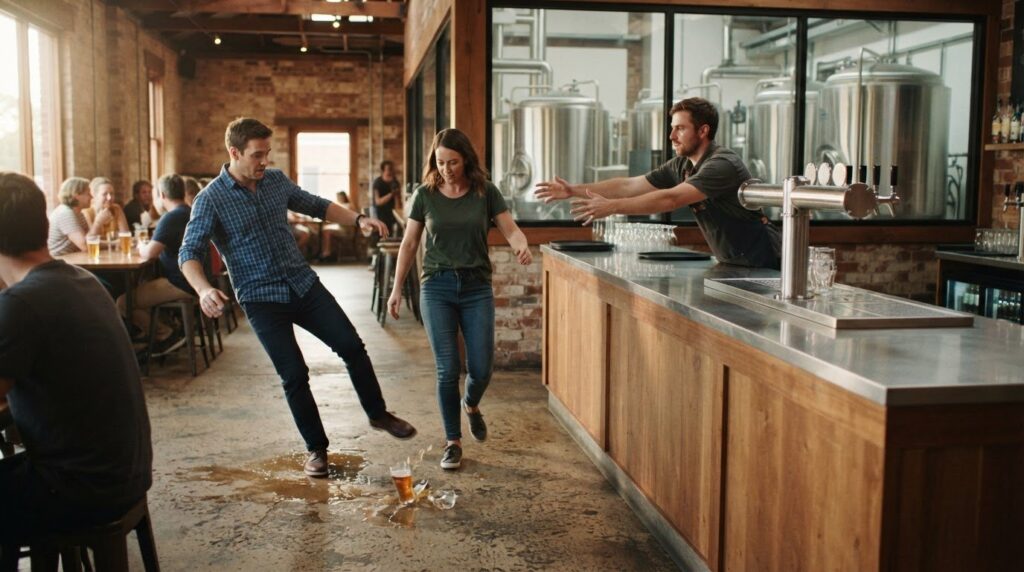
A taproom’s busiest nights can bring unexpected risks. Brewpub liquor liability insurance cost depends on the business’s size, operations, risks and selected cover. Liquor liability may respond to claims for injury or property damage linked to an intoxicated patron after being served alcohol.
If you brew and serve on site, you’re balancing production with a lively public space. That creates a different risk profile from brewing alone, so your cover should reflect how the business operates.
This guide explains who needs brewery insurance, what liquor liability may cover in Australia, and which factors shape the cost. You’ll also see how cover can apply when an intoxicated customer injures someone or damages property.
Key Takeaways
- Map how your brewpub serves and sells alcohol to understand where liquor liability fits alongside other business cover.
- See how claims involving an intoxicated patron could lead to legal defence costs, settlements or property damage expenses.
- Understand why your operations, location, trading hours and coverage limits can shape the cover you need and its cost.
- Learn how specialist brewery insurance can help align protection with your brewpub’s production and public service risks.
First, What is Liquor Liability Coverage?
Liquor liability addresses claims linked to alcohol service. A brewpub’s premium reflects its operations and risk profile, while cover for the business’s own property, equipment and lost income is separate.
Businesses and venues covered
Liquor liability is relevant to businesses that sell, serve or distribute alcohol, including breweries with a taproom, bar or restaurant. It addresses risks linked to alcohol service, not simply beer production. A brewery selling packaged beer still has product and public liability exposures, while on-site pours add risks associated with serving patrons. When reviewing cover, describe activities such as tastings, events and takeaway sales.
Alcohol-related claims
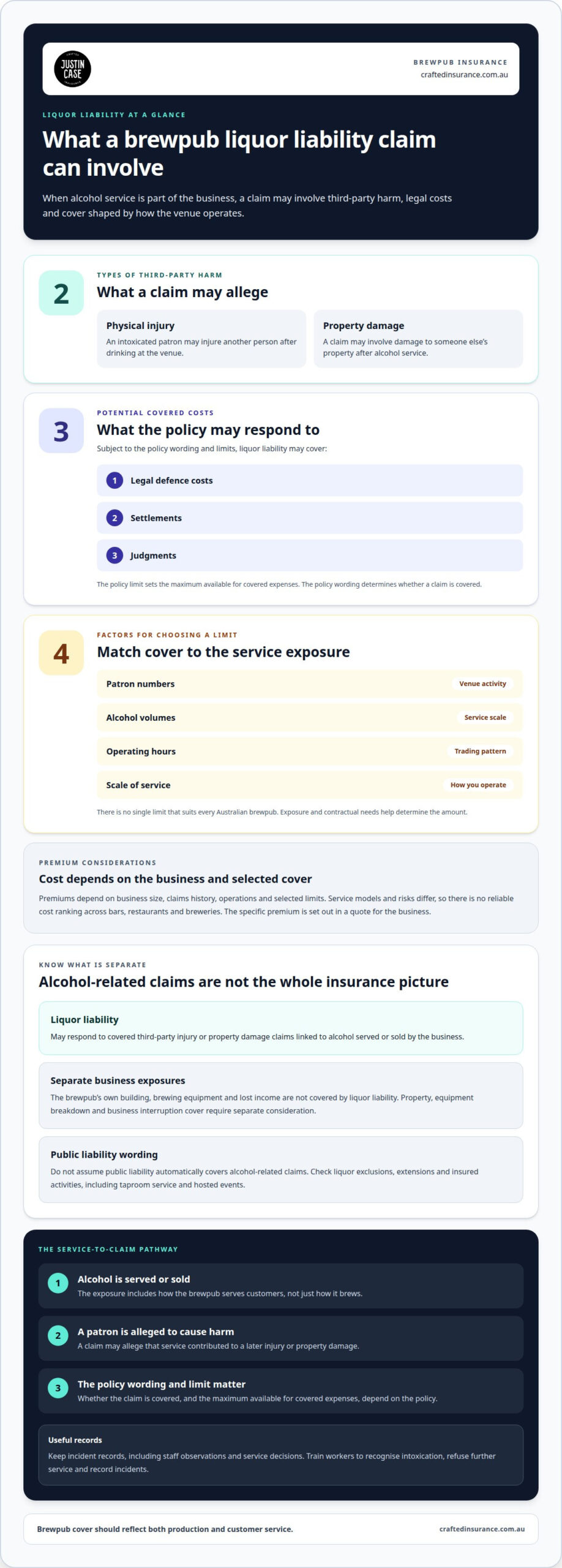
A claim may arise if an intoxicated customer injures someone or damages property after drinking alcohol supplied by the business. Subject to policy terms and limits, liquor liability may cover legal defence costs, settlements and judgments. For example, a claim could allege that a taproom was responsible for serving a patron who later caused third-party damage. The policy wording determines whether the claim is covered. Workers’ injuries are a separate exposure.
Policy inclusion and separate cover
Public liability covers third-party injury or property damage caused by business operations. When selling or serving alcohol is a core activity, liquor liability may need to be added separately. Don’t assume public liability automatically covers alcohol-related claims. Check the wording for liquor exclusions, extensions and insured activities, including taproom service and hosted events. Liquor liability does not cover the brewpub’s own building, brewing equipment or lost income. Those exposures require separate consideration, such as property, equipment breakdown and business interruption cover.
Coverage limits and cost factors
Choose limits with patron numbers, alcohol volumes, operating hours and scale of service in mind. Australian brewpubs don’t have one limit that suits every operation; exposure and contractual needs help determine the amount. Bars, restaurants and breweries share some pricing factors, but their service models and risks differ, so there’s no reliable cost ranking. Premiums depend on business size, claims history, operations and selected limits. The specific premium is set out in a quote for your business.
Claims involving injury and property damage caused by intoxicated customers
An intoxicated patron’s actions can lead to a claim against the brewpub that served them. The claim may involve physical injury, property damage, legal defence costs or compensation.
Intoxicated patron injury claims
Consider a patron who leaves a taproom after drinking and injures another person. The injured person may allege that the venue’s alcohol service contributed to the incident. Liquor liability may respond to covered claims arising from alcohol served or sold by the business, including legal defence costs, settlements and judgments. The policy limit sets the maximum available for covered expenses.
For owners, the key issue is the connection between the alleged injury and the brewpub’s service. A claim may raise questions about what staff served, the patron’s condition and what happened afterwards. Keep clear incident records, including staff observations and service decisions. These details can help explain events if a claim arises. Brewing activity alone doesn’t capture the full exposure when customers also drink on site.
Property damage and risk exposure
An intoxicated customer may damage someone else’s property after drinking at a brewery bar or taproom. For example, a patron could damage a neighbouring business’s property, with a claim alleging their intoxication followed service at the venue. Liquor liability may address covered damage claims and related legal costs. It does not insure the brewpub’s own equipment or building against customer damage.
Insurers consider claims history alongside the venue’s size, operating hours and alcohol-service exposure. A previous claim can be relevant to the risk assessment, as can busy service periods, events and the amount of alcohol involved. Owners can support responsible service by training workers to recognise intoxication, refuse further service and record incidents. Review any contract requirements that affect the liability limit, and ensure the policy description includes both brewing and customer service.
Liquor liability for alcohol sales and service
Alcohol service creates a different exposure from brewing alone. Licensing, staff practices and insurance each have a role in managing it.
Alcohol service and licensing
A brewpub serving beer on site needs to account for alcohol service as well as brewing operations. Liquor licensing and insurance serve different purposes: a licence governs permission to sell or serve alcohol, while insurance may respond to covered claims arising from service.
Licensing requirements depend on the rules that apply in the business’s Australian state or territory. Licence conditions, trading activities and venue setup help define the operation to insure. Breweries and distilleries offering tastings, bars or events should describe those activities accurately, rather than treating production as their only exposure.
Insurance legal requirements
There is no single liquor liability insurance rule that applies to every Australian pub or brewery. Requirements can depend on the jurisdiction and contractual obligations, such as a lease. Separately, businesses serving alcohol may face claims if a patron is injured or property is damaged after being served. Distinguish legal requirements from practical ways to manage financial exposure.
Alcohol surety bond requirements also depend on the legislation that applies to the licence. A bond and an insurance policy are not interchangeable: a bond relates to licensing obligations, while insurance responds to claims covered by its wording. Understand the obligations that apply to your venue and describe its service activities accurately when arranging cover.
Risk reduction starts with your team. Train staff to recognise intoxication, check identification where appropriate, refuse further service when a patron is overly intoxicated and offer non-alcoholic options. Record incidents and service decisions. These steps can help manage over-serving risks, but they don’t replace insurance cover.
Liquor liability addresses alcohol-related claims, not every interruption to operations. A fire or equipment breakdown that halts brewing may cause business interruption losses, which need separate consideration in the wider insurance programme.
What does liquor liability insurance cover for Australian brewpubs?
For an Australian brewpub, liquor liability focuses on claims connected to alcohol served or sold by the business. Subject to the policy’s terms and limit, it may respond when an intoxicated guest causes injury or property damage. The key distinction is that this is third-party liability, not cover for damage to the brewpub’s own assets.
Imagine a guest who becomes intoxicated after drinking in the taproom, then injures someone else. The injured party could make a claim against the venue, alleging its alcohol service contributed to the harm. Liquor liability may help with legal defence costs, settlements and judgments for covered alcohol-related claims. It doesn’t mean every claim will be paid. The policy wording defines what is covered.
Property damage follows the same third-party principle. If an intoxicated guest damages someone else’s property after drinking at the brewpub, the resulting claim may fall within liquor liability cover. The policy limit matters because covered legal expenses and damages draw on the available amount. Check how the wording treats defence costs and whether they reduce the amount available for a settlement or judgment.
Keep the brewpub’s other exposures distinct. A customer’s allegation about alcohol service differs from a fire damaging brewing equipment or a breakdown stopping production. Liquor liability addresses the former. Commercial property and equipment breakdown cover relate to the latter, while business interruption cover may address lost income from a covered disruption. A clear distinction helps owners understand what each policy is intended to handle.
To assess a policy, match its described activities to the real operation: taproom service, bar trade, events and alcohol sales. Then examine exclusions, the limit and how defence costs are treated. These details matter more than a broad label on a schedule. Review brewpub liability cover against your service risks and wider insurance needs.
Crafted Insurance: BrewPub
Crafted Insurance offers its BREWPUB package to Australian venues that brew and serve alcohol on site. A specialist broker can help when your taproom, bar, events or production activities make it difficult to see how liquor liability fits with your other business risks.
Crafted Insurance tailors specialist packages to your operation, including production, sales and public-service exposures. A free insurance risk audit and ongoing risk management can help identify where your cover and day-to-day controls may need attention. If a claim arises, claim advocacy can support you through the process.
Describe how your brewpub operates, from brewing and taproom service to events and sales. Crafted Insurance can assess your risks and help shape an insurance approach around your business. Start a conversation with Crafted Insurance about your brewpub’s insurance needs.
Keep your cover aligned as your brewpub grows
Your operation may change over time. A new service area, longer trading hours or more events can change the risks your insurance needs to reflect. Review your cover whenever the way you brew, sell or serve changes. This gives you a chance to discuss updated activities, policy limits and exclusions before your next busy period.
Understanding your brewpub liquor liability insurance cost is part of reviewing cover, but the premium is only one consideration. Look at how the policy responds to claims your business could face and whether its wording still matches day-to-day operations. Clear details make it easier to discuss cover suited to your business.
For specialist support with brewery risks, contact Crafted Insurance about brewery cover. Take the next step with confidence, and keep your focus on the craft.
Frequently Asked Questions
What should I look for in comparing policies and quotes?
Compare the protection, not just the premium. Check that each quote describes your actual activities, such as taproom service, private functions and takeaway sales. Then compare limits, excesses, exclusions and how legal defence costs affect the available limit. For example, quotes with similar limits may respond differently to an event held outside the usual venue. Read the policy wording alongside your operating plans.
What factors affect brewpub liquor liability insurance premiums in Australia?
A brewpub’s liquor liability insurance cost depends on its size, revenue, location, claims history, operating hours and selected limits. The number of patrons and amount of alcohol involved also shape the exposure. A venue with regular events or extended service hours presents a different operating profile from one with limited taproom service. Insurers consider these details together, rather than relying on one feature alone.
How are liquor liability insurance costs calculated for a brewpub’s turnover and alcohol sales?
Turnover and alcohol sales help describe a brewpub’s scale and exposure, but there’s no single calculation for every business. Insurers also consider service patterns, claims history and selected limits. For example, a brewpub’s revenue may include food, packaged beer and taproom sales, so a clear breakdown helps show how the business earns income and serves alcohol.
What liquor licensing and responsible service rules affect brewpub insurance in each Australian state?
Liquor licensing and service requirements vary across Australian states and territories, so there isn’t one national set of venue conditions to apply everywhere. Your location and licence conditions shape how your brewpub may serve and sell alcohol. For insurance, describe those activities accurately and keep staff procedures aligned with the rules that apply to your venue. This helps the policy reflect the operation you actually run.
What exclusions and risks should Australian brewpubs check in liquor liability policies?
Look closely at exclusions for alcohol-related claims, events, service away from the premises and activities not clearly described in the policy. Check whether defence costs reduce the limit available for damages. Liquor liability differs from product liability for beer-related injury or property damage, and from cover for your own building or brewing equipment. A clear policy schedule helps show which risks fall under each type of cover.
How can an Australian brewpub get quotes and reduce liquor liability insurance premiums?
Before arranging quotes, prepare a clear picture of your venue: describe alcohol sales, taproom hours, events, patron numbers, revenue sources and claims history. Accurate details help insurers assess the same operation. To manage exposure, train staff to recognise intoxication, refuse further service and record incidents. Stronger controls can support a clearer risk assessment, but don’t guarantee a lower premium. Compare the cover and exclusions, not price alone.