
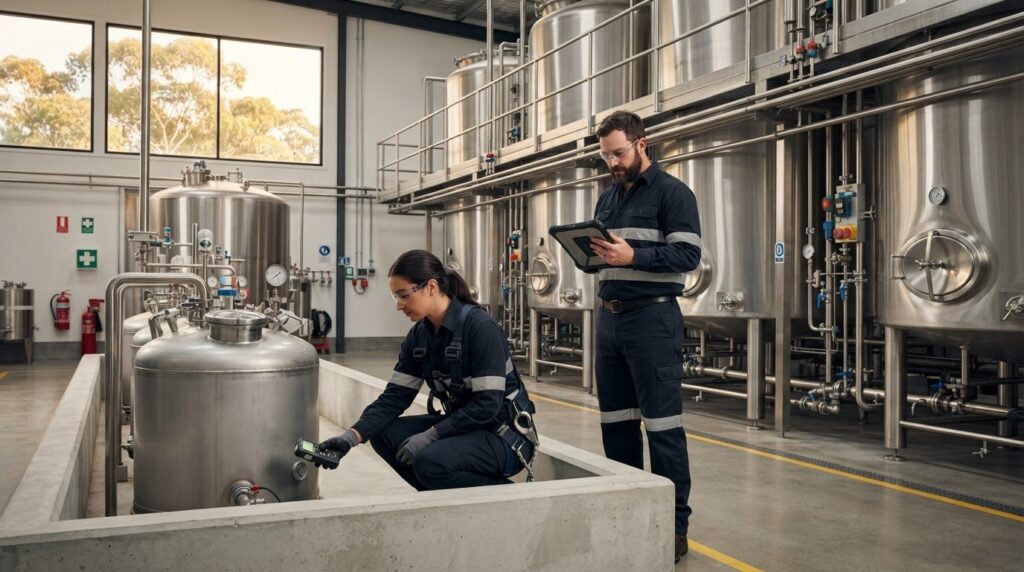
A clean-looking distillery can still hide a serious ignition risk. Effective distillery risk management brings fire protection, flammable-liquid storage and handling, hazardous-area electrical safety, and regular workplace risk assessments together. Before hot work on or near a tank that contains or contained ethanol, the tank must be cleaned and certified to have less than 5 per cent of the lower explosive limit of potable-spirit vapour.
You know craft distilling takes care, skill and plenty of hands-on work. Ethanol vapour, production equipment and visitor areas can also create hazards that deserve as much attention as the next batch.
This guide explains how Australian fire standards, storage rules, electrical safety and everyday distillery hazards fit together. It offers a clear starting point for understanding controls that help protect your people, premises and operations.
Key Takeaways
- Map fire controls to the distillery’s layout, production processes and planned changes, so hazards are addressed before work begins.
- Use alcohol strength, storage volume and the type of liquid to guide safe handling and South Australian placarding or licensing considerations.
- Assess where flammable vapours could be present, then make sure electrical equipment is suitable for those hazardous areas.
- Build regular risk assessments into day-to-day operations, and use specialist risk management support to help protect your people, premises and craft business.
Fire protection and risk management standards
Fire protection involves controls to limit ignition, contain spills and support a safe response. A practical distillery risk management review also considers equipment failures and production downtime.
Flammable Alcohol Vapour Prevention
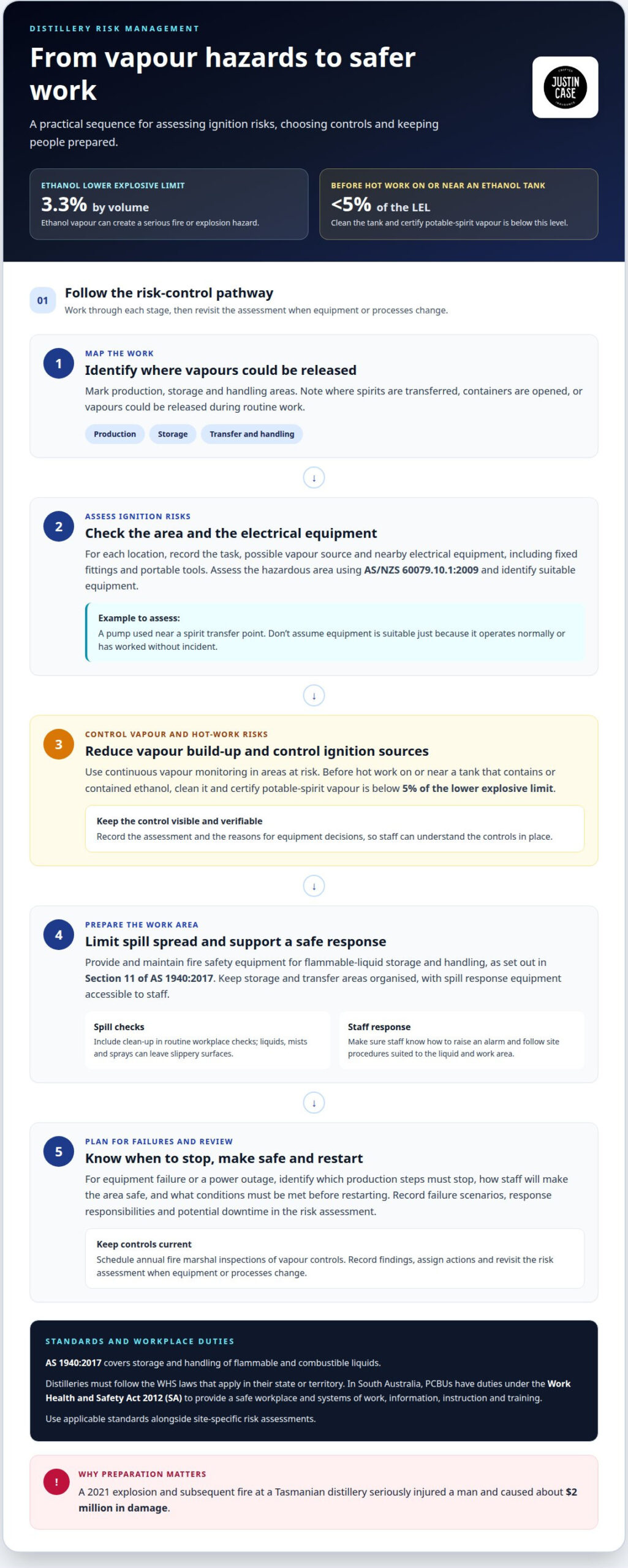
Flammable alcohol vapour prevention means reducing vapour build-up and controlling ignition sources around spirits. Ethanol has a lower explosive limit of 3.3 % volume, so vapour can create a serious fire or explosion hazard. Before hot work on or near a tank that contains or contained ethanol, clean it and certify potable-spirit vapour is below 5 per cent of the lower explosive limit.
Include continuous vapour monitoring in areas at risk, and schedule annual fire marshal inspections of vapour controls. Record inspection findings and assign actions, so a faulty monitor or control does not go unnoticed.
Spill Controls and Fire Equipment
Spill controls limit the spread of flammable liquid, while fire equipment supports an appropriate response to an incident. Under Section 11 of AS 1940:2017, provide and maintain fire safety equipment for flammable-liquid storage and handling.
Keep storage and transfer areas organised, with spill response equipment accessible to staff. Liquids, mists and sprays can leave slippery surfaces, so include spill clean-up in routine workplace checks. Match response steps to the liquid and work area, and make sure staff know how to raise an alarm and follow site procedures.
Fire and Explosion Prevention
Fire and explosion prevention combines hazard checks with controls that reduce ignition and limit incident impact. A 2021 explosion and subsequent fire at a Tasmanian distillery seriously injured a man and caused about $2 million in damage.
Review hazards around tanks, hot work and vapour-producing processes before work begins. For equipment failure or a power outage, identify which production steps must stop, how staff will make the area safe, and what conditions must be met before restarting. Record failure scenarios, response responsibilities and potential downtime in the risk assessment, then revisit them when equipment or processes change.
WHS Laws and Safety Standards
WHS laws and safety standards set workplace duties and technical controls for managing hazards. Australian distilleries must follow the WHS laws applying in their state or territory; in South Australia, PCBUs have duties under the Work Health and Safety Act 2012 (SA) to provide a safe workplace and systems of work, information, instruction and training.
AS 1940:2017 covers storage and handling of flammable and combustible liquids. The DISCUS Safety and Risk Management Committee publishes fire protection resources for new distilleries and facility extensions, including storage and warehouse facilities. Use applicable standards alongside site-specific risk assessments.
Flammable-liquid storage and handling
In South Australia, a Dangerous Substances Licence can be required for specified non-consumptive flammable liquids: more than 120 L of Packing Group I or II substances, or more than 1200 L of Packing Group III substances. Some businesses storing potable spirits may not need a licence if they hold an excise licence, manufacture products subject to Wine Equalisation Tax, or hold a concessional spirit permit.
Storage thresholds don’t settle questions of food safety, product testing or labelling. Assess product composition, production processes and consumer-facing information as separate compliance areas.
Barrel Handling and Storage
Safe barrel handling and storage means keeping barrels stable and planning how they’re moved and stacked. Secure barrels against rolling, and keep storage orderly so staff can move around without disturbing stock.
In South Australia, workplace hazardous-chemical storage must comply with Chapter 7 of the Work Health and Safety Regulations 2012, whether or not a dangerous substances licence is required. Placarding requirements for flammable liquids can vary according to the alcohol strength and quantity stored.
AS 1940:2017 covers storage and handling of flammable and combustible liquids. For bulk potable spirits above 70% alcohol by volume, quantities greater than 60,000 L bring the Standard’s main body into scope, particularly Section 5 on tank storage.
Barrel Handling Safety
Barrel handling safety is about preventing injuries while staff access, move or store barrels. Secure each barrel against rolling, and prohibit staff from climbing on racking systems.
Make safe access part of the storage plan. Keep routes clear around racks, and consider how staff will retrieve barrels without climbing or reaching across unstable stock. Liquids, mists and sprays can also create wet, slippery surfaces, so include spills around barrel areas in workplace checks. These controls help staff handle stock without turning routine movement into a fall or crush hazard.
Electrical safety in flammable zones
Electrical safety in flammable zones means choosing equipment suited to areas where flammable vapours may be present. AS/NZS 60079.10.1:2009 describes hazardous-area assessment for electrical equipment around potable spirits.
Start with a floor plan marking production, storage and handling areas. Note where spirits are transferred, where containers are opened and where vapours could be released during routine work. Compare these locations with the equipment used there, including fixed fittings and portable tools. For example, assess a pump used near a spirit transfer point.
For each location, document the task, possible vapour source and electrical equipment nearby. Use AS/NZS 60079.10.1:2009 to assess the hazardous area and identify suitable equipment. Don’t assume equipment is suitable simply because it operates normally or has worked without incident. Record the assessment and the reasons for decisions, so staff can understand the controls.
- Map the work: mark spirit production, storage and handling points on the distillery plan.
- List electrical items: record equipment used in or near each marked location.
- Review changes: reassess the layout when production steps or equipment locations change.
- Keep records: document findings, control decisions and follow-up actions for the relevant area.
Include inspection and maintenance in the review. Check whether equipment has been moved, replaced or damaged, and whether nearby work has changed. A new transfer point can change where vapours may occur, even if the electrical installation stays the same. Keep the plan current and make it available to those responsible for operating or maintaining the equipment.
Use the review to connect electrical choices with everyday production. Controls work only when staff know which equipment belongs in each assessed location and which changes need a fresh review. That’s the practical foundation of electrical safety around spirits.
Craft distiller risk management
Craft distillery risk management means regularly assessing workplace hazards, operational interruptions and compliance exposures. Treat excise duties as a production-planning and recordkeeping consideration, and build relevant obligations into business controls.
Environmental Risks and Wastewater Disposal
Environmental risk management identifies how distillery activities may affect surrounding land and water. Map wastewater sources, including cleaning and production, and record what each stream contains. Separate streams with different contents, then set handling and disposal procedures based on their composition and discharge route.
Wastewater disposal requirements depend on the location and discharge arrangements. Include them in site operating procedures alongside spill response and waste handling. Review the process when production methods or cleaning products change, so new activities don’t create overlooked disposal risks.
Business Continuity Planning
Business continuity planning sets out how a distillery will respond to disruption and resume essential work. Include equipment failure, power loss, cyber incidents and interruptions to key supplies in the assessment.
For each scenario, identify critical production steps, decision-makers and how staff will communicate. A cyber incident, for example, may affect access to digital records or production systems. Keep recovery steps accessible if those systems are unavailable, and decide which work can safely pause. Record priorities for restoring operations, protecting stock and updating customers or suppliers.
Regular risk assessments help distilleries identify work-related hazards and evaluate associated risks. Turn findings into assigned actions, then revisit them when processes, equipment or business activities change. South Australian PCBUs must provide a safe workplace and systems of work, information, instruction and training under the Work Health and Safety Act 2012 (SA). For potable spirits, certain businesses may not require a dangerous-substances licence if they hold an excise licence, manufacture products subject to Wine Equalisation Tax, or hold a concessional spirit permit.
Bring operational exposures and continuity planning into one review with specialist risk management support.
Crafted Insurance: Nano Brewery
Crafted Insurance helps craft producers connect operational risks with practical risk management and insurance support. Its free insurance risk audit can help identify exposures across production, sales and customer service at breweries, distilleries and brewpubs.
Ongoing risk management and claim advocacy can support you as your operation changes. You can discuss hazards, review your approach and get help navigating a claim, without treating risk management as a one-off checklist.
For a clearer view of your operation’s risks, contact Crafted Insurance.
Make your next risk review count
Turn your review into a working tool, not a document that gathers dust. Assign an owner to each action, record what needs attention and set a date to revisit decisions after changes to your operation.
Consistent follow-through makes distillery risk management part of running the business, not just a task for inspection time. Specialist support can also connect operational risks with insurance cover and advice suited to your craft business.
Crafted Insurance supports Nano Brewery, Micro Distillery and BrewPub businesses with tailored insurance packages and ongoing risk management. If you’re ready to talk through your distillery’s risks, contact Crafted Insurance about distillery risks.
Keep building your craft with a clearer plan for what comes next.
Frequently Asked Questions
What are the main risks in operating a distillery?
Key risks include fires or explosions from alcohol vapour, chemical exposure, confined-space hazards and production injuries. Fermentation can create carbon dioxide, for example, while spills can make floors slippery. Moving barrels, operating bottling machinery and hosting tours also bring distinct hazards. A useful review maps each risk to the task, the people exposed and the controls in place, including risks arising from changes to production or visitor activities.
What fire, explosion, and flammable-liquid controls are required for a distillery in Australia?
Controls depend on the activity, liquid and storage arrangements. For flammable-liquid storage and handling, fire safety equipment should be provided and maintained in accordance with Section 11 of AS 1940:2017. Electrical equipment where potable spirits are produced, stored or handled should suit the hazardous area described in AS/NZS 60079.10.1:2009. In South Australia, placarding thresholds also depend on alcohol strength and stored volume.
How should distilleries manage alcohol vapour, confined spaces, and chemical exposure?
Match controls to each exposure: monitor areas at risk of flammable alcohol vapours, and assess confined-space work before entry. The distillery risk assessment template recommends quarterly rescue drills for confined-space entry and CO₂ monitors with alarms, with tank-area entry restricted during peak fermentation. Store caustics, acids and sanitisers in locked, ventilated areas, and keep their safety data sheets available to staff.
What risk management systems and emergency plans are recommended for small distilleries?
A practical distillery risk management system starts with regular assessments, clear responsibilities and recorded follow-up actions. Build emergency plans around realistic events, such as a spill, equipment failure or a worker needing rescue from a confined space. The distillery risk assessment template recommends interlocks on bottling and labelling machinery, lockout/tagout during maintenance, and daily line inspections with servicing logged. Review the plan when equipment, processes or visitor activities change.