
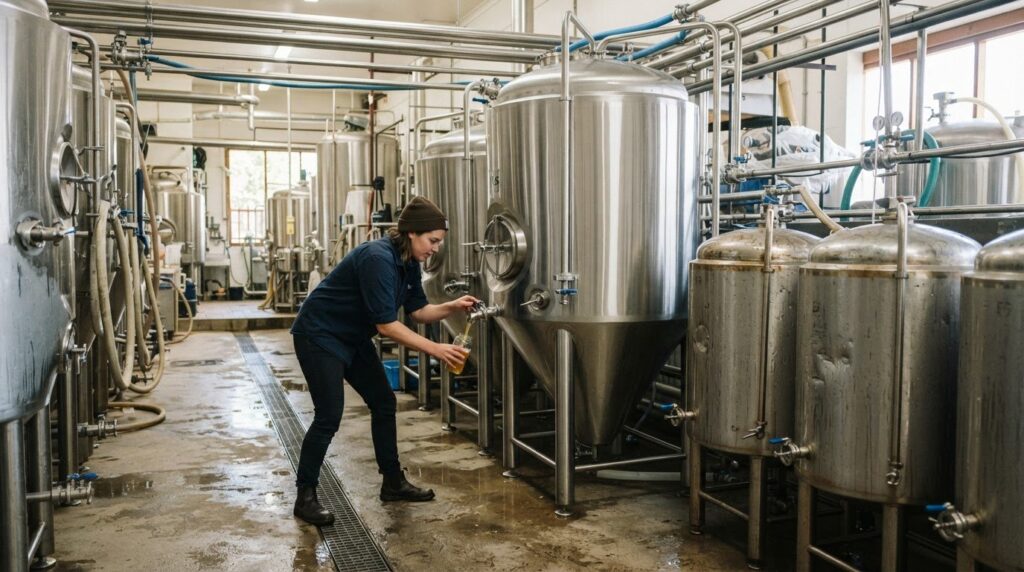
Growth brings more than bigger batches. Insurance for an expanding brewery operation should account for property, brewing equipment, machinery breakdown, business interruption, public and products liability, and risks associated with serving alcohol. The right mix depends on how you brew, sell and welcome people on site.
It’s natural to focus first on the beer, new tanks and extra staff. But an equipment failure or customer claim can disrupt the whole operation, not just one part of it.
This guide explains the cover to consider as your brewery grows, including the difference between property and machinery breakdown insurance, and why business interruption cover can matter when production stops. It also looks at liability, product recall and other cover that may fit. Use it to map the risks around your next growth stage and understand when specialist broker support can help bring the pieces together.
Key Takeaways
- Understand how business interruption cover can help address lost income and ongoing expenses when a covered event disrupts brewing or sales.
- See why growth makes accurate property and equipment values important when arranging cover for tanks, brewing systems and other assets.
- Learn how machinery breakdown cover can respond to equipment damage and the production downtime that may follow.
- Find out how a specialist brewery broker can help align cover with your operation’s changing risks and business plans.
What insurance should I consider for my craft brewery?
Choosing insurance for expanding a brewery operation means matching cover to your production, sales, staff and visitors. Property, equipment, liability and business interruption policies address different risks as your operation changes.
Business interruption cover
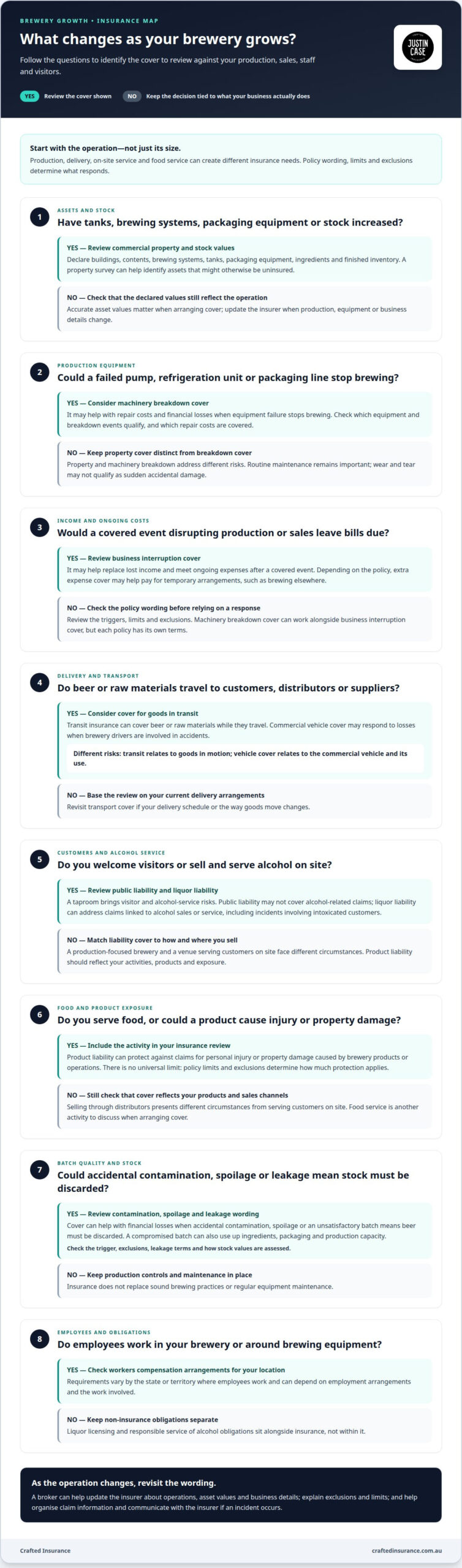
Business interruption cover may replace lost income and help meet ongoing expenses after a covered event disrupts trading. Equipment failure could stop production, delay orders and leave wages or bills due. Depending on the policy, extra expense cover may help pay for temporary arrangements, such as brewing elsewhere. Check the wording for triggers, limits and exclusions. Renewal dates also affect cash flow: several policies may renew in one month, alongside quarterly BAS obligations.
Insurance needs by brewery type
Insurance needs change with how a brewery makes, sells and serves beer. A production-focused craft brewery may rely heavily on equipment, stock and supply arrangements. A venue with a taproom also faces risks involving visitors, alcohol service and public liability. Food service is another activity to consider when arranging cover. Your business model matters because insurance for expanding a brewery operation should reflect what you actually do, not just your name or size.
Employee cover and workplace obligations
Workers compensation arrangements depend on the state or territory where employees work, so requirements vary across Australia. The right setup can also depend on employment arrangements and work around brewing equipment. Liquor licensing and responsible service of alcohol obligations sit alongside insurance, not within it. Public liability may not cover alcohol-related claims. Liquor liability can address claims linked to alcohol sales or service, including incidents involving intoxicated customers.
Cover for production changes
When production increases or new equipment arrives, a broker can update the insurer about your operations, asset values and business details. This helps keep cover aligned with your current setup. A broker can explain exclusions and identify risks in the wording, including limits affecting equipment or interruption claims. If an incident occurs, the broker can help organise claim information, communicate with the insurer and advocate for your brewery through the claims process.
Brewery property and equipment coverage
As your brewery grows, tanks, brewing systems, stock and delivery arrangements all add to the assets at risk. Property, transit and equipment cover each address a different part of that picture.
Commercial property and stock
Commercial property cover can protect brewery buildings, contents and stock against covered damage or loss. Accurate values matter: when seeking a quote, declare your business assets so the proposed cover can reflect them. Include brewing systems, tanks, packaging equipment, ingredients and finished inventory in the discussion. A property survey can also help identify assets that might otherwise be uninsured. Liability is separate and covers claims involving injury or property damage caused by brewery products or operations.
Spoilage and leakage cover
Contamination and spoilage cover can help with financial losses when accidental contamination, spoilage or an unsatisfactory batch means beer must be discarded. A compromised batch can tie up ingredients, packaging and production capacity. Leakage can also damage stock or property, but the policy wording determines which losses are covered. Review the wording for the event that triggers cover, exclusions and how stock values are assessed.
Transport creates another exposure. Transit insurance can cover beer or raw materials while they travel to customers, distributors or suppliers. Commercial vehicle cover may respond to losses when brewery drivers are involved in accidents. These policies address different risks: transit relates to goods in motion, while vehicle cover relates to the commercial vehicle and its use. A growing delivery schedule can make both relevant.
Equipment breakdown cover can respond to sudden and accidental equipment damage. It’s distinct from property cover, so the policy details matter for brewing machinery, including what counts as breakdown and which repair costs are covered. Routine maintenance remains important because wear and tear may not qualify as sudden accidental damage. A specialist brewery property and equipment review can help map assets, stock and transport risks to the operation.
Is insurance for machinery breakdown really necessary to consider?
Machinery breakdown cover may help with repair costs and financial losses when equipment failure stops brewing. A failed pump, refrigeration unit or packaging line can disrupt production, delay orders and affect income. The policy wording sets out which equipment and breakdown events qualify, as well as any exclusions. This cover can work alongside business interruption insurance, which may help with lost income and ongoing expenses after a covered event.
Product liability insurance can protect against claims for personal injury or property damage caused by brewery products or operations. There is no universal limit: it should reflect your activities, products and exposure, including how and where you sell beer. A brewery selling through distributors faces different circumstances from one serving customers on site. Policy limits and exclusions determine how much protection applies to a claim.
Contamination and spoilage cover addresses financial losses when accidental contamination, spoilage or an unsatisfactory batch has to be discarded. A compromised batch, for example, may mean losing both finished beer and the ingredients used to make it. Cover can help with the resulting stock loss, subject to the policy terms. Regular equipment maintenance and careful production controls also matter, because insurance does not replace sound brewing practices.
Product recall cover can help with costs associated with recalling defective or contaminated beer, including logistics and public relations. Product withdrawal expense cover may respond to the cost of removing products from shelves when a liability case requires a recall. These covers address related but distinct expenses, so the wording matters. A written recall plan can help your team act promptly, identify affected stock and coordinate communications if a product issue arises.
For an expanding brewery, the key is understanding how equipment damage, production downtime and product issues connect. Keeping breakdown, interruption and recall cover aligned can help address different losses without assuming one policy covers them all.
Brewery insurance brokers
A specialist insurance broker helps connect policy choices with your brewery’s actual operations. That matters when production grows, a taproom opens or distribution expands, because each change can alter the risks insurers assess.
Start with the operating picture. A broker can map brewing, packaging, storage, deliveries, alcohol service and public access, then identify relevant cover. For example, a brewery supplying retailers may need to discuss stock in transit, while a venue serving patrons needs to consider public liability and alcohol-related risks. A product recall plan also raises questions about recall expenses and which policy responds.
Read policy wording closely. A broker can explain exclusions, conditions, sub-limits and the events that trigger cover, then identify gaps between policies. For example, property cover and machinery breakdown cover can respond to different causes of loss. A broker can also help ensure declared equipment and stock values reflect your current assets, rather than an earlier, smaller setup.
At renewal, updated production, revenue, equipment and sales details help insurers assess your business as it stands now. A broker can coordinate those details and explain how changes may affect terms or premiums. That’s useful when a new tank, delivery route or public tasting area changes your risk profile.
If an incident leads to a claim, a broker can help organise relevant records, communicate with the insurer and advocate for your brewery. A customer injury, damaged equipment or contaminated batch may involve different evidence and policy sections. Clear incident details and production records can help move the claims discussion forward.
Choose a broker who understands craft breweries and can explain the reasoning behind each recommendation in plain language. For support aligning cover with your operation, review your brewery insurance.
Crafted Insurance
Crafted Insurance helps Australian breweries bring cover into line with changing production, equipment and sales risks. As your operation grows, its specialist broker support can help assess the exposures linked to new assets, brewing activity and customer-facing services.
Through risk audits, claim advocacy and ongoing risk management, Crafted Insurance helps brewery owners understand where their cover may need attention. Its specialist packages include NANO BREWERY, LOCAL CRAFT BREWERY and BREWPUB, tailored to production, sales and public service risks.
If your brewery is adding capacity or reviewing its protection, start a conversation with Crafted Insurance about your operation and its insurance needs.
Plan your next stage of growth
Growth rarely happens in a straight line. New tanks, a wider delivery footprint or a busier taproom can each change the shape of your operation. Treat insurance as part of each growth decision, not paperwork to revisit only after something goes wrong. A timely review gives you a clearer picture of what your business needs before its next move.
Crafted Insurance supports Australian craft breweries with insurance advice shaped around the operation’s development. Its offerings include Nano Brewery, Micro Distillery and BrewPub cover. For insurance for expanding a brewery operation, a specialist broker can help connect growth plans with the risks that come with production, sales and public service.
When your plans are taking shape, make the next conversation practical: discuss what’s changing and where cover needs to keep pace. Contact Crafted Insurance about brewery cover and take your next step with confidence.
Frequently Asked Questions
What risks can Breweries Insurance Protect against?
Brewery insurance can address property damage, equipment failure, trading interruptions and liability claims. For example, a fire affecting a packaging area could damage equipment and interrupt production, while a customer injury could lead to a public liability claim. Separate covers respond to different losses, so don’t assume one policy covers every part of that scenario. The policy wording sets the boundaries.
How can an insurance broker compare brewery policies and quotes?
An insurance broker can compare policies against the same brewery operations and declared asset values. That means looking beyond the premium to cover limits, excesses, exclusions and how each policy defines an insured event. For example, two quotes might treat stock damage or machinery failure differently. A side-by-side review helps identify those differences and shows whether a lower premium comes with narrower protection.
What insurance does an expanding brewery in Australia need?
An expanding Australian brewery commonly considers property, public and products liability, business interruption, workers compensation and machinery breakdown cover. Management liability, cyber, product recall, commercial vehicle and goods-in-transit insurance may also suit particular operations. A brewery adding online sales, for example, has different exposures from one adding a delivery vehicle. Your insurance mix should reflect the business’s activities, assets, staff and customers.
Does brewery insurance cover equipment breakdown, stock spoilage, and business interruption?
It can, but these losses may sit under separate covers with different triggers. Machinery breakdown cover can address repair costs after covered equipment damage, while spoilage cover can address accidental contamination or unsatisfactory batches that must be discarded. Business interruption cover may help with lost income after a covered event stops trading. A failed cooling system, for instance, could raise questions about equipment, stock and downtime.
What insurance is needed when adding a taproom, restaurant, or outdoor area?
Adding customer-facing space makes public liability and alcohol-related risks important parts of the insurance discussion. Property cover may also need to reflect new contents, furniture or equipment. A restaurant adds food service to the brewery’s activities, while an outdoor area changes where patrons gather. These operational changes can affect how insurers assess the business, so reflect the new setup in your cover.
Does brewery insurance cover product recalls, contamination, and food safety claims?
Product recall cover can help with expenses such as logistics and public relations after defective or contaminated beer must be recalled. Contamination and spoilage cover can address losses from affected batches, while products liability can respond to claims involving injury or property damage caused by brewery products. Food safety concerns can involve more than one policy. The wording determines which costs and claims each cover addresses.