
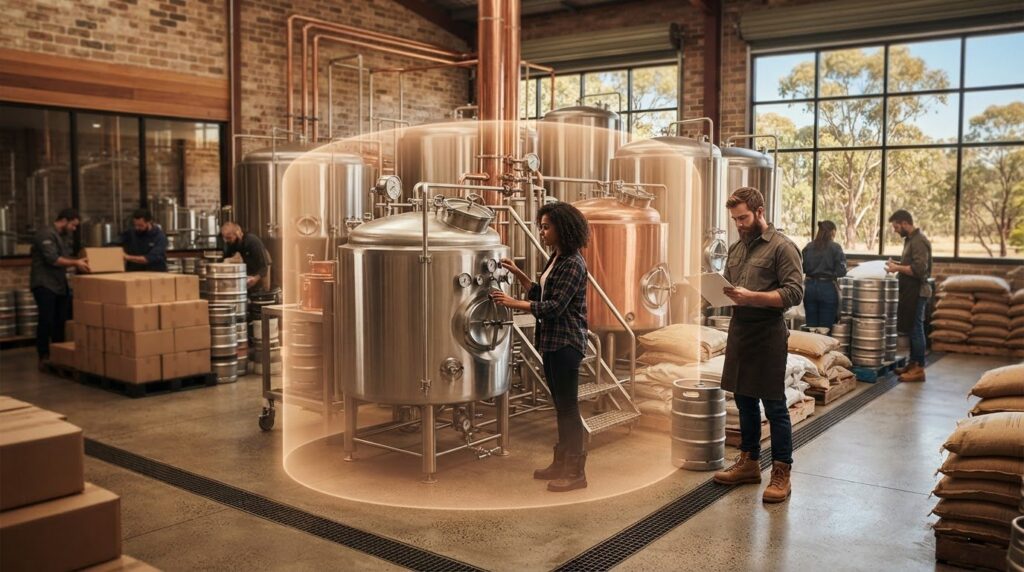
Your brewing kit isn’t just gear. If it fails, production can stop and sales can take a hit. For an Australian craft brewery, local brewery insurance can be tailored to premises and production equipment, stock, business interruption, public and product liability, and events or goods in transit. The right mix depends on how you brew, sell and serve.
A brewery brings together ingredients, machinery, staff, taproom service and deliveries. If your policy misses one of these risks, you could be left with a costly gap.
This guide covers insurance to consider, factors that shape your policy and how broker support can help if you need to make a claim. It also explains when specialist advice can help you protect your business without getting bogged down in insurance jargon.
Key Takeaways
- Match cover to your brewery’s setup, from premises and brewing equipment to stock and business interruption.
- Compare policy exclusions as well as premiums, and consider how equipment failure could disrupt production and sales.
- Review public and product liability needs alongside the way you sell, serve and distribute your beer.
- Plan for event-specific risks such as equipment breakdown, stock loss and theft at festivals or markets.
- Keep clear records of your property and operations to help your broker understand your risks and support you through a claim.
Why Choose Specialised Brewery Insurance?
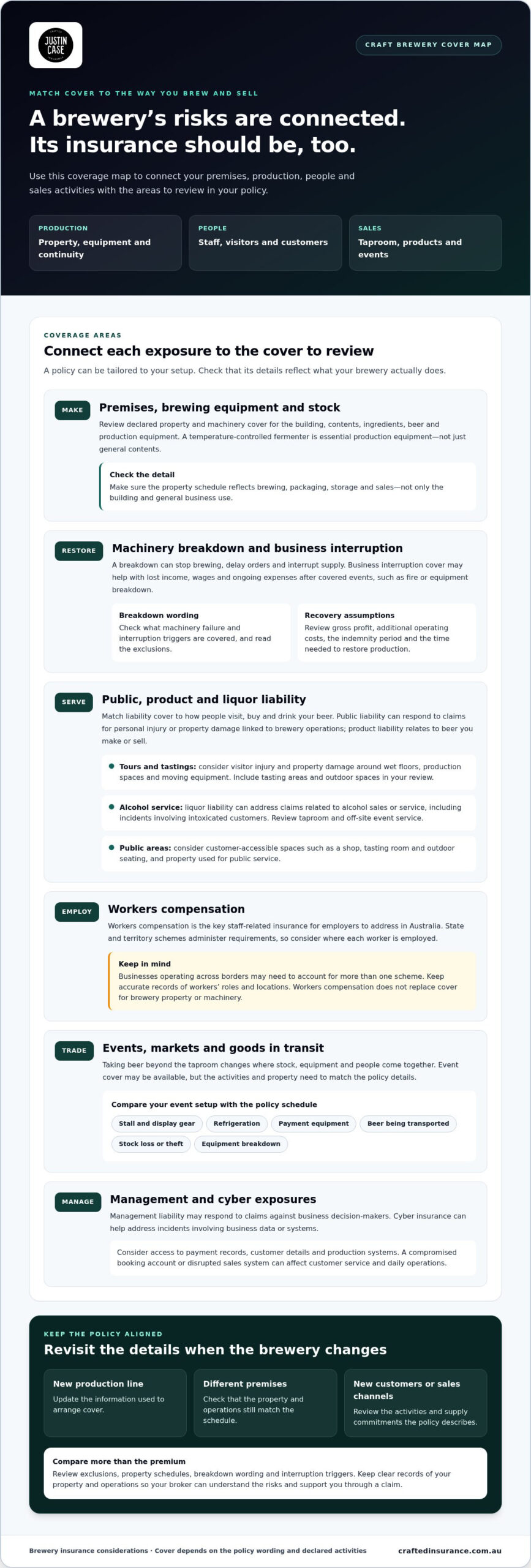
Brewing brings property, contents, machinery and customer activities together under one roof. Specialist local brewery insurance can account for these connected risks and their effects on production and sales.
Specialist and Standard Business Cover
A standard business policy may cover premises and contents, but its terms might not reflect the brewing process. Specialist cover can bring declared property, machinery and business interruption into a brewery-focused review. For example, a temperature-controlled fermenter is essential production equipment, not just general contents. Compare the property schedule, breakdown wording, interruption triggers and exclusions. Check that the policy reflects brewing, packaging, storage and sales, not only the building and its general business use.
Cover for Different Business Sizes
Cover should reflect your operation’s scale, assets and supply commitments. A nano brewery might rely on a compact brewhouse and direct sales, while a larger operation may have more production equipment, stock and wholesale orders to protect. When you add a production line, change premises or begin supplying new customers, update the information used to arrange cover. That helps keep your policy aligned with the business as it grows, rather than relying on assumptions from an earlier stage.
Equipment Failure and Lost Profits
A machinery breakdown can stop brewing, delay orders and interrupt supply. If a chiller fails, for example, production may not restart until repairs are complete. Business interruption cover can help with lost income, wages and ongoing expenses after covered events, such as fire or equipment breakdown. Review how the policy calculates gross profit and additional operating costs. Consider the indemnity period and how long it may take to restore production. These details connect equipment loss to its wider financial impact.
Staff and Worker Insurance Requirements
Workers compensation is the key staff-related insurance for employers to address in Australia. State and territory schemes administer requirements, so consider the jurisdiction where each worker is employed. Businesses operating across borders may need to account for more than one scheme. Keep accurate records of workers’ roles and locations, then assess your arrangements against the applicable requirements. Workers compensation does not replace cover for damage to brewery property or machinery.
Australian breweries should consider machinery breakdown cover because failure can delay operations and disrupt supply obligations. Equipment failure may require repair or replacement, suspend brewing and cause lost sales revenue. Crafted Insurance recognises that gross profit, additional operating costs, the indemnity period and production restoration time are vital business interruption considerations.
What insurance should I consider for my craft brewery?
Start with the people who visit, buy and drink your beer. Then match liability cover to how your brewery makes, serves and sells its products.
Public and Product Liability
Public liability can respond to claims for personal injury or property damage linked to brewery operations. Product liability addresses claims connected with beer you make or sell. For instance, a visitor could slip in a tasting area, or a customer could allege that a packaged product caused harm. Review which activities the policy treats as insured, including production, tastings, deliveries and retailer sales.
Tours and Tastings Liability
A brewery tour brings guests near production spaces, wet floors and moving equipment. Liability cover tailored to tours can address visitor injury and property damage claims during events. Walk the route as a guest would, mark restricted areas and keep paths clear. Plan safe routes to help reduce exposure. Include tasting areas and outdoor spaces in your review, not just the brewhouse.
Patron Intoxication and Liquor Liability
Serving alcohol creates different liability exposures from selling sealed cans. Liquor liability can protect against claims related to alcohol sales or service, including incidents involving intoxicated customers. For example, a patron might cause injury or damage after drinking at a tasting. Review how the policy treats service in your taproom and at off-site events. Train staff to recognise over-serving and manage service consistently.
On-Site Liability and Property Damage
A brewery open to the public needs to consider both general liability and damage to its premises. A customer could be injured in a shop, while an event guest might damage a display or fit-out. Review all customer-accessible areas, from the tasting room to outdoor seating. Separate visitor routes from production zones, and make sure the insurance schedule reflects property used for public service.
Management liability and cyber insurance address other commercial exposures. Management cover may respond to claims against business decision-makers, while cyber cover can help address incidents involving business data or systems. Consider who can access payment records, customer details and production systems. A compromised booking account or disrupted sales system can affect both customer service and daily operations.
Map each activity to its liability exposure: production, public access, alcohol service and online transactions. A brewery risk management review can help organise those exposures into a practical cover discussion.
Cover for trade fairs, festivals and markets
Taking beer beyond your taproom changes where stock, equipment and people come together. Before a festival, farmers’ market or trade fair, compare the event setup with your insurance schedule. Include the stall, display gear, refrigeration, payment equipment and beer you’ll transport. Brewery insurance can include cover for attending events, but the activities and property need to match the policy details.
At a beer festival, a damaged keg, stolen stock or broken serving equipment can disrupt trading. Think through the day from loading your vehicle to packing up. Record what leaves the brewery, where it will be stored and who handles it. This gives you a practical inventory if stock or equipment goes missing, and helps identify where transit, property or liability insurance may apply.
Railway-arch premises call for a close look at the exact brewing and customer areas. Separate the production floor, storage space and public-facing section in your asset records. Note equipment kept in shared or hard-to-access areas, along with stock stored away from the main premises. Accurate details help align declared property and contents with your brewery’s actual layout and operations.
Beer faces spoilage and leakage risks beyond the brewery, too. A damaged tap line at a market could waste a keg, while temperature changes during transport may affect saleable stock. Review how the policy treats accidental stock damage, contamination and spoilage. Keep batch records and note the quantity and type of stock taken to each event. These details help explain what was affected if a loss occurs.
Machinery breakdown matters at temporary events as well as at the brewery. A failed portable chiller can leave beer warm, while a faulty dispensing system can stop service. Consider whether event equipment is included in declared property and how breakdown cover responds away from your premises. Essential equipment failing back at the brewery can also affect production and delay orders after the event.
Before committing to an event, work through a short risk review:
- List beer, ingredients and equipment travelling to the venue.
- Identify who is responsible for setup, serving and pack-down.
- Record where stock will be stored and how it will be kept secure.
- Review event activities, including tastings, sales and public access.
- Update your records when a new event adds equipment or changes operations.
This approach helps brewery owners spot gaps between everyday premises cover and event activities. It also gives your broker clearer information about accidental damage, stock loss, machinery and liability exposures before you book the next festival.
Brewery property and production equipment
Your brewery’s property schedule should reflect the assets that keep production moving. Cover may include the brewhouse, refrigeration, canning or bottling equipment, fit-out and other declared property. Compare the schedule with your actual premises, including production areas, storage and customer spaces. An asset list helps identify equipment or property that may need to be declared.
Start with the equipment that would be hardest to replace or work around. A refrigeration unit, fermenter or bottling line, for example, could affect several brewing stages if damaged. Record each item’s location, use and value, and update the list after a purchase or fit-out change. Account for property kept away from your main premises, including stock stored elsewhere.
Production equipment and property damage can overlap. A burst bottle or barrel may damage nearby contents, while broken glass can create an injury risk and waste product. Consider how the policy treats damage caused by bursting bottles or barrels. Review the wording for property kept outdoors at insured or customers’ premises, including empty vessels, and note where those items are stored.
Stock needs attention, too. Beer, hops, grain or malt may be stored at a third party’s premises, while finished products travel to customers, distributors or suppliers. Cover can extend to qualifying hops, grain or malt stored in a secure building at another premises. Goods-in-transit cover can address damage, spoilage or loss during transport. Keep dispatch records and stock details to help establish what was affected.
Product recall and withdrawal bring different operational pressures. If defective or contaminated beer needs to be recalled, product recall cover can assist with costs such as logistics and public relations. Consider how a withdrawal would work in practice: identify affected batches, trace where they went and communicate with distributors. Batch records and dispatch details can help organise these steps while your business manages the interruption.
Before renewal, check the asset schedule against a real recovery scenario. If a canning line breaks down, list the equipment needing repair, the stock at risk and the production stages delayed. Then review how property damage, machinery and interruption cover work together. This makes potential gaps easier to spot, especially when equipment, stock and premises are insured under different parts of the policy.
Insurance broker services and claims support
Brewery owners make beer, manage staff and serve customers, but policy wording takes a different kind of focus. An insurance broker connects your operating details with suitable insurance options, then helps explain how cover responds when something goes wrong. That support matters for breweries, distilleries and businesses combining production with brewery tours or tastings.
A useful review starts with how your business actually runs. List your production, sales and public activities, then note where each risk sits. A broker can use this picture to assess policy wording, identify potential gaps and organise a risk review around your premises, equipment, stock and customers.
Bring practical records to the discussion. For example, prepare:
- A current list of brewing equipment, fit-out and other business property.
- Details of stock held at the brewery, at third-party premises and in transit.
- A summary of public activities, such as tastings, tours and festival stalls.
- Notes on recent changes, such as new products, suppliers or sales channels.
These details connect insurance cover to your real operations, rather than an outdated description of the business. They also give your broker a clearer basis for discussing exclusions, limits and business interruption needs.
Claims support is where preparation becomes especially useful. After an unforeseen event, gather relevant records, describe what happened and keep evidence such as repair reports, invoices, photographs and stock logs. A broker can help organise claim information, explain policy terms and advocate for you during claim discussions. Clear records make it easier to show how damage affected production, sales or brewery tours.
Consider a refrigeration breakdown that spoils stored beer and delays an order. The claim could involve damaged equipment, affected stock and interrupted operations. A broker can help separate these elements, identify the relevant policy sections and present supporting details. Claims decisions still depend on policy wording and evidence, so accurate records matter.
Broker support is valuable before a claim, too. A risk audit can flag changes that need attention, such as storing ingredients off-site or adding a public tasting area. Review cover after a significant change, and make sure your broker understands how the new activity affects production, customers and property. The same disciplined approach helps distilleries manage their distinct operating exposures.
If you want to map your brewery’s risks and understand the claims support available, talk with a specialist brewery insurance broker.
Crafted Insurance: Nano Brewery
Crafted Insurance helps Australian craft breweries match insurance to their production, sales and public service risks. Its NANO BREWERY package is designed for smaller brewing operations, while LOCAL CRAFT BREWERY can suit businesses with a different scale or setup.
Turn to Crafted Insurance when you’re reviewing cover for premises, production equipment, stock, events or customer-facing activities. Risk audits and ongoing risk management help identify exposures as your operation changes. If an incident leads to a claim, claims advocacy can help you work through the process and present the relevant information.
Bring a clear picture of your brewery’s assets, activities and recent changes to start a focused discussion. Contact Crafted Insurance to talk through your brewery’s insurance needs.
Make your next review count
Your brewery changes as new products, sales channels and events come into play. Make your next policy review a working session: bring current operations into focus, identify what has changed and decide which risks need attention first. That gives local brewery insurance a practical purpose, not just a place in the paperwork.
Crafted Insurance supports specialist operations with packages including NANO BREWERY, MICRO DISTILLERY and BREWPUB. Its risk audits, claims advocacy and ongoing risk management can help you organise the details and stay focused on making beer.
Ready to discuss cover for your operation? Contact Crafted Insurance to discuss cover, and take the next step with a clearer view of your brewery’s needs.
Frequently Asked Questions
Am I covered for expansion of my business?
Expansion can change the property, stock, production and activities your policy needs to reflect. Adding a canning line, opening a tasting room or starting wholesale deliveries can alter your risk profile. Keep a record of new equipment, premises changes and sales channels, then update your insurance details. This helps ensure the policy schedule reflects your current brewery, not an earlier version of it.
Are there any exclusions on my brewery insurance policy?
Yes. Exclusions and limits depend on the policy wording, so review them alongside the listed cover. Pay close attention to equipment breakdown, stock spoilage, goods in transit and public activities. A lower premium may come with more exclusions, so compare what each policy leaves out, not just its price. For example, check whether stock lost during transport is treated differently from damage at your premises.
How do brewery insurance claims work?
Start by notifying the insurer or your broker and recording what happened. Gather evidence such as photographs, repair reports, invoices, stock records and relevant delivery documents. If a failed refrigeration unit spoils a batch, for example, document the equipment damage and affected stock separately. A broker can help organise claim information and advocate for you, while the insurer assesses it against the policy wording.
Is insurance for machinery breakdown really necessary to consider?
Yes, consider it if production depends on machinery that would be difficult to work around. A failed chiller, pump or canning line can interrupt brewing and delay supply commitments. Machinery breakdown cover may help with equipment repair or replacement, while business interruption cover may address related income losses after a covered event. Review how each part responds, because equipment damage and lost income are separate claim considerations.
Is the financial rating of an insurer an important factor?
Yes, an insurer’s financial rating is one factor to weigh when comparing cover. It can indicate financial strength, but it doesn’t show whether a policy fits your brewery’s risks. Read the policy wording, exclusions, limits and claims process as well. For example, compare how different policies treat the same equipment breakdown, rather than choosing on rating alone.
What risks can brewery insurance protect against?
Brewery insurance can address risks affecting property, production, stock, customers and sales. Examples include fire damage to premises, equipment breakdown, spoiled beer, accidental contamination, theft at an event and injury claims linked to brewery operations. Goods-in-transit cover may also respond to loss or damage while beer or ingredients are travelling. The risks addressed depend on the cover selected and the events described in its terms.
What types of insurance do Australian breweries need?
Consider property and contents, machinery breakdown, business interruption, public and product liability, stock, product recall and goods in transit. Australian breweries may also need commercial vehicle cover, according to Marsh. The mix depends on how you brew, store, transport and sell. A brewery delivering its own kegs, for example, has different vehicle and transit exposures from one selling only at its premises.
What does brewery insurance typically cover?
A policy may combine cover for declared premises, fit-out, brewing equipment, stock and liability, with options for business interruption or events. Some policies can also address contamination, product recall or goods held away from the brewery. Check the schedule to see which assets and activities are included, and note any limits or exclusions. A taproom, market stall and wholesale delivery may each need consideration.