
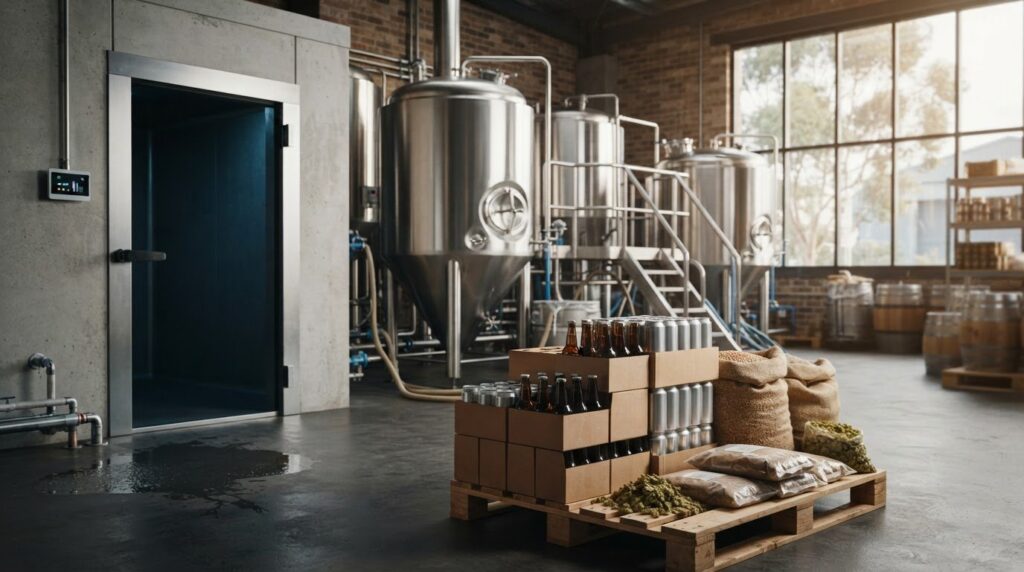
A cold-room failure can turn good beer into a costly stock loss. Brewery stock insurance can cover finished beer, ingredients, packaging and work in progress against insured events. If a glycol system or cold room breaks down and spoils beer, stock deterioration and machinery breakdown cover may both matter, subject to the policy terms.
Stock is only part of the picture. A production stoppage can affect sales, wages and ongoing costs, while contamination, damaged packaging or disrupted deliveries create other headaches. You’ve put too much care into every batch to leave these risks as an afterthought.
This guide explains which insurance to consider for an Australian craft brewery, how stock cover may respond and what can shape premiums and claims support. We’ll cover practical risks behind the policy wording, from equipment breakdown and spoilage to public-facing operations, so you can see how your protection needs to fit.
Key Takeaways
- Consider spoilage, machinery breakdown and business interruption cover together to address different impacts when production is disrupted.
- Map your finished beer, ingredients, packaging and work in progress so you can identify the stock exposures your policy needs to address.
- Production volume, stock and plant values, location, claims history and distribution arrangements can all affect premiums.
- Read policy wording and the Product Disclosure Statement closely, especially for exclusions and the time needed to restore production.
- Specialist broker support can help connect your brewery’s risks with suitable cover and assist with claims advocacy.
What insurance should I consider for my craft brewery?
Brewery stock insurance can address insured losses to beer stock, including spoilage or deterioration. For Australian breweries, the right mix may also include machinery breakdown and business interruption cover.
Spoilage and contamination cover
Contamination, leakage and temperature changes can make a finished batch unusable. Spoilage cover may help with financial losses from accidental contamination, spoilage or unsatisfactory batches, subject to the policy wording. Check whether the cover applies to finished beer and the cause of loss, not just equipment damage.
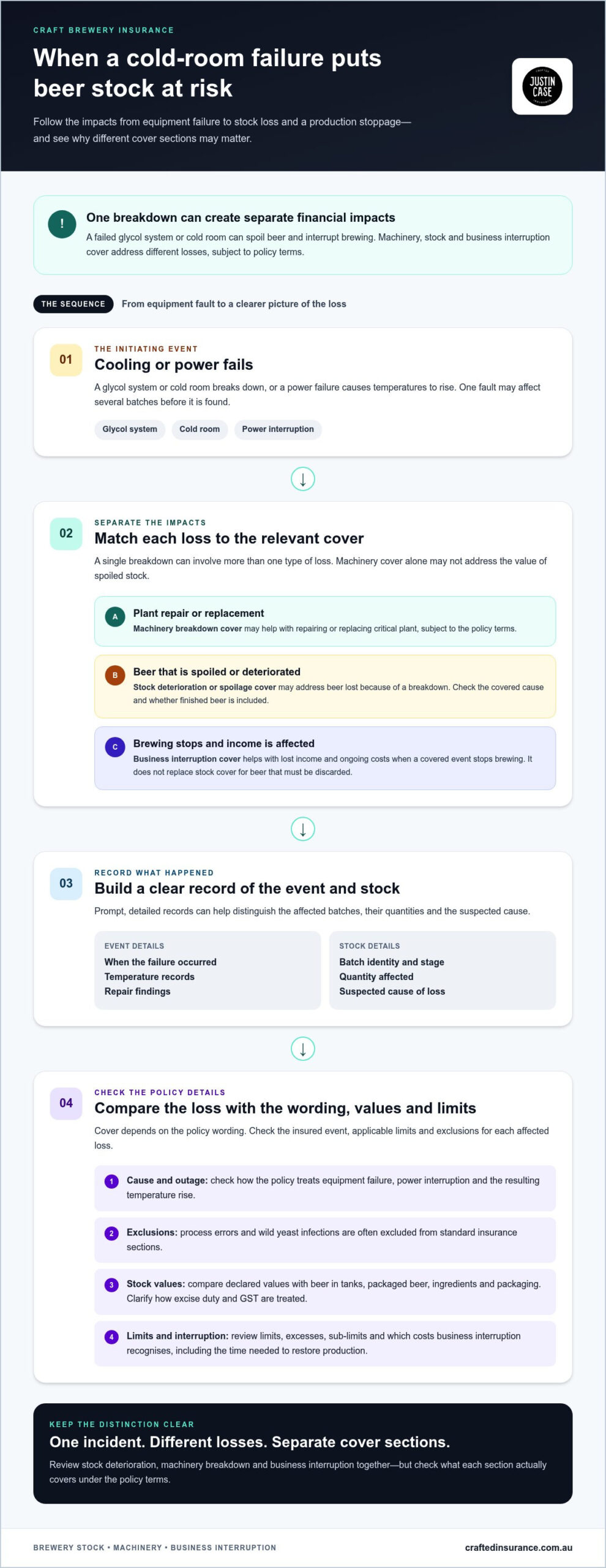
Process errors and wild yeast infections are often excluded from standard insurance sections. That distinction matters: a leaking tank and a contaminated batch can lead to different claims, even when both affect the same brew. Record the batch, quantity affected and suspected cause promptly.
Equipment breakdown and power failure
If a glycol system or cold room fails, machinery breakdown cover can help with repairing or replacing critical plant. Stock deterioration or spoilage cover may address beer lost because of a breakdown, subject to the policy terms. Consider both covers together: machinery cover alone may not address the value of spoiled stock.
For a power failure, check how the policy treats the outage and resulting temperature rise. A cold room losing power, for example, could affect several batches before the fault is found. Document when the failure occurred, temperature records, affected stock and repair findings.
Business interruption for spoiled stock
Business interruption cover helps with lost income and ongoing costs when a covered event, such as a breakdown or fire, stops brewing. It doesn’t replace stock cover for beer that must be discarded. A brewery may need separate stock deterioration or spoilage cover for that loss, alongside business interruption cover for the production stoppage.
Check how the policy links the insured event to the interruption and which costs it recognises. For example, a failed compressor might spoil beer and halt production. Stock cover and business interruption address different financial effects, so review the wording and limits for each section.
Stock valuation, exclusions and limits
Set out how you value stock before arranging cover. Separate finished beer, ingredients and packaging in your stock records, then clarify whether declared values include excise duty and GST. The policy’s valuation basis and settlement wording determine how those amounts are treated. Don’t assume tax components are included or excluded.
Also check the policy limit, excess, sub-limits and exclusions for contamination, process error, equipment failure and power interruption. For example, a limit that suits packaged beer may not reflect the combined value of beer in tanks and stored packaging. Keep dated inventory records and review declared values when production or stock levels change.
Finished beer, ingredients, packaging and work in progress
Australian breweries can insure declared finished beer, raw ingredients, packaging and work in progress as stock. Use clear inventory records to value each category, then compare declared values with the policy’s valuation basis and limits.
Finished beer and ingredients
Finished beer may be stored in kegs, cans, bottles or cases, while raw stock includes ingredients held for upcoming brews. Record quantities and storage locations so your stock schedule reflects what’s actually on hand. For example, separate packaged beer ready for dispatch from hops and malt awaiting production.
Contents and stock cover may respond to losses from events such as fire, theft, storm or breakage, subject to policy terms. Check that the declared categories match your brewery’s stock, including alcohol held for sale or distribution.
Packaging and work in progress
Cans, bottles, labels and cartons have value before the beer reaches customers. Include packaging in stock records rather than counting only finished alcohol. Beer still fermenting, conditioning or awaiting packaging is work in progress, so describe these stages when setting declared stock values.
Keep production and inventory records showing batch stages and quantities. If a loss affects a tank of fermenting beer and a separate pallet of cans, clear records help distinguish the affected stock and its recorded value.
Beer held in tanks
Beer in tanks is stock, even before it’s packaged for sale. Track tank contents, batch identity and production stage in your stock records. A current tank schedule can help show which beer was in production when a covered event caused damage or loss.
Consider how the policy treats stock held in vessels compared with packaged beer. For example, a brewery may have finished kegs in a cold room and several batches conditioning in tanks. Declared values should account for both locations and stages, not just stock ready for dispatch.
Valuing brewery stock
There isn’t one stock value that suits every brewery. In Australia, use inventory records and the policy’s valuation wording to establish how finished beer, ingredients, packaging and work in progress are valued. Clarify how excise duty and GST are treated rather than assuming either is included or excluded.
Review declared values when production, stock levels or storage locations change. At a beer festival, for instance, stock may move from the brewery to an event site, where equipment breakdown or theft can create different exposures. Check whether event locations and stock movements fit the policy terms.
For festivals and tastings, consider stock protection alongside liability cover. Beer and equipment can be at risk of loss or breakdown at festivals, while public events can also bring injury or property damage concerns. Check how insurance applies to stock at the event and during transport rather than assuming brewery-site cover follows it.
A stock risk review can help connect your records, storage locations and event plans with the cover you need.
Broker support and claims handling
A brewery claim can involve spoiled stock, machinery breakdown and lost trading income at once. A broker helps connect the incident to relevant policy sections, explain what evidence supports the claim and advocate during discussions with the insurer. Clear records make that work more focused.
Before an incident, set up a simple claims file for each brewing site. Include current stock schedules, batch records, equipment maintenance notes, supplier invoices and photographs of storage areas. For example, a dated cold-room temperature log can help show when beer was affected after refrigeration failed.
After an incident, take practical steps while preserving evidence. Record the time, location and apparent cause. Separate affected beer from unaffected stock, note quantities and keep disposal records. If a pump failure stops brewing, retain the technician’s report and repair invoice. These details help show the breakdown and its financial effects.
A broker can help organise the claim around the losses, not just the damaged item. Refrigeration failure could affect beer, ingredients and production. The claim file should distinguish spoiled stock from repair costs and any interruption to trading. That separation helps match each loss to the relevant cover and policy wording.
- Stock: identify affected batches, quantities and recorded values.
- Equipment: keep service reports, repair details and photographs.
- Interruption: record cancelled orders, lost production and ongoing costs.
Public-facing operations need their own evidence trail. For an injury on a brewery tour, keep the incident report, visitor details and photographs of the area. For a tasting event, record the activity, location and staff involved. Public and product liability claims differ from stock claims, so precise event records help establish what happened.
Policy wording shapes the claim. A broker can explain relevant exclusions, limits, excesses and notification steps, then help present supporting documents. For instance, a contamination claim needs batch details and evidence of the cause. A product recall claim involves different costs from a product liability claim, including recall logistics.
Keep a current contact list for the broker, insurer, equipment technicians and key suppliers. Review it when the brewery changes its plant, stock storage or events calendar. Preparation can save time after a fire, breakdown or stock loss, when production decisions and claim records need attention together.
Strong claims support starts before an incident. Regularly update stock values, store invoices and maintenance records, and note changes such as adding brewery tours or distributing through a new channel. When a claim arises, give your broker a clear timeline and the documents linked to each loss. The insurer assesses the claim under the policy terms.
Factors affecting brewery insurance premiums
Australian brewery insurance premiums reflect the business’s size, location, claims history, risk exposures and chosen cover. Production volume, plant and stock values, taproom operations and distribution arrangements also shape the risk presented to insurers.
Start with an accurate picture of your operation. A nano brewery producing small batches has different stock and machinery values from a national craft brewery supplying distributors. Give insurers current details about brewing volume, declared stock, equipment, sales channels and public-facing premises.
Plant values matter because a brewery relies on specialised equipment. Refrigeration, pumps, boilers, compressors and packaging machinery can each affect the potential cost of a breakdown. Keep an equipment schedule with purchase details, condition and maintenance records. If you add a canning line, update the declared plant values and describe its role in production.
Stock values also influence the cover you need. Finished beer, ingredients, packaging and work in progress can all contribute to the declared total. Seasonal peaks or a large batch awaiting distribution can change the exposure. Use inventory records to reflect actual stock levels rather than relying on an old estimate.
Claims history and risk controls provide further context. Previous fire, theft, water damage or machinery breakdown claims can affect how an insurer views the brewery’s risk. Keep maintenance records, incident reports and notes on steps taken after earlier losses. For example, a documented refrigeration service schedule can show how critical plant is monitored.
The way you sell beer changes the cover mix. A taproom, brewery tours, tastings and public events bring visitor exposures alongside production risks. Public liability addresses a different risk from stock cover. Product liability and product recall are also separate considerations, so clarify which protections your business needs and how each policy responds.
Distribution matters too. Beer delivered directly to customers, supplied to venues or moved through distributors creates different stock movements. Map where beer is stored and transported, then identify the values exposed at each stage. Include any reliance on suppliers whose disruption could interrupt brewing or delay packaging.
Compare policy terms, not just the premium. Check limits, excesses, exclusions and how machinery breakdown, spoilage, business interruption and recall are treated. A lower premium can come with narrower cover or exclusions that matter to your operations. Match each policy section to a real exposure, then note any gaps before choosing your cover structure.
Review the figures whenever production, plant, stock or distribution changes. A new taproom, larger fermentation capacity or expanded delivery footprint can alter the risk profile. Clear updates help insurers assess the brewery’s current operations, rather than relying on assumptions based on last season’s setup.
Craft brewery industry risks
Australian breweries face linked risks across production, property and public sales. A burst barrel can cause injury and waste beer, while equipment damage can stop brewing until repairs are complete. Strong insurance solutions start by mapping how one incident could affect stock, income and daily operations.
Machinery failure can create a chain reaction. A damaged compressor may interrupt refrigeration, affect production and delay orders. Repair or replacement costs are only part of the exposure. Business interruption cover can help with lost income and ongoing costs after a covered breakdown or fire stops brewing.
Plan for repair timelines, not just the first day of disruption. Replacement equipment can take well beyond 12 months, so Australian breweries should consider whether their business interruption indemnity period gives production enough time to recover. Include gross profit, extra operating costs and the time needed to restore operations when assessing this cover.
Supply interruptions create another brewery-specific pressure point. Political issues and shipping disruptions can affect international raw material suppliers, leaving a brewery short of ingredients and unable to keep batches moving. Keep a list of backup vendors and identify ingredients with few practical substitutes. That preparation can help reduce the chance of a production shutdown.
Public-facing activity changes the risk picture. Taprooms, tastings, brewery tours and events bring visitors into production spaces or onto brewery property. Public liability can respond to visitor injury claims, including legal costs, subject to policy terms. Keep visitors in safe areas and on planned tour routes, and train staff to prevent patrons from being over-served.
For Australian breweries serving alcohol, address liquor liability specifically within public liability cover. Align that protection with licence conditions and RSA practices. Product liability is also relevant when packaged beer is sold or distributed, while product recall cover is separate and may help with recall logistics and public relations costs.
Use a practical risk review to connect these exposures with the right policy sections. List critical machinery, supplier dependencies, visitor activities and the routes beer takes to customers. Then compare each risk with property, machinery breakdown, business interruption, liability and recall wording. Brewery insurance cover, limits and examples depend on eligibility, underwriting and the issued policy terms.
Map your brewery’s unique risks with specialist brewery risk support and identify where production, property or public activity could leave gaps.
Crafted Insurance: Nano Brewery
Crafted Insurance helps Australian nano breweries make sense of cover for production, stock and public-facing risks. Its specialist support includes risk audits, claims advocacy and ongoing risk management, helping you review exposures such as spoiled stock, equipment breakdown and interruptions to brewing.
Turn to Crafted Insurance when your operation’s stock, equipment or sales channels change, or when you want a clearer view of how your cover fits together. Support is tailored to craft businesses, including Nano Brewery, Local Craft Brewery, Micro Distillery and BrewPub operations.
Have questions about protecting your brewery’s stock and operations? Contact Crafted Insurance to discuss your needs.
Make your next batch part of the plan
Your next production cycle is a good prompt to revisit how brewery stock insurance fits your business. Stock levels, brewing plans and sales channels can shift, so keep your cover aligned with the operation you’re running now.
Crafted Insurance works with craft businesses, including Nano Brewery, Micro Distillery and BrewPub operations. Its risk audits, claims advocacy and ongoing risk management can help you review your brewery’s exposures and plan next steps with a specialist broker.
You’ve put care into every batch. Give the protection behind that work the same attention, then get back to making beer. Contact Crafted Insurance about brewery cover and start a conversation about your brewery’s needs.
Frequently Asked Questions
What risks can Breweries Insurance Protect against?
Brewery insurance can address property damage, stock loss, machinery breakdown, business interruption and liability exposures. For example, a fire may damage brewing equipment and stop production, while a product liability claim concerns harm linked to beer sold. Product recall cover is separate from product liability. Match each type of cover to the risk it addresses, then read the policy wording for exclusions, limits and conditions.
What should I look for in comparing policies and quotes?
Compare the actual cover, not just the premium. Check stock valuation, limits, excesses, exclusions and whether the wording addresses your brewing process and sales channels. For example, compare how each policy treats beer held in tanks with packaged stock, or whether transit is included. Review business interruption terms and the time allowed to restore operations too. A Product Disclosure Statement can help explain the policy’s cover and limits.
Why Choose Specialised Brewery Insurance?
A specialist understands how brewing, alcohol sales and public service combine in one operation. That perspective can help identify exposures a general business policy review might overlook, such as stock in production, brewery tours or a taproom alongside manufacturing. Crafted Insurance arranges tailored cover for Australian craft breweries, distilleries and brewpubs, and provides risk audits, claims advocacy and ongoing risk management to help businesses manage those exposures.
Does brewery insurance cover beer stock in tanks, kegs and bottles?
Policies can cover declared alcohol stock in tanks, kegs and bottles, depending on the cover arranged and its wording. Describe each storage form and location accurately. For example, list beer conditioning in a tank separately from packaged kegs ready for delivery. Keep batch and inventory records current so you can show what stock was held and where if an insured event causes a loss.
What does brewery stock insurance cost in Australia?
The cost depends on the brewery’s size, production volume, stock and plant values, location, claims history, risk exposures and chosen cover. A taproom and distribution arrangements can also affect the risk profile. There isn’t one premium for every brewery. The price depends on the business and is provided after a quote request, with cover needs and risk details shaping the assessment.
Is brewery stock covered during transport, storage or at festivals?
Cover depends on the policy and where stock is kept or moved. Transit insurance may cover beer or raw materials travelling to customers, distributors or suppliers. Festival stock can face theft and equipment breakdown risks. Before an event, map the stock’s journey, storage location and handling arrangements against the policy wording. Keep dispatch records and event inventory so stock movements are clear if a loss occurs.
How can an Australian brewery compare insurers and arrange stock cover?
Prepare a clear snapshot of your operation before comparing options: stock categories, brewing volume, plant, storage sites, distribution and public activities. Then compare policy limits, exclusions, valuation terms and claims support against those details. A specialist broker can assess the brewery’s risks and arrange suitable cover. Update the information when production or sales arrangements change so your cover reflects the business you’re running.