
Every brewery needs insurance that reflects how it makes, stores and sells beer. Brewery businesses should check which insurance requirements apply to their operations. Property, equipment breakdown, liability and business income cover are also common needs. A brewery insurance risk assessment helps identify the risks that matter to your operation and where cover may be needed.
That applies whether you brew on a small scale, run a brewpub or supply customers across the country. Risks change as your people, equipment, premises and sales channels change. A gap in cover can turn a production problem or customer claim into a serious business issue.
This article explains who should consider brewery insurance, the risks brewing businesses face and how needs differ by operation. It also covers how a specialist broker assesses those risks, so you can identify what to review as your brewery grows.
Key Takeaways
- Consider liquor liability separately from general liability to address claims linked to serving or selling alcohol.
- Assess barrel-aged beer storage for damage, contamination and interruption to production, then consider how those risks fit your cover.
- Review your insurance as your brewery grows, since changes in equipment, staff, premises and distribution can change your exposures.
- A specialist broker can assess how your operation works and help identify gaps between your risks and your policy cover.
1. Who should get Brewery insurance?
Workers’ compensation is an important consideration for brewery businesses. Employers’ liability concerns claims linked to employee injuries, so include staff duties, manual handling and machinery hazards when assessing employee-related exposure. For example, a worker moving full kegs faces different risks from a visitor attending a tasting.
Breweries should consider cover for their premises, products and day-to-day operations. General liability can respond to claims involving injury or property damage connected with business operations, such as a customer slipping on a wet floor. Product liability can address claims linked to consuming beer, including illness or contamination. Property, equipment breakdown and business income cover may also matter: a failed chiller, for instance, could spoil stock and interrupt brewing.
Liquor liability deserves a close look. General liability doesn’t cover every alcohol-related claim, so it may not address all the risks created by serving drinks. If your brewery hosts tastings, pours at events or runs a brewpub, assess how alcohol service affects your cover. Staff training is an important part of risk management. Train serving staff to understand their responsibilities, recognise over-intoxication, refuse service when needed and manage difficult customer interactions. Clear procedures help protect patrons and the business.
Review advertising and trademark risks, too. A label using another brewery’s name or an advert making comparative claims could lead to a dispute. Check whether policy wording addresses advertising injury, intellectual property or trademark allegations, and note any exclusions.
Environmental and cyber risks can extend beyond the taproom. A spill from brewing operations could create pollution-related cleanup costs, while a data breach could expose customer or staff information. Identify where chemicals are stored, how waste is handled and which systems hold business data. Compare those exposures with policy terms, limits and exclusions. The right mix depends on what you make, where you operate and how you sell.
2. What are the Risks Associated with Craft Breweries and Distilleries?
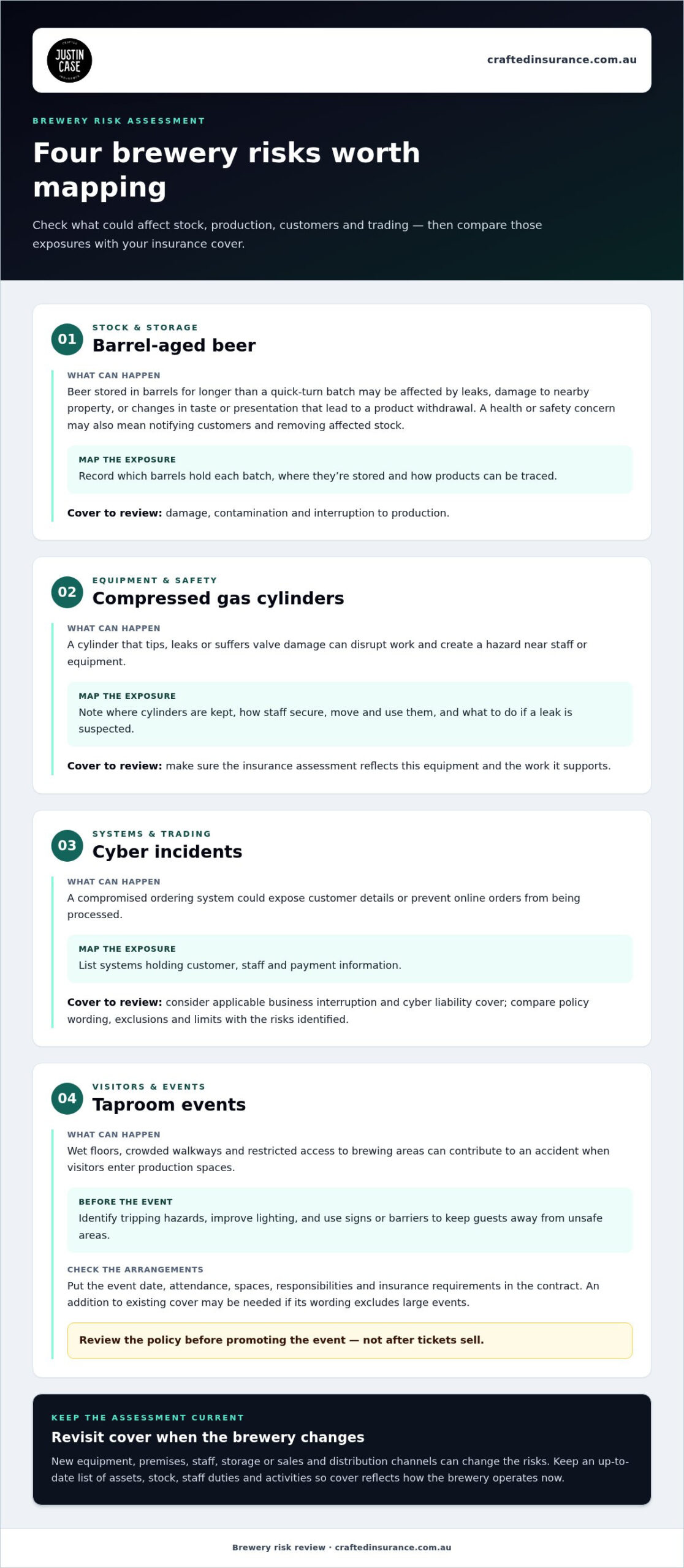
Barrel-aged beer ties up stock in barrels longer than a quick-turn batch. Leaks can damage stored beer and nearby property, while changes in taste or presentation may lead to a product withdrawal. If a health or safety concern affects beer, a recall can mean notifying customers and removing affected stock. Record which barrels hold each batch, where they’re stored and how you trace products. These details help you understand potential losses before a storage issue spreads.
Compressed gas cylinders create another physical risk in breweries and distilleries. A cylinder that tips, leaks or suffers valve damage can disrupt work and create a hazard near staff or equipment. Include cylinder storage, movement and use in your risk management. Map where cylinders are kept, how staff secure them and what to do if a leak is suspected. Make sure your insurance assessment reflects this equipment and the work it supports.
Cyber incidents can interrupt sales just as surely as a breakdown on the production floor. A compromised ordering system could expose customer details or prevent online orders from being processed. List the systems that hold customer, staff and payment information, then consider what business interruption and cyber liability cover may apply. A broker can compare policy wording, including exclusions and limits, with those exposures.
Taproom events bring visitors into production spaces and change how people move around the site. Wet floors, crowded walkways and restricted access to brewing areas can contribute to an accident. Before an event, identify tripping hazards, improve lighting and use signs or barriers to keep guests away from unsafe areas. Put the event date, attendance, spaces, responsibilities and insurance requirements in the contract. An addition to your existing cover may be needed if its wording excludes large events. Review the policy before promoting the event, not after tickets sell.
3. Brewery insurance for businesses of different sizes
A nano brewery and a national craft brewery face different combinations of risk. Size matters, but so do location, beverage types and distribution channels. A small producer selling from its taproom may focus on stock, equipment and customer access. A brewery distributing nationally must also consider goods in transit, wider sales relationships and the impact of a production shutdown. Build cover around the operation, not just its production scale.
Growth can quickly change your risk profile. Adding a brewpub, expanding storage or hiring more staff changes what’s at risk. A new delivery route can expose products to different handling and storage conditions. Review cover whenever the business changes, including after buying equipment, leasing premises or starting a new sales channel. Keep an up-to-date list of assets, stock, staff duties and activities so your insurance reflects how the brewery operates now.
Business interruption insurance can help address lost income when an insured event disrupts trading. For example, fire damage that closes a brewing space may stop production while repairs are underway. Business income protection focuses on the income impact of that interruption, but the policy wording determines how cover applies. Compare the trigger for cover, the interruption period and any exclusions with the brewery’s actual dependencies. A taproom relying on regular production may face a different income shortfall from a contract brewer with another production site.
Map what keeps revenue moving: brewing equipment, utilities, ingredients, staff, premises and distribution. Then consider what could happen if one link fails. A breakdown affecting a key tank could delay a brew, while an injury that takes a specialist out of a small team could slow production. These examples help show where insurance and practical risk controls matter most.
Review your policy regularly as the brewery grows. Update declared values and business details after material changes, and compare terms, limits and exclusions. A brewery insurance risk assessment gives you a structured way to connect changing operations with the cover and income protection your business needs.
4. Risk assessment by a specialist broker
In Australia, insurers assess a brewery’s location, size, beverage types, distribution and activities. A specialist broker connects those details to potential claims, coverage needs and policy exclusions. The focus is practical: how manufacturing works, which assets keep production moving and what could interrupt sales.
Expect a review of the whole operation, not just the brewhouse. A broker may consider premises, equipment, stock, staff duties, customer access, events and sales channels. For example, a brewery supplying packaged beer has different transport risks from one serving customers mainly in its taproom. Changes in production or distribution can also alter your business insurance needs.
To prepare, gather a current asset register, equipment maintenance records and stock details. Include brewing machinery, refrigeration, ingredients and finished products. Add a clear outline of each production step, from receiving ingredients to storing and dispatching beer. These details help show where a breakdown could damage assets or interrupt manufacturing.
Next, gather information about staff and past incidents. Note staff roles, safety training, reported injuries, customer complaints and previous claims. Include records of spills, product quality issues, equipment faults and corrective actions. Written procedures for cleaning, maintenance and product traceability help explain the controls already in place.
Finally, compare your current policy wording with the operation you’ve described. Check declared assets and activities, then review coverage limits, conditions and exclusions. A new event space, online sales channel or production line can create risks an older policy doesn’t reflect. Record planned changes as well, so the assessment can consider where the business is heading.
A useful assessment should leave you with a clearer view of exposed assets, possible interruption points and risk-management actions. For a specialist review of your brewery’s risks, request a brewery risk assessment.
Crafted Insurance: Nano Brewery
Crafted Insurance helps Australian brewing businesses assess risks across production, sales and public service. Its NANO BREWERY package is designed for smaller brewing operations, while MICRO BREWERY, LOCAL CRAFT BREWERY and BREWPUB packages serve other business formats.
Turn to a specialist broker when your setup changes, such as when you add a taproom, increase production or begin distributing to new customers. A risk audit can help identify where your assets, people and processes may be exposed. Crafted Insurance provides claim advocacy and ongoing risk management, helping you understand insurance details and practical risk controls.
For a nano brewery, that means looking at how you brew and sell, then considering how cover fits those activities. Get a clearer view of the risks behind your business, so you can focus on the craft. Contact Crafted Insurance to discuss your brewery insurance risk assessment.
Make your next review part of the plan
Your brewery will keep changing. New equipment, a fresh sales channel or a change in how customers use your space can all affect its risk profile. Make an insurance review part of those decisions, not a last-minute task after the change is in place.
A brewery insurance risk assessment can turn operational changes into clearer questions about cover, risk controls and next steps. Crafted Insurance works with brewing and distilling businesses through packages including NANO BREWERY, MICRO DISTILLERY and BREWPUB, as well as risk audits and ongoing risk management.
Bring your current policy and a simple outline of what’s changing. A focused conversation can help you see where your insurance arrangements may need another look. Contact Crafted Insurance for support with your next review.
Keep building the business you love, with a clearer plan for what comes next.
Frequently Asked Questions
Who should get Brewery insurance?
Any Australian business making or selling beer should assess its insurance needs, from a small production setup to a brewpub serving customers. The mix of cover should reflect whether you manufacture, store, distribute or serve alcohol. Workers’ compensation insurance is mandatory for brewery businesses in Australia. Review your arrangements when you add a taproom, start wholesale sales or change how you produce beer.
Is insurance for machinery breakdown really necessary to consider?
Consider equipment breakdown cover if a failed machine could stop production or damage stock. A refrigeration fault, for example, can affect ingredients or finished beer before repairs are complete. This cover can address repair or replacement costs and losses during downtime. Compare the policy wording with your most critical equipment, its maintenance needs and the production steps that depend on it.
What are the Risks Associated with Craft Breweries and Distilleries?
Risks include supply interruptions, recipe disputes and contractor-related problems, as well as hazards inside production areas. A delayed ingredient shipment can disrupt a planned batch, so a backup supply plan helps reduce reliance on a single delivery. Document recipe ownership in employment agreements, and set clear insurance requirements for contractors working on site. These steps help manage risks beyond day-to-day production.
What should I look for in comparing policies and quotes?
Compare the policy wording and Product Disclosure Statement, not just the premium. Check the insured activities, limits, exclusions, excesses and how the policy treats stock, equipment, interruption and alcohol-related claims. Make sure declared values reflect current assets and inventory. Marsh advises breweries to compare wording because lower premiums often involve more exclusions. A quote is useful only if its cover matches your operation.
What public liability limits do Australian breweries typically need?
There isn’t one public liability limit that suits every brewery. Assess your premises, customer access, events, distribution arrangements and any insurance requirements in leases or contracts. A brewery hosting public tastings has different visitor risks from one operating only as a production site. Compare the policy limit with those obligations and the potential scale of a claim, then review it as activities change.
Does brewery insurance cover product liability and beer recalls in Australia?
Product liability cover can respond to claims linked to consuming beer, including illness or contamination. Recall cover relates to health and safety concerns, while product withdrawal cover concerns other issues, such as taste or presentation. These are distinct risks, so check the policy wording for each. A batch-tracing process and a plan for contacting customers can also help your team act quickly if stock must be removed.