
A brewpub’s biggest risks don’t stop at the brewhouse door. Machinery, carbon dioxide, cleaning chemicals, hot liquids, slips, product contamination and taproom incidents can all affect staff, customers and the business. Effective brewpub risk management brings workplace safety, environmental compliance, production controls and responsible service together.
You know a great brew takes care, skill and plenty of moving parts. The less enjoyable part is making sure a missed hazard doesn’t disrupt production or put someone at risk. An effective plan should fit the way your brewery or distillery actually operates.
Here’s a practical look at key risks for Australian craft producers, from keg handling and chemical cleaning to taproom service and supplier arrangements. Clear procedures, routine checks and joined-up risk planning can help protect people and keep operations on track.
Key Takeaways
- Map hazards across production and the taproom, from moving machinery and carbon dioxide to wet floors, heat and equipment failure.
- Build practical safety routines around staff training, protective gear, ventilation checks, maintenance records and safe keg handling.
- Keep taproom cleaning controls clear: clean beer lines carefully, share allergen information and have burns first aid and chemical spill kits ready.
- Set clear service and supplier procedures, including slowing service when needed and using written vendor contracts that spell out responsibilities.
1. What are the Risks Associated with Craft Breweries and Distilleries?
Brewery risks run from grain handling to the customer’s glass. Mills, augers and keg fillers can injure workers, while forklifts can tip or strike people and property. Wet floors, hot wort, steam and fermentation-related carbon dioxide add further hazards. Taprooms also face injury claims if premises aren’t kept reasonably safe.
Liquor licensing depends on the Australian state or territory and how the brewpub serves alcohol. A venue selling drinks for on-site service, takeaway, or both needs to follow the licence conditions that apply to its service model. Licensing isn’t one identical national checklist.
Key financial risks include injury or liability claims, damaged equipment, spoiled batches and interrupted operations. Startup costs depend on choices such as premises, fit-out, brewing and cooling equipment, initial stock, staffing and working capital. Those same choices shape exposure: a flood-prone site or neighbouring factory can increase property-loss risk, while a failed cooler gauge can threaten a batch.
Insurance should reflect the brewery’s actual work. Review cover for brewing equipment, business interruption, product and public liability, spoilage, equipment breakdown and workers compensation. Taproom alcohol service and advertising claims may also need attention. Read policy terms alongside supplier contracts and member agreements, so responsibilities and exclusions are clear.
Make maintenance visible: inspect tanks, valves and guards, and log repairs and servicing. Include temperature gauges and refrigeration in the schedule. As production grows, revisit the risk plan before adding equipment, staff, taproom capacity or sales channels. A Brewers Association training resource can support staff learning, but it should form part of a broader safety program. That’s practical brewpub risk management: connect the site, machinery, people and cover before a small fault becomes a costly interruption.
2. Workplace safety and environmental compliance
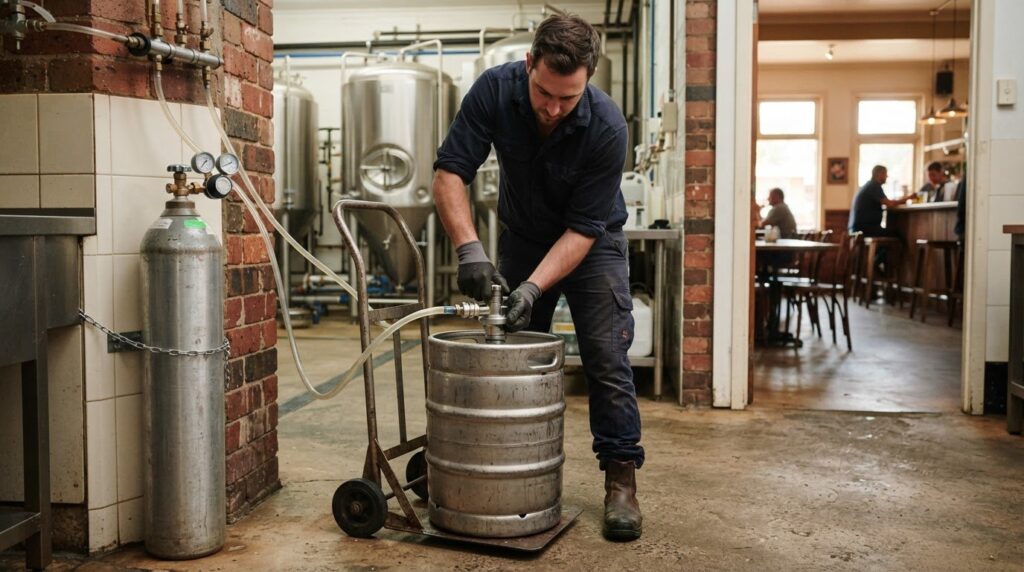
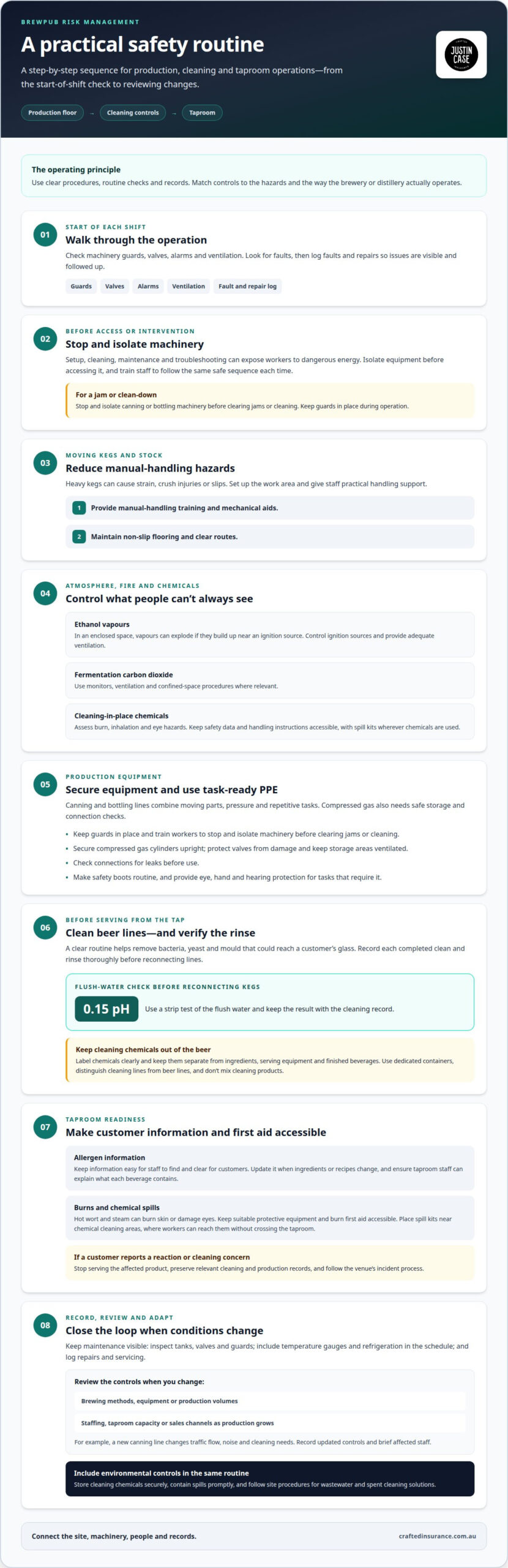
Start each shift with a walk-through of brewery operations. Check guards, valves, alarms and ventilation, then log faults and repairs. Machinery can expose workers to dangerous energy during setup, cleaning, maintenance and troubleshooting. Isolate equipment before accessing it, and train staff to follow the same safe sequence each time. For keg handling, provide manual handling training, mechanical aids and non-slip flooring. Clear routes reduce the risk of a heavy keg causing a strain, crush injury or slip.
Fire, chemical and confined-space controls should match the hazards on site. Ethanol vapours can explode if they build up in an enclosed space with an ignition source, so control ignition sources and provide adequate ventilation. Fermentation can also release carbon dioxide. Use monitors, ventilation and confined-space procedures where relevant. Assess cleaning-in-place chemicals for burn, inhalation and eye hazards. Keep safety data and handling instructions accessible, and make spill kits available wherever chemicals are used.
Canning and bottling lines combine moving parts, pressure and repetitive tasks. Keep guards in place, and train workers to stop and isolate machinery before clearing jams or cleaning. Secure compressed gas cylinders upright, protect valves from damage and keep storage areas ventilated. Check connections for leaks before use. Make safety boots routine, and provide eye, hand and hearing protection for tasks that require it.
Environmental controls belong in the same practical routine. Store cleaning chemicals securely, contain spills promptly and follow site procedures for wastewater and spent cleaning solutions. Review hazards when brewing methods, equipment or production volumes change. A new canning line, for example, changes traffic flow, noise and cleaning needs. Record the updated controls and brief affected staff. For a joined-up view of operational exposures, explore brewery risk planning alongside day-to-day safety procedures.
3. Taproom cleaning, allergen information and first aid
Clean draft beer lines properly to remove bacteria, yeast and mould that could reach a customer’s glass. Set a clear cleaning routine, record each completed clean and rinse thoroughly before reconnecting lines. A draught-line checklist can include a 0.15 pH strip test of flush water before reconnecting kegs. Keep the result with the cleaning record. This gives staff a practical sequence to follow during a busy taproom shift, rather than relying on memory.
Caustic cleaning solutions can cause serious harm if they contaminate beer or contact skin and eyes. Label cleaning chemicals clearly and keep them separate from ingredients, serving equipment and finished beverages. Use dedicated containers, follow product handling instructions and make sure staff can distinguish cleaning lines from beer lines. If a cleaning step is missed or a chemical spill occurs, pause service in the affected area and follow the venue’s incident procedure.
During mashing and other hot-liquid work, splashes of wort or steam can burn skin and damage eyes. Keep suitable protective equipment available and make burn first aid accessible to staff. Chemical cleaning also calls for clear handling instructions and prompt spill response. Don’t mix cleaning products. Keep a spill kit near chemical cleaning areas, where workers can reach it without crossing the taproom.
Make allergen information easy for staff to find and clear for customers. Update it when ingredients or recipes change, and ensure taproom staff can explain what each beverage contains. If a customer reports a reaction or cleaning concern, stop serving the affected product, preserve relevant cleaning and production records, and follow the venue’s incident process. Clear records support a prompt response and help distinguish a product issue from a cleaning failure. Pair practical staff guidance with first aid readiness, so injuries receive timely attention and incidents are properly documented.
4. Risk management compliance
Compliance works best as a routine, not a folder brought out after an incident. A written brewpub risk management plan can name who monitors service, records incidents and reviews supplier contracts. Set clear limits for serving alcohol, with a consistent process for slowing service to a patron drinking too rapidly and refusing service to someone who arrives obviously intoxicated. Record decisions and handovers so staff follow the same approach across shifts.
An Australian brewpub needs the liquor licence that applies to its alcohol service. The relevant licence and conditions depend on the state or territory and the operation, including how alcohol is served. Required licences and permits can therefore differ by location and activity. There isn’t one identical national checklist.
That variation matters in practice. State and territory requirements can shape service conditions and operating procedures, so include local licence conditions in staff training and shift records. Set out who checks compliance, how incidents are logged and how procedures are updated when the venue changes its service model. Keep these steps useful during a busy evening, not just during a review.
Contracts are another practical control. Written supplier agreements should address indemnification, defence costs and insurance coverage. For example, an agreement with an event organiser can clarify each party’s responsibilities when the brewpub supplies a keg for a charity event. Keep signed agreements alongside records of the event, product supplied and any complaint or injury. Potential brewery liability for a consumer’s actions after drinking may apply regardless of where the drink was consumed, so consider how service decisions, supply arrangements and incident records fit together.
Review exposure whenever a new event, supplier or service arrangement changes the risk. Make the person responsible for each action clear, and give workers a simple way to report concerns before they become incidents. For a structured view of operational exposures, explore brewpub risk management support.
Crafted Insurance: Nano Brewery
Crafted Insurance helps Australian craft producers connect day-to-day risks with insurance and practical risk management. Its NANO BREWERY and BREWPUB packages suit businesses balancing production with public service, while MICRO DISTILLERY and LOCAL CRAFT BREWERY packages address other craft operations.
Turn to Crafted Insurance when reviewing cover, changing your setup or making sense of exposures across production, sales and the taproom. A FREE INSURANCE RISK AUDIT can help identify where your operations may be vulnerable. Ongoing risk management supports efforts to minimise and mitigate those exposures, while claim advocacy can help you through the claims process.
The aim is to give you a clearer view of how your work, premises and customer service fit together, so you can make informed decisions about protection. To discuss your brewery or brewpub’s risk management needs, start a conversation with Crafted Insurance.
Make your next operational change a safer one
Risk planning shouldn’t stand still as your business changes. A new event, production line or service arrangement can shift where exposure sits. Build a simple habit: review your risk plan whenever operations change, assign someone to update procedures and make sure workers know what to do next.
That’s the practical value of brewpub risk management. It connects everyday decisions with the protection your business needs, without losing sight of the craft and community at its heart.
When you’re ready to talk through the risks affecting your operation, contact Crafted Insurance about your risks. Take the next step with a clearer plan, and get back to making good beer with confidence.
Frequently Asked Questions
What are the Risks Associated with Craft Breweries and Distilleries?
Operational failures can affect people, stock, premises and sales at once. For example, a power interruption can affect refrigeration, fermentation controls and taproom service together. Review how one event could trigger several losses, then check whether procedures, recovery plans and insurance arrangements address the whole chain rather than treating each hazard in isolation.
What are the main risks for a brewpub in Australia?
The main risks for Australian brewpubs arise where production and public service overlap. A keg delivery through a customer area, for example, can create a safety issue and disrupt service. Map shared spaces, handovers and equipment routes, then assign responsibility for each transition. This practical view catches interface risks that separate production and taproom checklists can miss during busy periods.
What food safety and workplace health and safety regulations apply to Australian brewpubs?
Australian brewpubs need to identify the food safety and workplace health and safety requirements that apply to their activities and location. Start by mapping what you make, handle and serve, along with workers’ tasks. Keep food handling, cleaning, incident and training records together. Revisit procedures after changes to recipes, processes or premises instead of assuming one checklist fits every operation.
What insurance does an Australian brewpub need, and how much does it cost?
Consider cover for brewing equipment, business interruption, product liability and public liability, alongside workers compensation where relevant. The appropriate mix depends on production, sales, customer service, premises, equipment and policy terms. The price depends on the case and is given after a quote request. Compare how policy wording responds to your operation’s exposures, not just the premium.
How can brewpubs manage fermentation, equipment, and product contamination risks?
Use batch records to connect ingredient lots, tanks, operators, cleaning and packaging runs. If readings or product quality shift outside normal patterns, hold the affected batch, document what changed and trace potentially involved stock before serving or dispatch. Track temperature and equipment readings over time. These records can help spot gradual drift before it affects fermentation or the finished beverage.
How can a brewpub manage responsible alcohol service and intoxication risks?
Manage intoxication risks with a shared service protocol and clear shift handovers. Staff should know who makes service decisions, how to record a refusal and how to alert colleagues without escalating an interaction. Include event nights and outdoor service in briefings. Consistent handover notes help the next shift understand earlier concerns and actions already taken.