A contaminated beer batch can cost more than the stock it spoils. For an Australian brewery, product recall cover is the type of insurance that can help with notification, retrieval, destruction and replacement costs. Product liability cover addresses a different risk: claims if someone is harmed by the beer.
That distinction matters when a batch must be pulled from taps, shelves or distribution. Even before a customer is affected, spoiled inventory and the work of managing a recall can put pressure on cash flow. The right insurance for a contaminated beer batch depends on which costs you need your policy to address.
Learn how recall cover differs from product liability, how contamination can affect stock and cash flow, and what to consider when arranging protection for your brewery. We’ll also cover practical risk management steps that can help you prepare for a batch problem and get back to making good beer.
Key Takeaways
- Separate recall costs from claims for consumer illness or injury so you can see what each type of cover is designed to address.
- Consider how spoiled stock and halted production could affect cash flow, not just the value of the beer lost.
- Think through the risks that can arise once packaged beer leaves the brewery, including contamination and labelling issues.
- Review how your policy treats spoiled batches, then explore specialist risk management support if you want help assessing your brewery’s exposures.
Does my brewery need product recall coverage?
Recall cover and product liability address different costs. Product liability can respond to claims if contaminated beer causes illness or injury, while recall cover may help with expenses from withdrawing affected product. If your brewery distributes beer, consider whether insurance for a contaminated beer batch needs to address both risks.
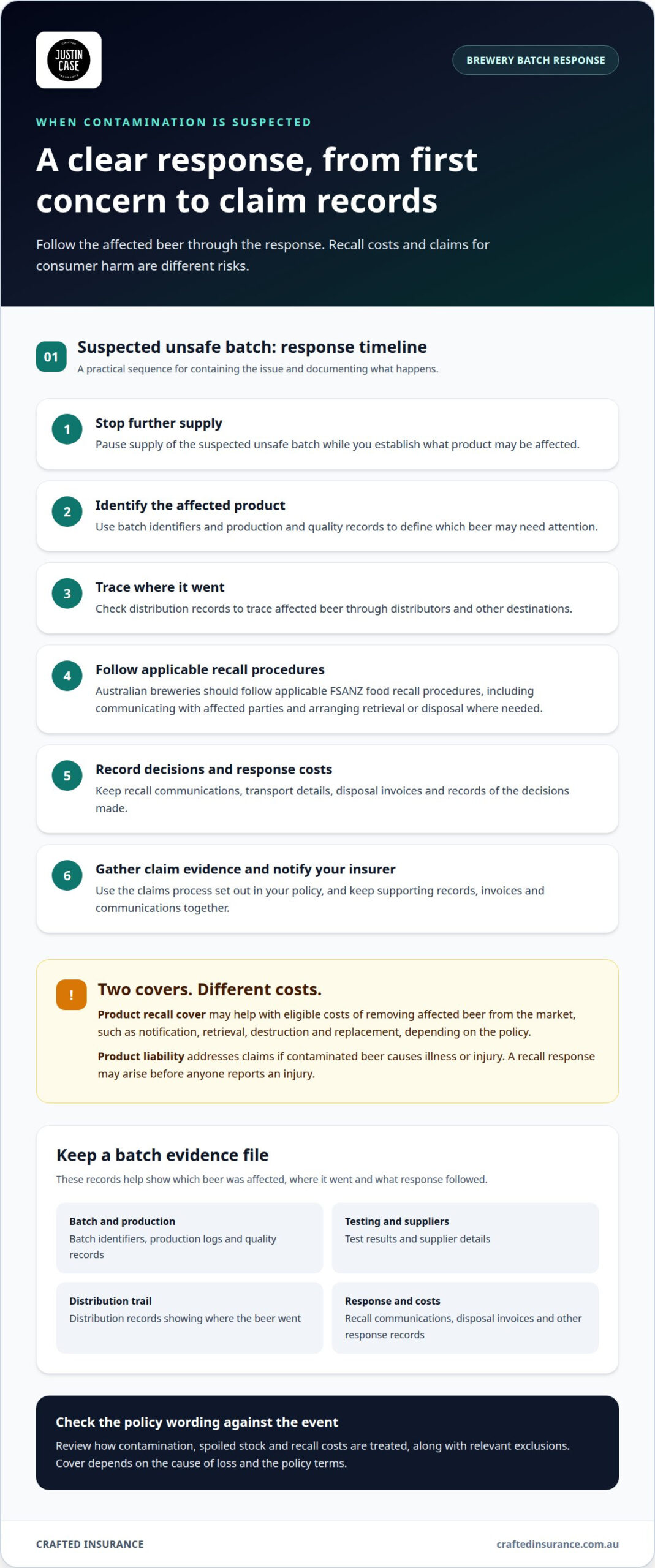
For a suspected unsafe batch, stop further supply, identify the affected product, trace where it went and keep a record of recall decisions. Australian breweries should follow applicable FSANZ food recall procedures, including communicating with affected parties and arranging retrieval or disposal where needed.
Contamination and Liability Cover
Product liability addresses claims after a consumer is harmed. Contamination or recall cover may help with response costs before anyone reports an injury. For example, a packaging failure could prompt a withdrawal even when no customer has made a claim. Check how each policy treats contamination, claims and affected stock.
Commercial property and inventory cover are separate considerations. Stock and spoilage cover may respond when a breakdown or power failure ruins a batch or tank, subject to the policy terms. Check the cause of loss and whether spoiled beer is covered. Insurance for a contaminated beer batch may involve stock loss as well as recall expenses.
Recall and Disposal Costs
Product recall cover may help with eligible costs of removing contaminated beer from the market. Depending on the policy, these could include notification, retrieval, destruction and replacement. For example, a brewery may need to contact distributors and arrange transport for affected kegs. Those costs differ from product liability claims after someone is harmed.
For a claim, gather batch identifiers, production and quality records, test results, supplier details, distribution records, recall communications and disposal invoices. These records help show which beer was affected, where it went and what response followed.
Policy Limits and Deductibles
There is no single limit or deductible that suits every Australian brewery. Consider production volume, distribution reach, stock values and the potential scale of a withdrawal. A local release and widely distributed packaged beer can present different levels of exposure.
Compare policy limits with likely notification, transport, destruction and replacement expenses. Then consider the deductible your business could absorb. Review how the policy wording treats contamination, spoilage and recall costs, including whether one incident could trigger several expense categories.
Financial impacts of brewery contamination
A contaminated batch can drain cash through lost stock, stopped production and delayed sales. The financial impact depends on what failed and which parts of your brewery insurance respond.
Insurance Cost Factors
Insurance needs depend on production volume, plant and stock values, taproom operations and beer distribution. A production-focused brewery has different exposures from a brewpub serving customers onsite. Employee numbers, equipment values and the reach of your distribution network also help shape the cover needed.
Those differences matter when considering premiums by business type. A nano brewery without a taproom has a different risk profile from a staffed taproom or a production brewery distributing beer. In Australia, brewery insurance premiums have increased in recent years as awareness of contamination risks and their financial impact has grown.
Contaminated Batch Claims
For a batch claim, build a clear record of what happened and its financial impact. Gather the affected batch details, production logs, test results, maintenance records and supplier information. Document the stock affected, steps taken to contain the problem and any interruption to production.
Notify your insurer through the claims process set out in your policy, and keep invoices and communications together. A breakdown claim may require different evidence from a contamination event linked to ingredients or production. The cause, policy wording and records all help determine how the claim is assessed.
Exclusions depend on the policy wording and the cause of the event. Read the exclusions alongside the cover description, especially for contamination, spoilage, equipment breakdown and resulting business interruption. An exclusion can change whether a particular loss is covered, so the exact wording matters.
Cover for Contaminated Beer
In Australia, stock and spoilage cover may respond when a breakdown or power failure ruins beer, subject to policy terms. Machinery breakdown cover can include business interruption assistance while production is stopped. Business interruption cover can also help with lost income and ongoing costs if a breakdown or fire halts brewing.
Property insurance and equipment cover address different risks. Standard commercial property insurance does not cover mechanical and electrical breakdown of brewery equipment. When considering protection, review the cause of loss, the equipment involved and the resulting stock or income impact.
For a closer look at brewery-specific exposures, brewery insurance and risk management can help connect equipment, stock and interruption risks.
Product liability for packaged and distributed beer
Packaged beer can travel beyond your taproom, so a production fault may affect customers across a distribution chain. Product liability can respond to claims if contaminated beer causes illness or injury.
Contamination can start at several points: cleaning chemical residue, faulty CO2 supply, a yeast issue or a packaging defect. Those causes make batch identification important. Production records can connect a customer complaint to a brewing run, packaging line and distribution consignment. That trail helps define which products may need attention.
Labels matter too. A peanut butter stout, for example, needs clear allergen information so customers can make an informed choice. An undisclosed allergen can lead to serious reactions and product liability claims. Keep recipes, ingredient records and label versions aligned when a brewing change affects the finished beer.
Public liability addresses another setting. It can respond to injury claims involving visitors in a brewery taproom or on a tour. A customer slipping during a tasting is different from a consumer becoming ill after drinking packaged beer. The first involves a visit to your premises; the second concerns the product itself.
General liability is a broad term for cover against certain third-party claims. It does not replace checking whether product liability applies to packaged beer or public liability fits taproom and tour activities. Map your operations from brewing and manufacturing through packaging, storage, delivery and tastings. Then consider where a failure could cause injury or property damage.
Liquor liability may also be relevant to alcohol service at a taproom or tasting event. The exposure depends on what happens during service, while product liability focuses on harm linked to the beer. Review each activity separately, including who serves customers and whether beer is sold onsite or distributed. Clear records of batches, ingredients, labels, complaints and sales help connect an incident to the right production or service activity.
Insurance for spoiled beer batches
A spoiled batch can mean lost stock and replacement costs, even without a customer injury. The key question is what caused the loss and whether your policy responds to that event.
For example, a refrigeration failure could affect beer still in a tank, while contamination discovered after distribution may involve different costs. Stock and spoilage cover may respond to a breakdown or power failure, subject to the policy terms. The cause, affected stock and claimed expenses all shape how cover applies.
Separate the value of spoiled beer from the costs of managing an incident. A batch that cannot be sold creates a stock loss. A recall may also involve retrieving product, disposal or replacement. Product liability addresses another exposure: claims if beer causes injury. One incident can raise several issues, but each type of cover responds according to its own terms.
Before a loss, map the records that can explain a spoiled batch: production logs, tank and batch identifiers, temperature records, maintenance notes and test results. If equipment breakdown is involved, record the failure and any repair work. For contamination, preserve relevant ingredient, cleaning and quality-control records. A clear timeline helps connect the cause to the damaged stock.
After an incident, contain the affected beer and record decisions, stock quantities and disposal or replacement steps. Notify the insurer using the process in your policy, and retain invoices and supporting evidence. A broker can help interpret how the policy wording applies to the facts, without assuming every spoilage event is covered.
Review your wording before production is disrupted. Check how it describes spoiled stock, machinery failure, contamination and any excess you would need to meet. Review brewery spoilage cover with a specialist broker to understand how these exposures fit together.
Crafted Insurance
Crafted Insurance helps Australian craft breweries assess how contamination, spoiled stock and product liability fit into their wider insurance needs. If you’re unsure whether your cover addresses a batch loss, recall expenses or a claim involving customer injury, its specialist team can review risks across production, sales and public service.
Risk audits and ongoing risk management can help identify operational exposures, while claim advocacy provides support when an incident leads to a claim. The aim is to make the details easier to understand, so you can make informed decisions about your brewery’s protection.
For help reviewing your brewery’s risks and insurance needs, contact Crafted Insurance.
Make your next step a practical one
Turn the insurance question into a short planning exercise. Picture a batch you can’t sell, then note who would pause production, coordinate decisions and keep the incident record. A simple response plan can clarify responsibilities before a stressful day arrives.
Use that plan to focus your insurance conversation. Explain how you brew, package and distribute, and where contamination could disrupt your operation. The right insurance for a contaminated beer batch should reflect how your brewery works, not be treated as a standalone policy question.
Crafted Insurance works with Australian craft businesses on specialist insurance and risk management. If you’re ready to discuss how your brewery’s exposure fits together, contact Crafted Insurance.
Keep making great beer. A clearer plan can help you get back to it with more confidence.
Frequently Asked Questions
What Does It Cost?
The cost of brewery insurance depends on your operation’s risk profile, not a single standard rate. Production volume, plant and stock values, taproom activity and distribution all affect the quote. The cover selected and its limits also shape the premium. A broker can assess these details and provide pricing after a quote request, rather than relying on a generic estimate.
What Types of Insurance Are Essential for Craft Beverage Manufacturers?
Craft beverage businesses commonly consider product liability, product recall, property, stock and spoilage, machinery breakdown, business interruption and public liability cover. The right mix depends on the work you do. A contract producer, a brewery with onsite tastings and a business distributing packaged beer face different exposures. Map each activity, from production through customer service, to identify the protections relevant to your setup.
What does product recall insurance cover for Australian breweries?
Product recall insurance may help with eligible expenses from withdrawing affected beer, such as customer notifications, retrieval, destruction and replacement. For example, a brewery could need to trace packaged stock across several distributors and arrange its return. The policy wording sets out covered costs, limits and exclusions, so match those terms against your recall process and how you sell beer.
Are beer contamination claims covered by product liability insurance in Australia?
Product liability can respond to claims if contaminated beer causes illness or injury, subject to the policy terms. It is not the same as cover for spoiled stock or the cost of a voluntary recall. For example, a consumer alleging illness after drinking packaged beer raises a product liability issue. Keep complaint details and batch records to help establish what happened.
How much does product contamination or recall insurance cost for an Australian brewery?
There isn’t one standard premium for recall or contamination cover. Insurers assess factors such as production volume, stock values, distribution reach and the level of protection sought. The excess and policy limits also affect the quote. A broker can use your brewery’s operations and risk details to arrange a quote, so you can consider the premium alongside the cover provided.
Which Australian insurers or brokers offer contamination and recall cover for breweries?
Crafted Insurance is an Australian specialist broker for craft breweries, distilleries and brewpubs. It assesses business risks and sources insurance suited to the operation, including production, sales and public service exposures. As a broker, it arranges cover rather than acting as the insurer. Share how your beer is made and distributed to start a focused discussion about your risks.