
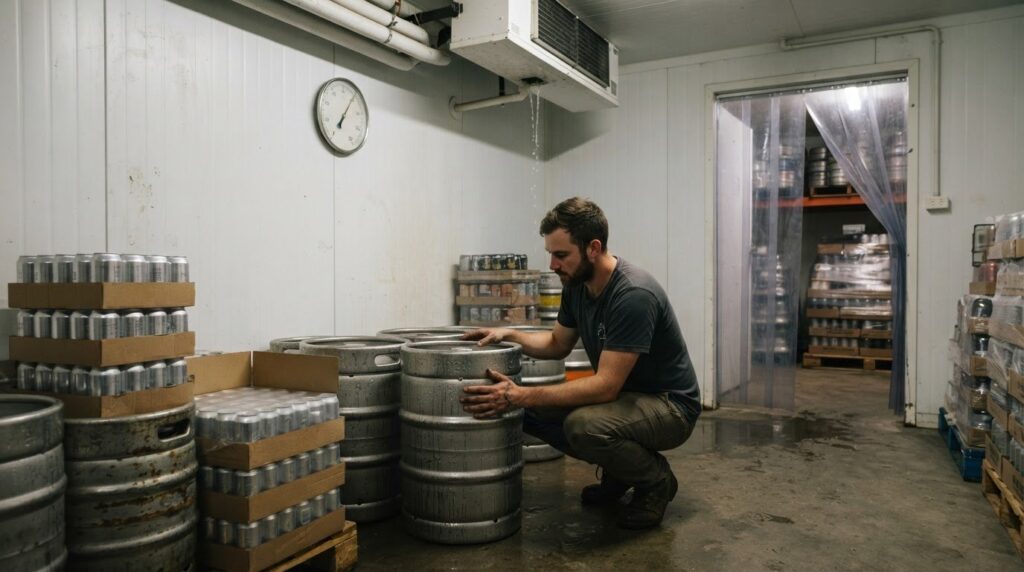
A brewery can insure its refrigeration equipment and still find that spoiled beer is not covered. Stock spoilage insurance for craft beer may respond when a chiller or temperature-control failure ruins a batch, but spoilage cover generally needs to be specifically included. A failed chiller’s lost beer may require both machinery breakdown and spoilage cover.
It’s easy to focus on tanks, chillers and brewing gear. But the beer inside them is stock too, whether it’s fermenting, ageing or ready to sell. Its value can build over time, especially in barrel-aged programmes that tie up capital for months or years.
This guide explains what brewery insurance may cover, how refrigeration failure can affect a spoiled-beer claim, and why alcohol-stock definitions matter. You’ll also learn which exclusions to look for, including those related to contamination and process errors, to understand where cover may fit your operation.
Key Takeaways
- Map your brewery’s property and stock, including beer in tanks and ageing inventory, so the value tied up in production doesn’t get overlooked.
- Understand why a refrigeration failure may need both machinery breakdown and spoilage cover for a beer loss to be considered.
- Look closely at contamination and process-error exclusions, which can affect whether a spoiled batch is covered.
- Review how the policy defines alcohol stock and whether that definition fits your beer at each stage, from brewing to sale.
What insurance does a brewery need?
A brewery insurance programme can combine property, equipment breakdown, stock, business interruption and liability cover. The right mix depends on what the brewery makes, stores, sells and serves.
Finished beer and ageing inventory cover
Property insurance may cover declared brewery stock, including finished beer in tanks, kegs, cans or bottles. Raw materials such as malt, hops and yeast may also be included. Ageing inventory deserves attention: barrel-aged beer can tie up capital for months or years. Make sure stock descriptions and declared values account for beer at different production stages, not just packaged products ready for sale.
Tailoring cover to brewery operations
A nano brewery selling from its taproom has different exposures from a producer distributing packaged beer. Tailor brewery insurance to the operation’s equipment, stock, sales and public service activities. For example, a brewery relying on chillers may need equipment breakdown cover alongside spoilage cover. A business serving alcohol to visitors should also consider liquor liability within its public liability arrangements.
Brewery programme risk factors
Review production volume, plant and stock values, taproom operations, and distribution arrangements. These factors help shape the programme. Building cover also needs a realistic replacement-cost appraisal, alongside declared equipment and fit-out values. A building estimate alone won’t account for brewing plant, refrigeration or packaging equipment. Consider how a breakdown could affect production, what repair or replacement involves, and whether business interruption cover reflects the time needed to restore operations.
Claims valuation and cover providers
A spoiled-stock claim may be assessed against the policy’s valuation basis and records supporting the batch’s eligible value. Production costs and lost revenue may be relevant when spoilage cover includes them. Business interruption cover can consider gross profit, additional operating costs, the indemnity period and the time required to restore production.
In Australia, specialist brewery insurance brokers can arrange stock spoilage cover, with the insurer and terms depending on the brewery’s risk. For a contract-brewed brand, clarify who owns the beer and how its stock and liability exposures are addressed. Product liability can relate to beer after it enters the market, while contamination or process-error exclusions may affect a spoiled-stock claim.
Spoilage cover for refrigeration or temperature-control failure
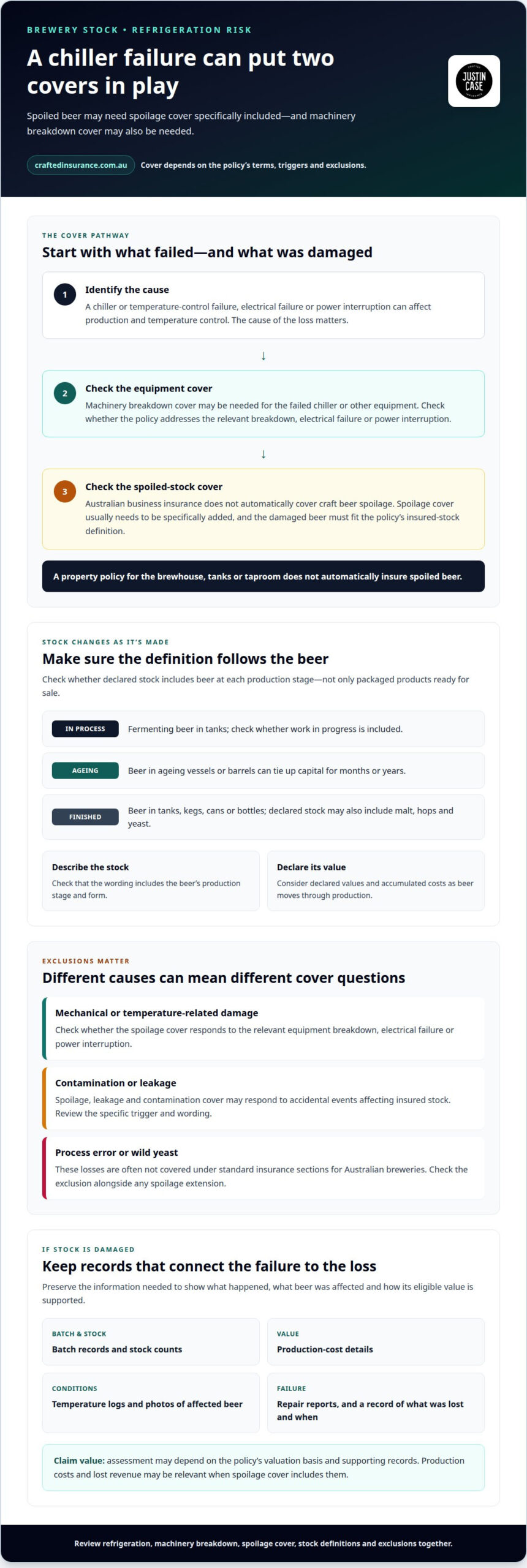
A chiller failure can turn a tank of beer into a stock loss. In Australia, spoilage cover usually needs to be specifically added, and machinery breakdown cover may also be needed.
Refrigeration and temperature-control failure
Spoilage cover may respond when a refrigeration or temperature-control failure damages insured beer, subject to the policy’s terms and exclusions. A failed chiller can affect a whole tank, while a power outage can interrupt production and compromise temperature control. Review whether the policy links spoilage to equipment breakdown, electrical failure or power interruption. The cause of the loss matters.
In-process and ageing beer protection
Beer in fermentation tanks or ageing vessels can carry value before it reaches a keg, can or bottle. Check whether the stock definition includes work in progress and ageing beer, rather than only finished, packaged products. A craft brewery with barrel-aged stock should also consider how declared values reflect the beer’s production stage and accumulated costs.
Spoiled and contaminated beer cover
Spoilage and contamination cover may address accidental contamination, leakage or temperature-related damage to insured stock. But the trigger matters: beer spoiled by mechanical failure may be treated differently from beer affected by a process error or wild yeast. Read the exclusions alongside the cover description. Property insurance for brewhouses, tanks and taproom fit-outs protects different assets; it doesn’t automatically insure spoiled beer.
Australian stock claims and documentation
Australian business insurance doesn’t automatically cover craft beer spoilage. The policy needs spoilage cover, and a refrigeration breakdown loss may also require machinery breakdown cover. To document a claim, preserve batch records, stock counts, production-cost details, temperature logs, repair reports and photos of affected beer. Record what was lost and when, then follow the policy’s claim process.
Clear records help connect the failure to the damaged stock. A brewery insurance review can help map refrigeration, property and spoilage exposures across production and taproom operations.
Contamination and process-error exclusions
A spoiled batch can result from a brewing fault, accidental contamination, leakage or theft. The cause matters because stock spoilage cover and policy exclusions treat these losses differently.
Process-error and contamination limits
Contamination caused by a process error or wild yeast infection is often not covered under standard insurance sections for Australian breweries. A batch affected by an unintended organism may therefore fall outside ordinary stock cover. Read the exclusion wording alongside any spoilage extension, and note whether it distinguishes accidental contamination from faults in brewing or handling.
Spoilage, leakage and contamination cover may respond to accidental events affecting insured stock. Theft is a separate loss, so check whether the stock section includes it and how it defines beer in tanks, kegs or packaged form. For example, a leaking tank can destroy beer without contamination, while a stolen keg raises a stock-theft question.
Fermentation faults and product recalls
Stock spoilage insurance may cover some accidental contamination, but fermentation faults aren’t automatically included. A fault linked to a process error or wild yeast may meet an exclusion, even if the beer can’t be sold. Product liability addresses claims connected to beer after it enters the market. It doesn’t pay the costs of recalling packaged beer; product recall cover is separate.
That distinction matters if a brewery discovers a problem after distribution. For example, a contaminated packaged batch may prompt customer injury claims and a need to remove products from shelves. Product liability and product recall cover address different costs. Check the policy wording for each trigger, and whether stock cover applies only before sale or also after distribution.
Keep brewing and batch records that show ingredients, production steps, quality checks and when a fault appeared. For a leakage or theft claim, stock records and incident details help identify affected quantities and the loss event. If tastings or liquor service are part of brewery operations, consider those alcohol-related liability exposures separately from contamination claims against stock.
Alcohol included within insured stock
Beer is alcohol, but a policy’s stock definition still needs to account for it. For an Australian brewery, declared stock can include beer in tanks, kegs, cans and bottles, as well as work in progress and ingredients such as malt, hops and yeast. The key is whether the wording matches what your operation actually holds.
Map stock across each production stage: fermenting beer, ageing batches, packaged products and stock ready for dispatch. Then make sure declared values reflect those categories. A barrel-aged batch, for example, can tie up capital for months or years before sale. Leaving it out of the stock description can create a gap between the beer on site and the property listed for insurance.
Stock spoilage insurance for craft beer should fit the stock categories and production stages your brewery actually uses. Separate the value of alcohol stock from other brewery exposures. Machinery cover addresses insured equipment breakdown, while business interruption can address lost income after insured damage. Product liability concerns claims linked to beer after it enters the market, including illness or injury. For a taproom serving alcohol, liquor liability addresses a different risk: damage to people or property caused by over-served patrons.
These covers do different jobs. Stock insurance is about the beer itself, not every cost that follows a loss. A batch spoiled in a tank, packaged beer stolen from storage and a visitor injured after a tasting involve different policy sections and triggers. A broker can help align stock descriptions and declared values with the brewery’s brewing, storage and sales operations.
Review the wording for how it defines alcohol stock, work in progress and finished products. Also look at applicable limits, exclusions and valuation terms. Clear categories help connect your inventory records to the property you intend to insure. That’s the practical starting point for stock spoilage insurance for craft beer.
Review your brewery’s stock cover against the beer and ingredients held at each stage of production.
Crafted Insurance
Crafted Insurance helps Australian breweries review cover for production, stock, sales and public service risks. If your policy’s spoilage wording, alcohol-stock definition or equipment breakdown cover leaves you unsure how a loss could be handled, its specialist brokerage can help clarify the details.
Risk audits and ongoing risk management can help identify exposures across your brewery operations. If a covered event leads to a claim, Crafted Insurance provides claim advocacy. The aim is practical: understand how the policy fits your business, including the beer and ingredients held at different production stages.
For a tailored review of your brewery’s insurance needs, contact Crafted Insurance.
Make your next policy review count
Use your next renewal or insurance review to connect your stock records with how beer moves through your operation. That gives the discussion a practical starting point: what you brew, where it’s stored, and how its value changes before sale.
Stock spoilage insurance for craft beer is most useful when its wording fits the actual production process, not just the finished product. Crafted Insurance works with brewery businesses, including Nano Brewery, Micro Distillery and BrewPub operations, and can help bring stock, equipment and operational risks into the conversation.
If you’re ready to talk through your brewery’s cover, contact Crafted Insurance about brewery cover. A clear review can help you take the next step with more confidence and get back to the work you love.
Frequently Asked Questions
Is equipment breakdown and spoilage included?
Not automatically. Equipment breakdown cover addresses damage to machinery, while spoilage cover addresses affected beer stock. A claim involving a failed chiller may need both sections to apply. For example, the chiller repair bill and the value of beer lost from a tank are separate parts of the incident. The policy wording determines which loss each section responds to.
What insurance policies cover beer spoilage caused by refrigeration breakdown or power failure in Australia?
Stock spoilage cover may respond to beer damaged by refrigeration failure or power outages, while machinery breakdown cover addresses insured equipment failure. The policy needs to include the relevant cover and event. For example, a power interruption could stop a cooling system and affect beer, but a stock section that excludes that cause may not respond. Business interruption is a separate consideration for lost income.
What exclusions apply to stock deterioration insurance for craft breweries and pubs?
Process errors and wild yeast contamination are often excluded under standard insurance sections for Australian breweries. Wording can also distinguish accidental contamination from a brewing fault, so the cause and circumstances matter. Theft is a different type of stock loss, not deterioration. For a pub or taproom holding beer, consider whether stock cover applies to stored products and how the policy treats each loss event.
What refrigeration and temperature-control requirements affect a beer spoilage insurance claim?
There isn’t one temperature figure that applies to every policy. The cover wording sets out relevant triggers, exclusions and conditions for refrigeration or temperature-control losses. Clear records can help explain what happened: note when the system failed, which tanks or batches were affected, and what repairs followed. Temperature logs and maintenance records can help build a timeline, but don’t replace the policy’s terms.
Is spoiled beer covered by public liability, product liability, or brewery business insurance?
Spoiled beer stock is generally addressed through stock or spoilage cover, not public liability. Public liability may respond to a visitor injured in a taproom, while product liability concerns claims of injury or illness linked to beer sold into the market. For example, a customer’s illness claim differs from the brewery’s loss of an unsaleable batch. Product recall costs are separate from product liability cover.