
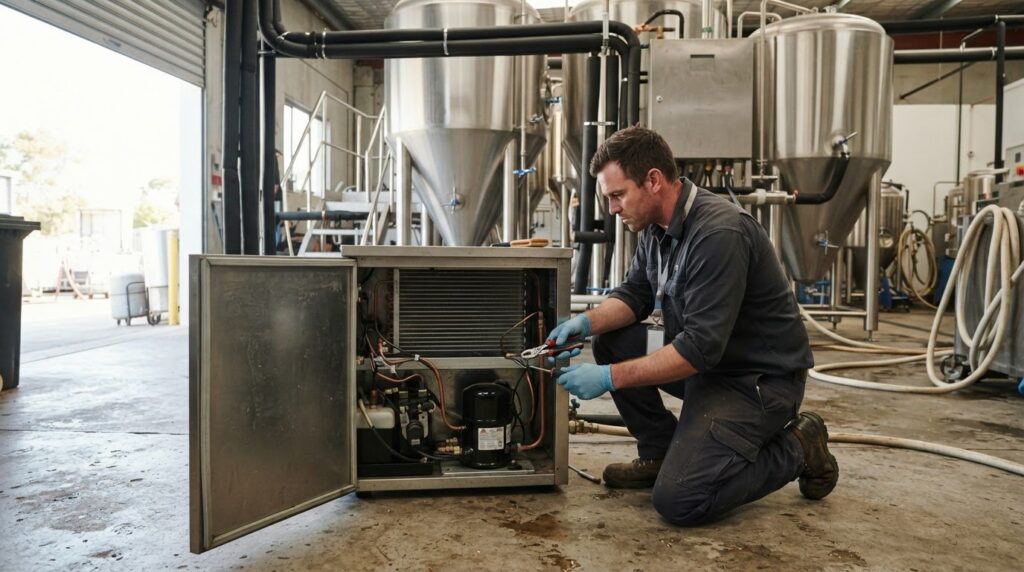
A glycol chiller failure can put more than the machine at risk. Machinery breakdown insurance for glycol chillers may cover repairs or replacement after sudden, unforeseen damage. Depending on the policy wording and selected options, cover may also extend to refrigerant replacement, business interruption or stock deterioration.
There’s no standard Australian premium for this cover. The premium depends on the equipment and cover selected, and is determined through a quote. Factors such as the chiller’s value, age, capacity, operating environment, excess and cover limits can all affect the cost.
For breweries and distilleries, the stakes can reach beyond a repair bill. A temperature interruption may threaten fermentation and stock. This guide explains what cover may include, what affects the cost, and how to weigh protection against downtime and spoilage. Plain English, no guesswork.
Key Takeaways
- There’s no standard premium: the chiller, its value, operating risks and selected cover all influence the cost.
- Some policies cover refrigerant lost after a covered breakdown, with a stated limit and excess to understand.
- Repair or replacement costs depend on the damage, the equipment’s age and whether parts are available.
- Explore deterioration-of-stock cover if a chiller failure could put temperature-sensitive stock or fermentation at risk.
Can the cost of lost refrigerant be covered by a Machinery Breakdown Policy?
Australian policies differ in their schedules, limits, excesses and extensions. Compare how each policy treats the named chiller and refrigerant loss. Cover may respond to sudden, unforeseen machinery damage, while business interruption cover is available under some policies.
Glycol chiller equipment cover
Machinery and plant breakdown cover can include commercial refrigeration and air-conditioning equipment, including a glycol chiller listed on the policy. Mechanical or electrical failure may trigger cover when it causes sudden physical damage that requires repair or replacement.
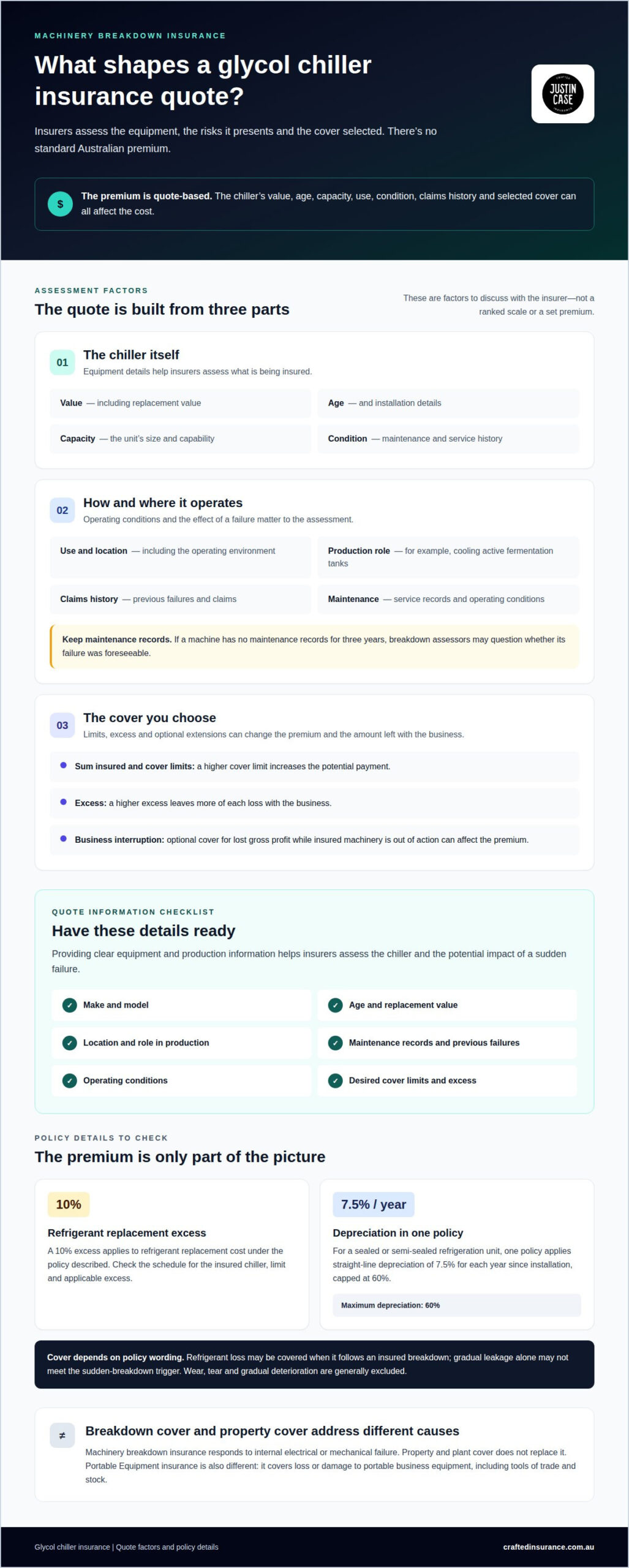
Lost refrigerant may also be covered if it escapes because of an insured breakdown. A 10% excess applies to the refrigerant replacement cost. Check the schedule for the insured equipment, limit and applicable excess.
Repair and replacement cover
After a covered breakdown, machinery breakdown insurance generally covers reasonable costs to repair or replace the failed item, subject to the policy terms. It may also cover resulting damage. Wear, tear and gradual deterioration are generally excluded, so the cause of the failure matters.
Don’t assume replacement means a brand-new chiller at full value. For a sealed or semi-sealed refrigeration unit, one policy applies straight-line depreciation of 7.5% for each year since installation, capped at 60%. Some policies offer equipment-upgrade extensions, but these sit within the policy wording and limits.
Failures and repair costs
Examples of relevant failures include an internal short circuit, overheating or a mechanical fault that stops the chiller. A published restaurant claim involving a freezer compressor and ruptured refrigerant pipe reported A$1,300 in repair costs. That example illustrates a claim, not a standard repair price or guaranteed outcome.
To make a claim in Australia, notify the insurer and provide the repairer’s findings, invoices and details of the failure. Insurers may also rely on reports from experts they appoint. Keep maintenance and service records, and document refrigerant loss and resulting interruption. This evidence helps establish what failed, what repairs were needed and whether the policy covers the loss.
How much does Equipment Breakdown insurance cost?
There’s no standard Australian premium for a glycol chiller. The cost depends on the equipment, selected limits and risks presented to insurers.
Equipment breakdown pricing factors
Insurers assess the chiller’s value, age, capacity, use, condition, claims history and chosen excess. The sum insured and optional business interruption cover can also affect the premium. A higher cover limit increases the potential payment, while a higher excess leaves more of each loss with the business. A unit cooling active fermentation tanks also presents a different interruption risk from a spare chiller.
Information for an insurance quote
For a quote, provide the chiller’s make, model, age, replacement value, location and role in production. Include maintenance records, previous failures, operating conditions, desired cover limits and the excess the business can carry. These details help insurers assess the equipment and the potential impact of a sudden failure.
Maintenance requirements vary by policy. Routine servicing of chillers and pumps is a practical risk-management measure. When a machine has no maintenance records for three years, breakdown assessors may question whether its failure was foreseeable.
Property insurance and breakdown insurance address different causes of loss. Breakdown insurance responds to internal electrical or mechanical failure, while property and plant cover does not replace it. Portable Equipment insurance is also different: it covers loss or damage to portable business equipment, including tools of trade and stock.
Monitoring can help identify developing faults before they cause interruption. Deloitte reports predictive maintenance can reduce downtime by 30-50% and extend equipment life by 20-40%. For a brewery, inspection records and alerts can help show how the chiller was maintained and when a fault emerged.
Equipment repair or replacement costs
A breakdown claim can involve more than the failed chiller component. The repair method, replacement value and selected extensions determine which costs may be covered.
After covered damage, machinery breakdown insurance generally pays reasonable costs to repair or replace the failed equipment. If parts are unavailable or repair is uneconomical, a functional replacement may be used. For a sealed or semi-sealed refrigeration unit, one policy deducts straight-line depreciation of 7.5% for each year since installation, capped at 60%. So replacement may not mean a brand-new unit at full cost.
Lost refrigerant expenses
Refrigerant replacement may form part of a covered repair when gas escapes following an insured breakdown. A policy’s refrigerant extension may set a per-event limit and an excess, both of which affect the amount payable. Check how the wording treats refrigerant loss, repair labour and related costs. Gradual leakage alone may not meet the sudden-breakdown trigger.
Equipment breakdown insurance costs
There’s no standard Australian premium for this insurance. The cost depends on the equipment and cover selected, and is determined through a quote. Underwriting can consider the chiller’s value, age, condition, use, claims history, cover limits and chosen excess. Business interruption cover can also affect the premium because it responds to lost gross profit while insured machinery is out of action.
Depending on the policy, extensions may cover additional costs of working, express freight, overtime or temporary equipment hire, helping keep production moving after a failure. Read each limit and condition closely. The extension described here applies to electric motors, not automatically to every chiller expense.
Glycol chiller breakdown and fermentation risks
A glycol chiller keeps fermentation vessels within their intended temperature range. If its pump, control system or refrigeration circuit fails, temperatures can shift and a batch may be affected. For breweries, machinery breakdown insurance for glycol chillers can address sudden physical damage to insured equipment. Also consider what may happen to stock and income while the chiller is out of operation.
Repair cover and stock protection are separate considerations. A machinery breakdown policy may include optional deterioration-of-stock cover for stock lost or damaged after a breakdown. Without that option, damaged beer or ingredients may not be covered under the machinery section. Check how the policy defines stock, which events trigger deterioration cover, and any limits or exclusions for fermenting product.
Business interruption cover may address lost gross profit after insured machinery damage, subject to the policy terms. A waiting period may apply before cover starts. The production impact depends on which vessels rely on the failed chiller, whether another cooling system can take over, and how long repairs take. Replacing a pump might restore operation sooner than repairing a major refrigeration-system failure.
Wear and tear or gradual deterioration is generally excluded from machinery breakdown cover. That distinction matters when a mechanical component has been weakening over time rather than failing suddenly. Maintenance records, service reports and the repairer’s findings can help explain the cause. They also provide useful evidence when insurers assess a claim for equipment damage or resulting stock loss.
Map the exposure before a failure: identify which tanks depend on each chiller, what backup cooling is available, and which cover addresses stock and interruption. That gives a clearer basis for choosing limits and extensions. Review cover for chiller and fermentation risks as part of your brewery’s risk planning.
Crafted Insurance
Crafted Insurance helps Australian craft breweries and distilleries understand machinery breakdown risks and the cover that may address them. If a glycol chiller supports fermentation, consider equipment damage alongside potential stock loss and business interruption.
Crafted Insurance’s tailored insurance packages, risk audits and ongoing risk management help connect cover decisions with your production setup. Its claim advocacy can also support you through the claims process, without guaranteeing a particular outcome.
Whether you run a nano brewery, micro distillery, brewpub or local craft brewery, Crafted Insurance can help you discuss your operation and insurance needs.
Make your next cover decision with confidence
Start by connecting the chiller’s role in production with the financial impact of a failure. Note which fermentation vessels depend on it, what backup cooling is available, and how a shutdown could affect stock and trading. This operational picture gives you a practical starting point to discuss machinery breakdown insurance for glycol chillers.
Then focus on the policy details that matter to your setup: insured equipment, repair and replacement terms, refrigerant treatment, stock protection and interruption cover. Clear information about the chiller and its maintenance helps make the discussion practical.
Crafted Insurance supports craft businesses including Nano Breweries, Micro Distilleries and BrewPubs with tailored insurance packages and risk management. If you’re ready to talk through your operation and cover needs, contact Crafted Insurance about chiller cover. A considered plan can help you put your energy back where it belongs: making great beer and spirits.
Frequently Asked Questions
Can I claim for faulty equipment on insurance?
Possibly, if the fault causes sudden, unforeseen physical damage to insured machinery that needs repair or replacement. A glycol chiller that stops after an internal electrical failure is different from one gradually deteriorating through age or wear. Machinery breakdown cover generally excludes wear, tear and gradual deterioration. A manufacturer defect may fall under warranty instead, so the cause and policy wording matter.
What happens if my machinery cannot be repaired due to parts becoming obsolete?
If parts are unavailable and the chiller can’t be repaired, the policy may provide for a functional replacement. That doesn’t automatically mean a new unit of the same brand or model. The insurer’s assessment, policy settlement terms and any applicable depreciation shape the claim. Keep the repairer’s report explaining why obsolete parts prevent a practical repair.
What is typically not covered?
Machinery breakdown policies generally exclude wear, tear and gradual deterioration. They also don’t cover burglary, and lost stock is covered only if deterioration-of-stock cover has been selected. A breakdown policy isn’t a substitute for property or plant and equipment insurance, which responds to different causes of loss. The policy wording sets the exclusions, limits and conditions for each insured machine.
What policy extensions or endorsements may be relevant to consider?
For a brewery, useful extensions may include deterioration of stock, additional costs of working, temporary equipment hire, expediting expenses and business interruption. Other available extensions can address loss of rent, denial of access, electronic data restoration, professional fees, equipment upgrades or green costs. Consider which costs could follow a chiller failure, then match selected extensions and limits to those risks.
Why might you need Machinery Breakdown insurance?
A business may need this cover when production depends on machinery that could fail internally. For example, a glycol chiller failure can interrupt cooling for fermentation tanks, while a pump or control fault can stop the wider process. Cover may help with insured repair or replacement costs. Optional protections can address related losses, such as eligible stock deterioration or business interruption.
What does machinery breakdown insurance cover for glycol chillers in Australia?
Machinery breakdown insurance for glycol chillers may cover sudden, unforeseen physical damage to specified equipment that requires repair or replacement. Cover can include mechanical or electrical failures, and some policies extend to refrigerant lost after an insured breakdown. Whether resulting stock loss or business interruption is covered depends on the selected cover and policy terms, so check how the schedule treats the chiller and connected equipment.