

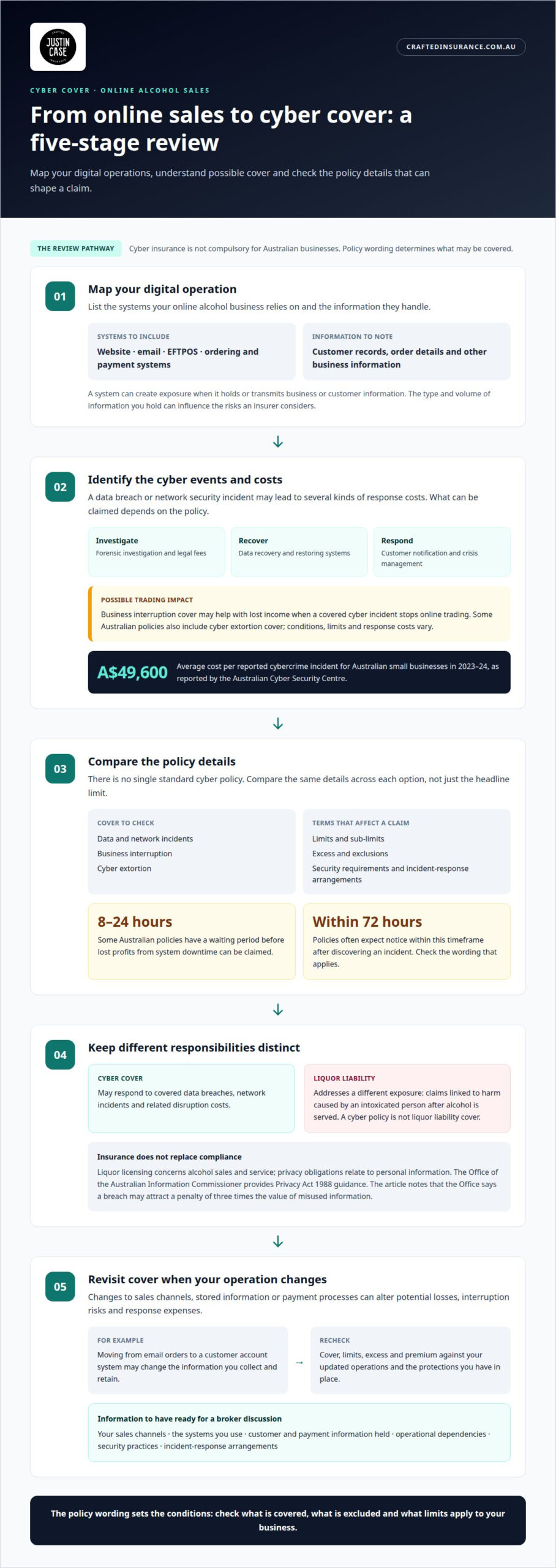
Cyber cover isn’t compulsory for Australian businesses, and it won’t address every risk of selling alcohol online. Cyber liability insurance for online alcohol sales may help with costs after a data breach or network attack, including investigation, data recovery and disruption. The policy determines what’s covered and what’s excluded.
That distinction matters when your online store handles orders and customer information. A cyber policy is not the same as cover for alcohol-related claims, and exclusions or policy limits can leave gaps when you need support.
This guide explains what cyber insurance may cover, where exclusions can apply and which online alcohol sellers may benefit. You’ll also learn what to bring to a broker conversation, so you can discuss your sales channels, customer data and operational risks with a clear picture of the cover you’re considering.
Key Takeaways
- Map how your online store handles orders, payments and customer information to identify the cyber risks a policy should address.
- Look closely at cover for breach response, data recovery and business interruption, then note the limits and exclusions that could affect a claim.
- Keep cyber incidents separate from alcohol-related liability risks; they call for different types of protection.
- Give a broker a clear picture of your sales channels and operations so you can discuss policy terms that fit your business.
Alcohol-selling businesses and online retailers that may need coverage
Cyber liability insurance for online alcohol sales may cover response costs after a data breach or network attack, depending on the policy. Some Australian policies also include business interruption and cyber extortion cover.
Businesses that may need cyber cover
Online alcohol retailers, breweries, distilleries and brewpubs may need cyber cover if they rely on digital sales or hold customer data. Whether operating an established digital spirits retailer like Whisky Fix or a boutique local brand, an attack that locks staff out of an online store’s ordering system could disrupt sales. The exposure grows when online sales, customer records and payments all rely on connected systems.
Data and network breach cover
Cyber policies may respond to costs arising from a data breach or network security incident. Depending on the wording, cover may include forensic investigation, data recovery, customer notification, legal fees and crisis management. An investigation, for example, may establish which customer records were accessed. Policy limits and exclusions determine which costs can be claimed.
Business interruption cover may help with lost income when a covered cyber incident stops online trading. Ransomware could lock a retailer out of its ordering platform or customer records, disrupting sales while systems are restored. Some Australian cyber policies include cover for cyber extortion ransom payments. The policy wording sets the conditions, limits and response costs that apply.
Premiums and coverage limits are linked: choosing a higher limit may mean a different annual premium. Insurers also consider your online operations, the information you hold and the protections you have in place. An alcohol retailer’s exposure may differ depending on whether it has a basic product catalogue or processes orders and customer details. Compare the excess, sub-limits and waiting period as well as the headline limit.
Businesses using websites, email, EFTPOS or customer data
Digital tools create cyber exposures for Australian alcohol sellers, from order systems to customer records. Cyber cover isn’t mandatory for Australian businesses, but it may be relevant if your operations depend on digital systems.
Digital tools and customer data
A website, email account or EFTPOS terminal can hold or transmit business and customer information, making access to those systems part of your exposure. For example, a compromised email account could expose order details or disrupt supplier communications. The type and volume of information you hold can influence the risks an insurer considers and the cover you need.
Reviewing cover as ecommerce grows
As ecommerce grows, review your insurance when sales channels, stored information or payment processes change. A retailer moving from email orders to a customer account system, for instance, may collect and retain different information. Those changes can affect potential losses, interruption risks and incident response expenses. They may also affect the premium, policy limits and excess that suit your operation.
Liquor liability and cybercrime costs
Liquor liability addresses a different exposure: claims linked to harm caused by an intoxicated person after alcohol is served. It isn’t cyber cover, so a digital policy shouldn’t be treated as protection against alcohol-related claims. The Australian Cyber Security Centre reported an average cost of A$49,600 per reported cybercrime incident for Australian small businesses in 2023-24. That figure shows why interruption and recovery expenses matter.
Licensing and privacy requirements
Australian liquor licensing and privacy laws create distinct responsibilities, but they don’t make cyber insurance compulsory. Liquor licensing concerns alcohol sales and service, while privacy obligations relate to personal information. The Office of the Australian Information Commissioner issues guidelines to help entities comply with the Privacy Act 1988. The Office also says a breach may attract a penalty of three times the value of misused information. These obligations can shape the data risks a seller discusses when considering policy coverage, but insurance doesn’t replace compliance.
What doesn’t cyber liability insurance cover?
Australian online alcohol retailers can seek cyber cover through insurers offering business insurance, but there’s no single standard policy. Terms vary, so the insurer’s name matters less than the wording, limits and exclusions that apply to your business.
There’s no universal list of security controls for every Australian policy. Insurers set requirements through their applications and policy terms. These may cover the software and systems you use, security practices and incident-response arrangements. Read the requirements alongside the cover to understand how they affect eligibility and claims.
Compare policies by matching the same details across each option: cover for data and network incidents, business interruption, cyber extortion, limits, sub-limits and excess. Australian policies may have a waiting period of 8 to 24 hours before lost profits from system downtime can be claimed. Notification may also be time-sensitive: policies often expect notice within 72 hours of discovering an incident.
Excess matters too. Check whether separate excesses apply to different events, and read exclusions carefully. A cyber policy isn’t liquor liability cover, so it won’t address claims for harm caused by alcohol service. Don’t assume every outage, data loss or software failure qualifies: policy definitions and exclusions determine what counts as a covered cyber incident.
Getting help from a broker to buy cyber insurance
A broker can help connect your online alcohol business’s risks with suitable cyber policy terms. Cyber insurance isn’t mandatory for Australian businesses, so owners can weigh potential losses against the cover and premium.
Start the discussion with a clear picture of your digital operations. A broker can use details about your website, payment processes, customer information, suppliers and physical order fulfilment to assess likely exposures. For example, an online store relying on one ordering platform may face different interruption risks from a business taking orders through several channels.
Then compare policy wording, not just headline limits. Look at what counts as a cyber incident, which response expenses are covered, and how exclusions or sub-limits could affect losses. Ask for the differences to be explained through a scenario that fits your business, such as a compromised email account exposing customer details or an attack disabling online orders.
Bring details of your existing business insurance to the conversation too. A broker can explain how cyber cover sits alongside other policies and distinguish digital losses from physical damage or alcohol-related liability. Many Australian cyber policies include cover for cyber extortion ransom payments, but wording and conditions vary. Ask what the policy requires before a claim, including incident notification and any security conditions.
A useful outcome is a side-by-side comparison of limits, exclusions, excesses and response support, explained in plain language. It should make clear what the policy covers, what it excludes and how the terms relate to your cyber security arrangements. This gives you a practical basis for choosing cover that reflects your online sales and day-to-day operations. For organisations operating internationally or seeking cross-border commercial risk solutions, independent specialists such as Paterson Insurance Brokers provide tailored reviews to help businesses navigate these types of digital and commercial exposures.
For a broker-led discussion focused on craft alcohol businesses, talk through cyber cover options.
Crafted Insurance
Crafted Insurance helps Australian craft breweries, distilleries and brewpubs make sense of business risks, including digital exposure from online sales. Its specialist insurance brokerage and risk management can help you consider how cyber cover fits alongside protection for production, sales and public service risks.
Bring your online sales channels, customer information practices and main operational concerns into the conversation. Crafted Insurance can assess those exposures and explain policy terms, exclusions and limits in the context of your business. This can help if you’re weighing cyber cover or reviewing how your existing insurance may respond to an incident.
For a tailored discussion of your business risks, contact Crafted Insurance.
Plan your next step with confidence
Your next policy conversation can connect cyber cover with the direction your business is heading. As digital sales evolve, include insurance in planning for changes to production, customer service and how customers buy. That gives you a practical reason to revisit cover as the business grows, rather than treating it as a one-off decision.
Crafted Insurance works with craft alcohol businesses, including Nano Brewery, Micro Distillery and BrewPub operations. Its specialist brokerage, risk audits and ongoing risk management help put business exposures into context. Consider what you want protected and how digital sales fit your plans. Those priorities can shape a focused conversation about cyber liability insurance for online alcohol sales.
Talk through your cover needs with Contact Crafted Insurance. A clear conversation is a solid place to start as you keep building your business.
Frequently Asked Questions
Do I need Multi-Factor Authentication (MFA) to qualify for a cyber insurance policy?
MFA requirements vary by cyber policy, so there’s no universal answer for Australian applicants. Insurers may set security requirements in their application or policy wording. Ask the broker whether MFA is required, which accounts it must protect, and what happens if a control isn’t in place. A requirement can affect eligibility and how a later claim is assessed.
How are premiums for cyber insurance calculated?
Cyber premiums reflect the insurer’s assessment of your business’s exposure and the cover selected. Your reliance on digital ordering, payment systems and stored customer information can shape that assessment. The limit, excess and policy features also affect the premium. For example, a business seeking broader interruption cover may be assessed differently from one seeking protection focused on incident response.
What questions should I ask about cover?
Ask what the policy treats as a covered cyber incident, which response costs it includes, and whether separate limits apply to particular claims. Also ask how the excess and downtime waiting period work. If an attack disrupts ordering but leaves email working, for example, the wording determines whether the event qualifies. Ask the broker to explain exclusions using situations that fit your sales process.
What is the difference between first-party and third-party cyber insurance?
First-party cyber losses affect the insured business directly, such as damage to its data or records. Third-party losses involve claims by others, including alleged physical injury or property damage connected with a cyber incident. For an alcohol retailer, a customer’s claim differs from the retailer’s own data-recovery expense. Policy definitions set which costs and claims fall within each category.
Does cyber insurance cover data breaches, ransomware, business interruption and payment fraud for alcohol e-commerce businesses?
A policy may cover some of these losses, but each treats them differently. Data breach response or a ransomware incident may be covered subject to terms, limits and exclusions. Business interruption cover can depend on the policy’s definition of a covered outage and any waiting period. Don’t assume payment fraud is included: look for wording that specifically addresses fraudulent transactions or funds transfer losses.
Does cyber insurance cover losses from age-verification failures or unlawful online alcohol sales?
Cyber insurance isn’t a substitute for lawful sales practices or age checks. Insurance cannot protect against incidents related to underage drinking. A cyber policy may also exclude losses linked to unlawful sales, depending on its wording and the circumstances. A system attack and a failure to verify a buyer’s age are different events, so ask the broker how the policy treats each scenario.