
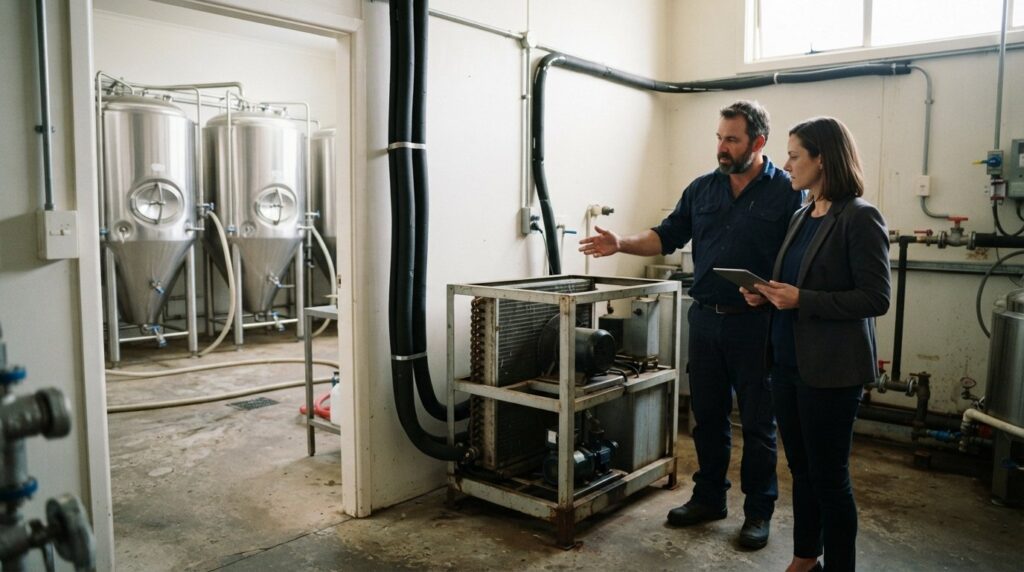
A failed chiller can do more than spoil a brew. It can stall production, disrupt orders and put cash flow under pressure. Knowing how an insurance broker helps with brewery claims means looking beyond the damaged equipment to the losses that may follow.
A policy does not automatically cover every setback. Public and product liability, sudden equipment breakdown and business interruption may respond to different losses, depending on the cover and its terms.
This guide explains which brewery losses may be covered, what can affect a claim and how a specialist broker can help you understand your options and move the process along. That means less time wrestling with policy wording and more time focused on the next brew.
Key Takeaways
- See how public and product liability cover may apply to injuries, property damage and claims linked to a brewery’s operations or products.
- Understand how business interruption cover may help with lost income and ongoing expenses when damage or a breakdown stops production.
- Learn why sudden equipment failure and gradual wear and tear can be treated differently when a brewery makes a claim.
- Find out how specialist broker support can help assess brewery risks, interpret policy wording and advocate during the claims process.
Public and product liability
Public liability may respond when a visitor is injured at a brewery, or when the brewery’s work causes injury or property damage elsewhere. A taproom spill and damage during an off-site delivery illustrate how the circumstances and policy terms can differ. For businesses wanting a broader breakdown of how these policies function, commercial brokers such as Just Quote Me provide useful guides detailing what public liability covers.
Product liability relates to claims involving beer or another product. For example, a customer who becomes ill after drinking a contaminated batch may allege injury or illness. The cause, product involved and policy wording all matter.
Alcohol-related claims need particular care. General liability insurance does not cover these claims; liquor liability insurance is needed for those exposures. Liquor liability may respond to claims involving the sale or service of alcohol, including incidents involving intoxicated customers.
For Australian breweries, claims may involve visitor injuries, product-related illness or damage, alcohol-service incidents, and losses involving vehicles or machinery. Cyber and management liability are separate areas to consider, with cover depending on the policy and the event behind the claim.
In Australia, claims are handled according to the policy terms, including insured events, exclusions and notification steps. If there is a dispute, start with the insurer’s internal complaints process, then follow the escalation pathway in its complaints information.
A broker may need the policy, claim form, incident report, photos, invoices and correspondence. For a product claim, batch records and quality-control documents can help explain what happened. For a vehicle incident, repair estimates and driver details may be relevant.
Exclusions can affect the outcome. Wear and tear is often excluded because it is not sudden and accidental. A broker can help identify whether an exclusion, limit or unmet policy condition affects the claim.
Broker fees and commissions depend on the arrangement. Engagement terms should explain whether a fee applies and how any commission is handled, so the brewery understands the costs before proceeding.
Business interruption after a breakdown or fire
A fire can damage a brewery building, stock and production equipment at once. Property insurance may cover accidental loss or damage to buildings, contents and stock. Business interruption cover addresses income lost when that damage stops operations.
A sudden breakdown can create a similar cash-flow problem without a fire. If a refrigeration unit fails and production cannot continue, business interruption cover may help replace lost profits and meet bills, payroll and extra expenses. The policy wording sets out which damage or breakdown triggers that support.
For Australian breweries, a business interruption claim links the insured event to the interruption and resulting financial loss. The insurer assesses the event, affected operations and claimed loss against the policy terms. Clear records help show how the disruption affected production and operating costs.
For example, a fire might leave a brewhouse unusable during repairs. The brewery could lose sales while still facing payroll and bills. Cover may also help with additional expenses, such as arranging for another brewery to brew product during downtime.
Interruption can also follow restricted access or the loss of essential services. Damage that cuts electricity, gas or water supplies may affect revenue, depending on the policy. Contamination can create a separate stock loss, so the claim should distinguish spoiled product from income lost while operations are interrupted.
Useful claim records include repair reports, production schedules, sales figures, payroll records and invoices for extra costs. These documents help link the interruption period to actual business expenses and lost income. A broker can organise the evidence and explain how the policy’s limits, conditions and interruption period apply.
That’s where specialist brewery insurance support can help clarify the link between physical damage and business interruption, before a breakdown or fire puts production on hold.
Equipment breakdown and production downtime
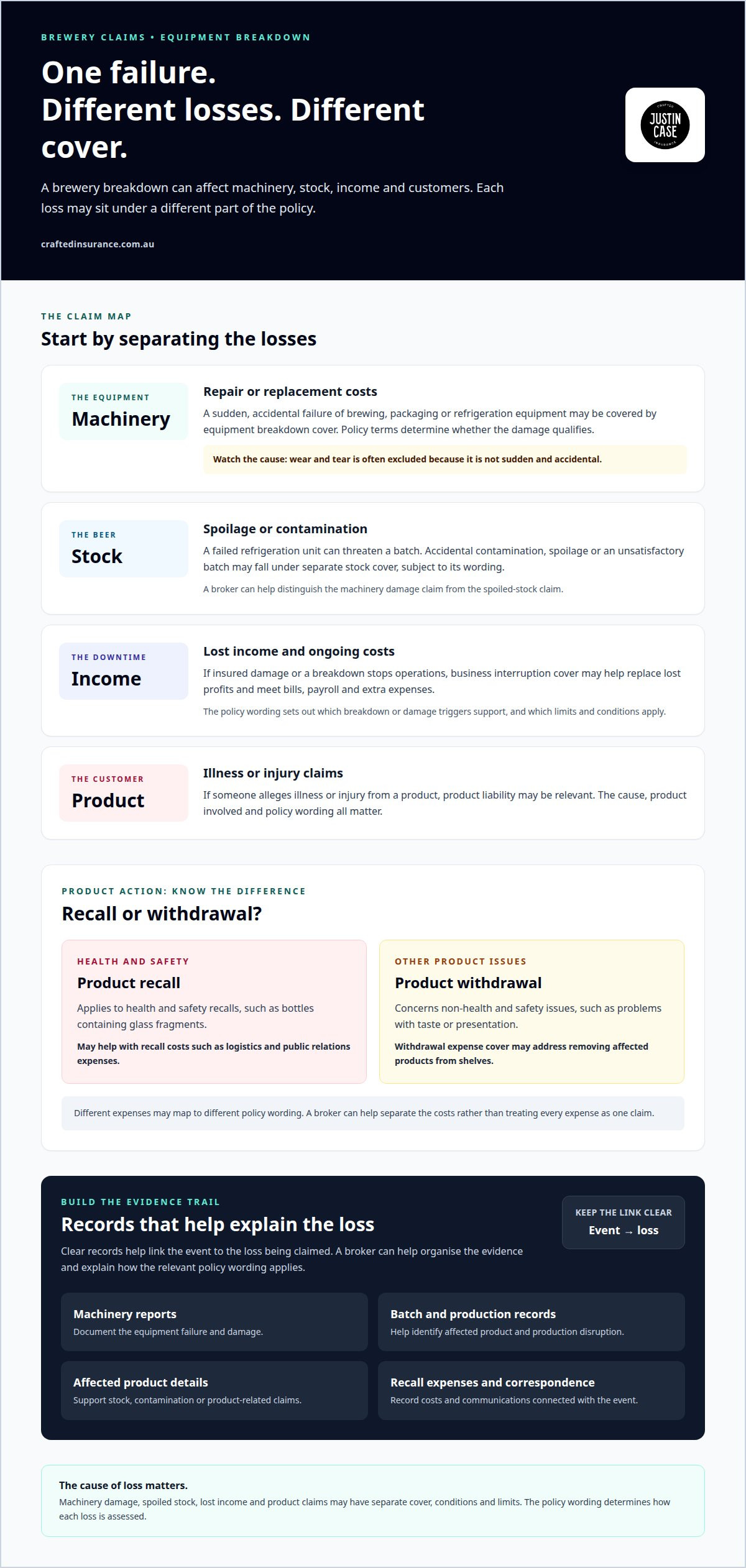
A sudden, accidental failure of brewing, packaging or refrigeration equipment can halt production. Equipment breakdown cover may help pay repair or replacement costs, while the policy terms determine whether related losses qualify. Wear and tear is often excluded because it is not sudden and accidental.
For example, a failed refrigeration unit can threaten a batch and delay orders. A broker can help distinguish the machinery damage claim from claims for spoiled stock or lost income. These losses may fall under different parts of the insurance cover, with separate conditions and limits.
Equipment breakdown, stock spoilage and product liability claims depend on the cause of loss and relevant policy wording. A machinery failure may trigger equipment cover, while accidental contamination or spoilage may fall under separate stock cover. Illness or injury claims may involve product liability.
Contamination cover may respond to accidental contamination, spoilage or unsatisfactory batches that must be discarded. Product recall cover applies to health and safety recalls, such as bottles containing glass fragments. Product withdrawal cover concerns non-health and safety issues, such as problems with taste or presentation.
A recall can bring costs beyond the beer itself. Product recall cover may help with logistics and public relations expenses, while withdrawal expense cover may address removing affected products from shelves. A broker can map each expense to the relevant wording rather than treating every cost as one claim.
Australian breweries that export products may also face claims involving overseas customers. Exported product cover may protect against costs arising from an injury or incident involving products abroad. Errors and omissions cover may respond to a third-party financial loss claim caused by a production error, such as a mislabelled item.
For a claim, a broker can help organise machinery reports, batch and production records, affected product details, recall expenses and customer correspondence. This evidence helps link the event to the claimed loss, whether the issue involves breakdown, contamination, recall or a production error.
Specialist insurance brokers for breweries
A brewery combines manufacturing, machinery, stock and public service. A specialist broker understands how one incident can affect several parts of the business, from damaged equipment to delayed customer orders.
That context matters before a claim. A broker can map the brewery’s activities against its insurance solutions, then identify which policy sections may respond. A taproom, contract production and deliveries each bring different exposures, including public liability and property risks.
After an incident, a broker can help notify the insurer, organise records and explain how the claim relates to the policy wording. For a critical pump failure, that means distinguishing repair costs from stock losses or interruption expenses, then presenting each part clearly.
Good claim support is practical, not just paperwork. A broker can track information requests, clarify insurer questions and advocate for the brewery if the claim assessment overlooks relevant details. The insurer still assesses the claim under the policy, but clear evidence helps show what happened and what was affected.
When choosing a broker, look for relevant brewery experience and a clear process. Ask how they assess production, taproom and distribution risks, and how they support a claim from notification through assessment. Their explanation should connect policy terms to real operations, not rely on broad promises.
Price discussions need context too. A broker can discuss options and negotiate with insurers, but a lower premium may come with different limits or exclusions. Compare how each option responds to the brewery’s critical exposures, not just the price.
For breweries, a specialist broker brings risk assessment and claims advocacy together. That can make the path from incident to insurer decision easier to follow, especially when equipment repair, public liability and interruption overlap. Discuss specialist brewery claim support when you want help connecting policy wording to your operations.
Crafted Insurance
Crafted Insurance helps Australian breweries understand their cover and claim support. Its specialist brokerage includes risk audits, ongoing risk management and claim advocacy, bringing policy details into the context of the brewery’s real operations.
That support can suit nano, micro, local craft and national craft breweries facing a machinery failure, product claim or taproom incident. A broker can help organise claim information, explain relevant policy wording and advocate during discussions with the insurer. The insurer assesses the claim under the policy terms.
If a claim has raised questions about your cover, or you want to understand your brewery’s risks before the next incident, contact Crafted Insurance to discuss your needs.
Get your brewery cover ready for what’s next
Your next step need not wait for a claim. As production, venues or sales channels change, a fresh review can help keep your risk planning aligned with how your business operates.
Understanding how an insurance broker helps with brewery claims gives you a clearer basis for discussing your cover and the support you may need. Crafted Insurance provides brewery risk audits, ongoing risk management and claim advocacy. Its work spans Nano Brewery, Micro Distillery and BrewPub businesses.
You can talk through the details that matter to your operation, from changing equipment to new ways of serving customers. The aim is practical: make policy wording easier to understand and provide experienced support when a claim needs attention.
Contact Crafted Insurance about brewery cover to discuss your operation and what you’d like your insurance support to help with. A clearer plan can leave you more room to focus on making good beer and bringing people together.
Frequently Asked Questions
What can it cover?
Brewery insurance may cover liability, property damage, equipment failure and interruption losses, depending on the policies in place. Some policies may also address contaminated stock, product recalls, transit or cyber incidents. The key is how the insured event, exclusions, limits and conditions fit the specific loss. A broker can help map the brewery’s activities to the cover arranged and explain where different policy sections may apply.
Why use a broker?
A broker can assess how a brewery’s production, sales and public-facing activities fit together, then arrange insurance options around those risks. That matters when one incident affects several areas, such as damaged machinery and delayed customer orders. Understanding how an insurance broker helps with brewery claims also means knowing they can advocate during insurer discussions, explain policy wording and help keep claim information organised.
How does an insurance broker help a brewery lodge and manage a claim?
A broker can help notify the insurer, explain what happened and organise the information supporting the claim. A clear event timeline can be useful, especially when several people, suppliers or contractors were involved. The broker can also track insurer questions and help prepare responses, keeping the brewery’s account consistent as repair findings or sales records come in.
What steps will an insurance broker manage, and what timeframes should a brewery expect, when handling an insurance claim in Australia?
A broker can help with notification, document collation, insurer queries and claim follow-up. Timing depends on factors such as the cause of loss, the investigation required and when repair or financial records become available. A machinery claim requiring specialist assessment may follow a different path from a straightforward property-damage claim. The broker can explain progress and identify outstanding information that affects the next step.
How do brokers help resolve disputed or underpaid brewery insurance claims?
A broker can review the insurer’s decision against the policy wording and submitted evidence. If something appears to have been overlooked, they can help prepare a focused response with relevant invoices, reports or claim calculations. For example, a brewery disputing a repair allowance can provide supporting repair documents. The broker can help raise the issue through the insurer’s complaints process and follow its response.
How does using a broker compare with dealing directly with an insurer on a brewery claim?
Dealing directly with an insurer means communicating with the organisation assessing the claim. Using a broker adds an intermediary who can help interpret the policy, organise the brewery’s account and follow up on questions. The broker does not replace the insurer’s assessment or decide the outcome. Their role is to help the brewery present its case clearly and understand the steps involved.