
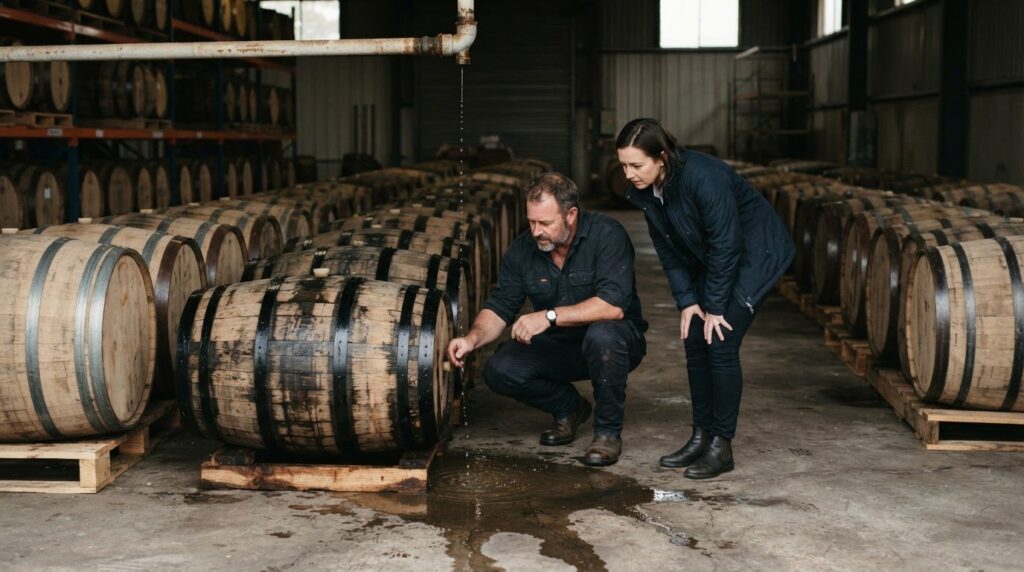
A distillery can hold the right licence and still face a disputed claim if its policy conditions, liquor liability cover and responsible service practices don’t line up. Common insurance claim denials for distilleries often involve gaps in business interruption cover, unclear protection for bottled spirits or stock values that don’t reflect whisky’s maturation.
Maturing whisky can be insured while it sits in barrels, but cover depends on the policy terms and how the stock is valued. If it’s insured only at production cost, the value added through maturation may not be reflected in a claim settlement.
This guide looks at where disputes can arise, including machinery failures, product claims and incidents involving alcohol served on site. It also explains how licence conditions, responsible service practices and barrel-stock valuations can affect cover, and what to review when arranging or updating a policy.
Key Takeaways
- Check whether your business interruption cover includes machinery breakdown and allows enough time to replace and commission specialist stills.
- Separate cover for injury or property damage claims from cover for voluntary product recalls; they can respond to different events.
- Make sure liquor liability cover and policy conditions reflect your licence, cellar-door service and responsible service practices.
- When valuing equipment and maturing stock, account for replacement, freight and installation costs, as well as the value added over time.
Business interruption
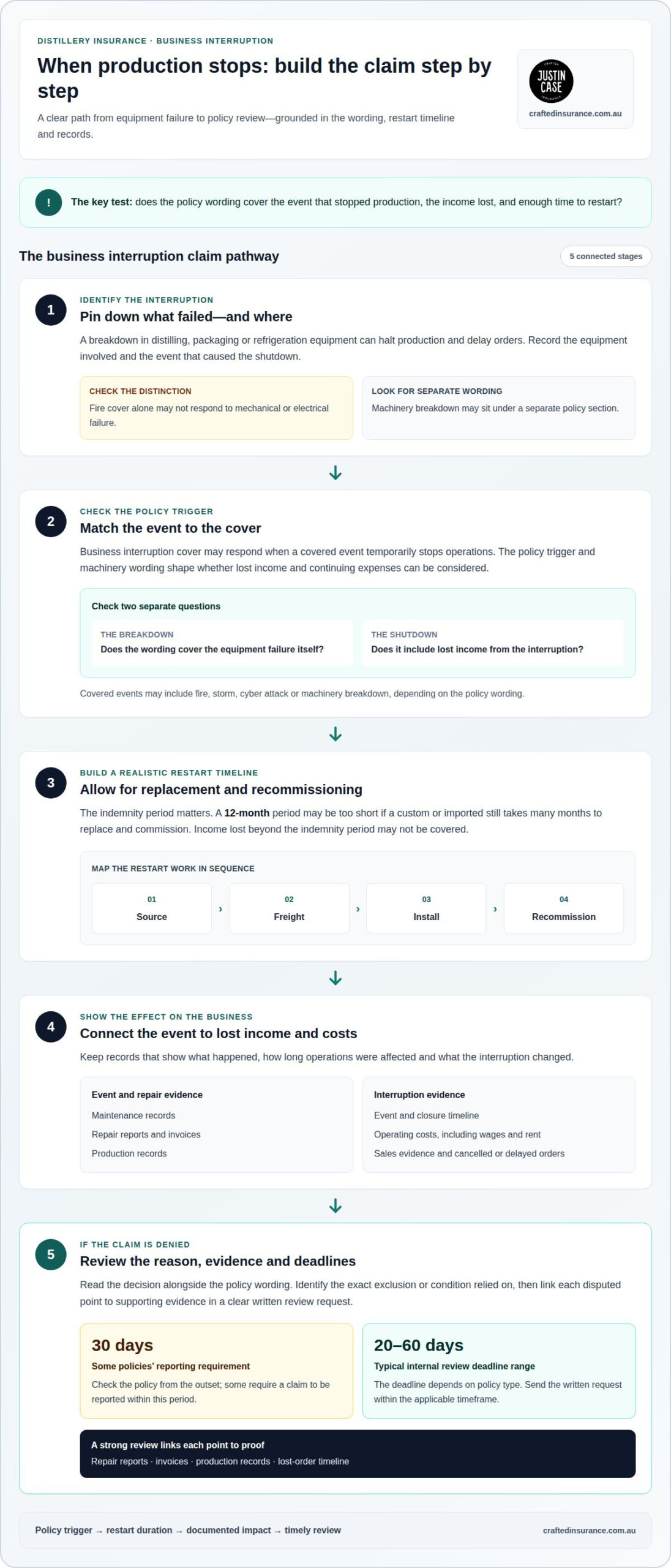
Business interruption cover may help replace lost income and ongoing expenses when a covered event temporarily stops production. Disputes often turn on the policy trigger, machinery wording and the time allowed to restart.
Machinery breakdown claims
A breakdown in distilling, packaging or refrigeration equipment can halt production and delay orders. Fire cover alone may not respond to mechanical or electrical failure, as machinery breakdown can sit under a separate policy section. Check whether the wording covers the breakdown itself and whether it includes lost income from the shutdown. Business interruption cover may help meet ongoing expenses such as wages and rent. Keep maintenance records, repair reports and sales evidence to show how the failure affected operations.
Claims after covered events
Business interruption cover may respond when a covered event, such as fire, storm, cyber attack or machinery breakdown, temporarily stops operations. The policy trigger shapes whether the insurer can settle lost income and continuing expenses. Keep records of the event, closure period, operating costs and cancelled or delayed orders. Duration matters too. A 12-month indemnity period may be too short if a custom or imported still takes many months to replace and commission. Income lost beyond the indemnity period may not be covered. Include sourcing, freight, installation and recommissioning in the restart timeline.
Internal reviews and appeals
If a claim is denied, read the decision alongside the policy wording. Note the exact exclusion or condition relied on, then gather evidence that addresses it, such as repair reports, invoices, production records and a timeline of lost orders. Some policies require claims to be reported within 30 days, so reporting requirements matter from the outset. Internal review deadlines typically range from 20 to 60 days, depending on policy type. Send a clear written review request within the applicable deadline, linking each disputed point to supporting evidence.
Product liability for injury or property damage caused by bottled spirits
A bottled spirit can lead to a liability claim if someone alleges that consuming it caused injury or that the product damaged property. Product liability cover may help with legal defence costs and potential settlements. The key questions are whether the allegation concerns a product or activity covered by the policy and whether any exclusions or conditions apply.
Keep records linking each batch to its ingredients, formulation, production arrangements and sales channels. If production is contracted out, document who owns the formulation and how the product is made and sold. A brand may retain product liability even when another party manufactures the spirit. These records help trace the product from production to customer if a claim arises.
Recall costs are another potential gap. Standard product liability cover generally doesn’t pay for a deliberate or voluntary product recall. Product recall cover may respond to recalls for health and safety reasons, while product withdrawal cover may apply to non-health-and-safety issues, such as taste or presentation. A complaint about a batch’s taste, for example, may require a different response from a health-related safety concern.
Serving alcohol on site raises a separate coverage question. A standard public liability policy may exclude or restrict claims involving alcohol served at a distillery cellar door. Make sure liquor liability is addressed specifically, alongside the policy conditions, licence and responsible service practices. A claim alleging injury after a tasting may not fall under the same cover as damage caused by a sealed bottle sold wholesale.
Management liability and cyber insurance address different exposures from product liability. Don’t assume one policy responds to a claim that belongs under another. A broker can map the exposures across production, sales and customer service, then identify where policy wording separates them. Risk management support can help bring those coverage questions into one review before a dispute lands.
Claims affected by licence conditions and responsible service practices
A distillery’s licence and responsible service of alcohol practices can affect how liquor liability cover responds. In Australia, policy conditions may be tied to both. Yet a standard public liability policy may exclude or restrict claims involving alcohol served at a cellar door. The business could then face a claim for injury or property damage without the cover it expected.
Start with the activity behind the claim. Selling sealed bottles, offering tastings and running tours create different customer interactions. Serving alcohol and staying open after 12.00 am are identified as higher-risk activities for insurance. If the policy doesn’t specifically address liquor liability, a claim linked to a tasting could raise questions about whether the right cover applies. The key takeaway: match the policy description to the actual service, not just the distillery’s production work.
Responsible service practices matter when an allegation concerns over-serving. For example, a complaint could allege that staff kept serving a patron who appeared affected. A dispute may focus on what happened, which service practices applied and whether the policy conditions were met. Keep clear records of staff procedures, incident reports and the timing of service. These details can help explain the decisions made during an incident.
Policy fit can also affect income and other parts of a claim. A liquor liability dispute may concern alleged injury, while a separate property damage claim could arise from an incident at the venue. Don’t assume one policy section automatically covers both. Match each activity to the relevant wording, including cellar-door tastings, tours and sales. If service expands or operating hours change, update the insurance details so they reflect the new exposure. Otherwise, a mismatch between the declared operation and the event can complicate a claim, delay settlement or leave the business to meet costs itself.
How can underinsurance or inaccurate business valuations lead to distillery claim denials in Australia?
An inaccurate valuation can leave a distillery short when damaged equipment or stock needs replacing. It can also trigger a dispute about what the policy was intended to insure. The declared business value helps determine the premium and cover, so an incomplete figure can affect both.
Equipment values need to account for more than the purchase price. For an imported still, include freight and installation in the replacement estimate. A sum insured based only on the still’s base replacement cost may leave those expenses uncovered. Commissioning and fitting the equipment also affect how quickly production can restart, so valuation gaps can flow into a business interruption claim.
Barrel-aged whisky needs particular care when valuing stock. Production cost may not capture the value built up during maturation. If barrel stock is insured only at cost price, the policy may not reflect its maturation value when a loss occurs. Review the insured value as the spirit ages, and check that the settlement basis accounts for that growth.
Keep a clear valuation trail. Record the basis for equipment replacement figures, including freight and installation, and update barrel-stock values as maturation changes them. Use those figures when requesting a quote and reviewing cover. A distillery’s operations, stock and equipment can change, so an old declaration may no longer represent the business accurately.
For example, a policy schedule that lists a still’s base cost but omits imported freight can leave a gap after damage. A barrel valuation based only on production cost can create another. Neither automatically means a claim will be rejected, but the gaps can limit what the policy pays or lead to a dispute about the loss. Accurate, current figures give the insurer a clearer basis for assessing the claim.
Arrange a review of your distillery’s insured values to bring equipment and maturing stock into focus.
Crafted Insurance
Crafted Insurance helps Australian craft distilleries review cover against how they produce, store and sell spirits. Its specialist Crafted Packages, FREE INSURANCE RISK AUDIT, claim advocacy and ongoing risk management help bring policy wording and operational exposures into sharper focus. Its Insurance on Tap™ approach is tailored to the business and its risks.
Turn to Crafted Insurance when a claim is disputed, your equipment or barrel-stock values have changed, or your business adds tastings or new sales channels. A focused review can help identify gaps between the risks your distillery faces and the protection described in its policy.
For a specialist discussion about your distillery’s cover or a claim, contact Crafted Insurance.
Make cover part of the way you run the business
Use common insurance claim denials for distilleries as a prompt to make coverage part of everyday planning, not just renewal paperwork. A simple coverage map can show who manages policy updates, where key documents are kept and how operational changes are shared. That clarity helps your team act promptly when something changes or a claim arises.
Set a regular internal review alongside business planning, and involve the people responsible for production, sales and customer service. They can flag changes early, before those changes create a mismatch between the business and its cover. Clear ownership makes the process easier to maintain as the operation grows.
For support reviewing cover around your distillery’s needs, talk with Crafted Insurance about your cover. A considered next step can help you focus on making great spirits with greater confidence.
Frequently Asked Questions
How do distillery insurance claims work?
A claim starts with notifying the insurer and describing the event, damage and losses. Preserve relevant records, such as dated photos, repair assessments, production logs and affected-batch details. The insurer considers the policy wording, cause of loss and evidence provided. Ask for the decision and reasons in writing. If the claim is declined or reduced, compare the explanation with the relevant policy terms before seeking an internal review.
What are the most common insurance claim denial reasons for Australian distilleries?
Common insurance claim denials for distilleries can involve an event outside the insured cover, an exclusion, a missed policy condition or a loss value the evidence doesn’t support. For example, a claim may be disputed if production stopped after machinery failed but the relevant breakdown cover wasn’t included. Delayed reporting or an outdated stock declaration can also complicate assessment. Keep incident records and current business information together to support a clear account.
Which Australian insurance policies do distilleries typically need, and what exclusions apply?
The right cover depends on the operation. A distillery may consider property, equipment breakdown, business interruption, stock, transit, product liability and public liability insurance. Employers may also need workers’ compensation cover. Each policy responds to different risks: transit cover concerns goods in transit, while stock cover concerns items held at the facility. Exclusions and limits vary by wording, so match each policy section to the activities, property and products involved.
How can equipment breakdown, maintenance, or boiler compliance issues affect distillery claims?
Equipment claims turn on what failed, why it failed and which policy section applies. A still breakdown, for example, may raise different questions from fire damage to the same equipment. Keep maintenance records, service reports and repair findings to establish the sequence and cause. For boiler or other equipment conditions, compare the policy’s stated requirements with the records available. Missing evidence can make it harder to establish how the failure occurred.
When can product contamination, faulty batches, or product recall claims be denied for Australian distilleries?
A claim may be disputed if the loss falls outside the cover purchased or the policy conditions aren’t met. A faulty batch causing a health concern, for example, may raise different coverage questions from a batch withdrawn for taste or presentation. Product liability, product recall and product withdrawal cover can respond to different losses. Keep batch records, test results, customer complaints and recall decisions to show what happened and why action was taken.
What liquor liability and public liability exclusions commonly affect Australian distilleries?
Public liability cover may exclude or restrict claims connected with alcohol served at a distillery cellar door. Address liquor liability specifically, particularly if tastings or tours are part of the business. A claim about a visitor’s injury after a tasting may be assessed differently from an injury unrelated to alcohol service. Policy wording, licence conditions and documented service practices help define how the claim is considered.