
A good brew can build a business, but it can’t protect your tanks, cover lost income after a disruption or manage a claim. Australian breweries may need to consider cover for property and equipment, business interruption, public and product liability, contamination or spoilage, and goods in transit. A craft brewery insurance broker can help you understand how these options relate to your operation.
The right mix depends on how you operate. A production-only brewery faces different risks from a brewpub serving customers on site, while distilling brings its own equipment and production exposures. There’s no one-size-fits-all package.
This guide explains the cover worth considering, what can shape your options, and how a specialist broker can support you through a claim. It will help you get a clearer picture of the risks involved in brewing, distilling and hospitality, without getting lost in insurance fine print.
Key Takeaways
- Match cover to how your business operates, from production-only brewing to customer-facing hospitality.
- Understand how a broker can help you navigate a claim and organise the information needed when disruption hits.
- Consider how equipment, stock, customer service and product risks could affect your brewery or distillery.
- See how specialist insurance support can help make coverage options clearer for businesses at different stages.
Broker location and contact details
To get an insurance quote, an Australian craft brewery should describe how it brews, stores, sells and serves its products. A broker can use those details to identify relevant cover options. Explain whether you produce beer only, serve customers on site or distribute to retailers. Each activity shapes the discussion about your risks and policy options.
The broker’s listed phone number is 1800 962 089. Breweries across Australia can use this contact point to discuss their operation and quote needs. Before calling, outline your production setup, sales channels and customer-facing activities. For example, note whether you run a taproom alongside production or deliver packaged beer to distributors. Those details help make the conversation relevant from the outset.
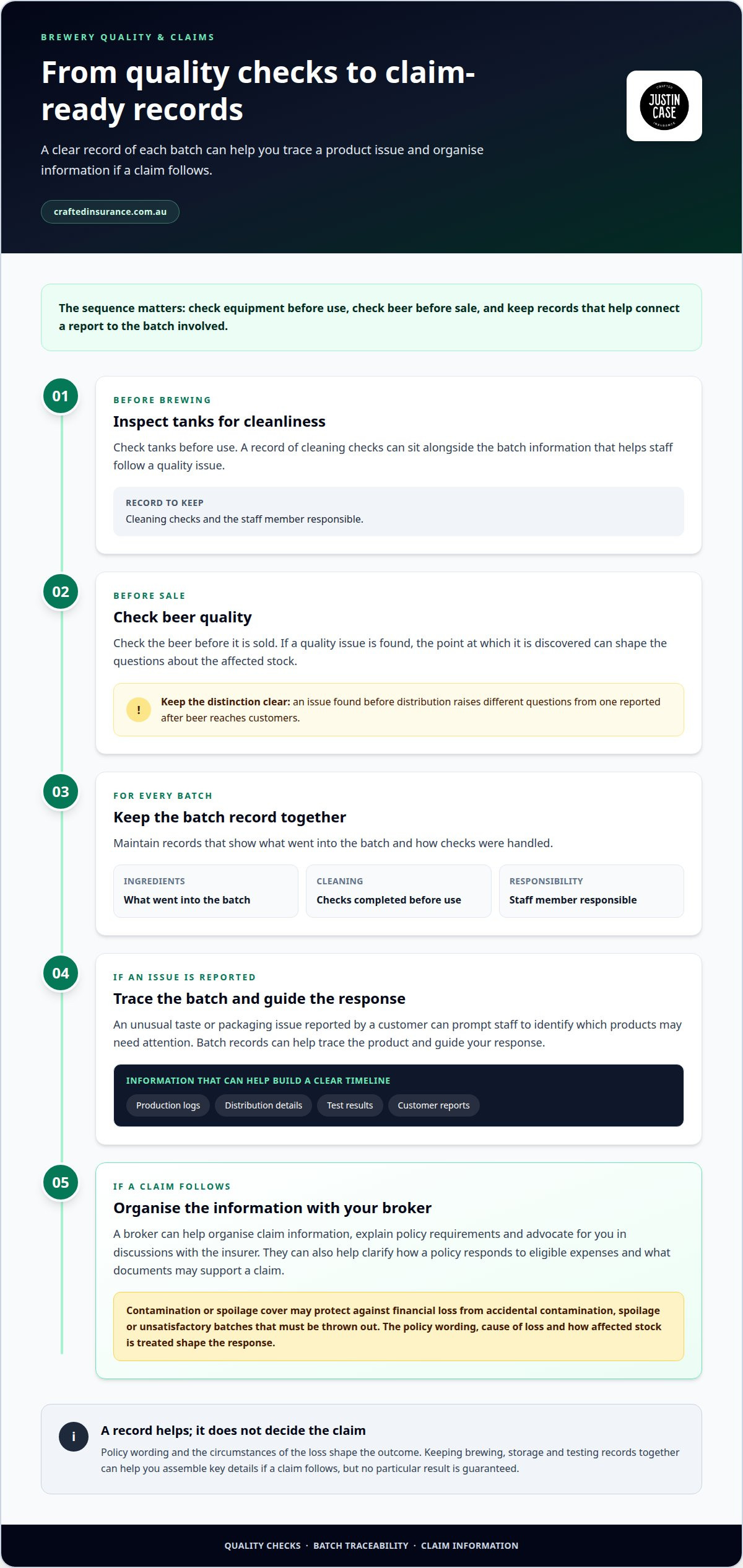
Quality control starts before brewing. Inspect tanks for cleanliness before use, then check beer quality before sale. Keep batch records showing ingredients, cleaning checks and the staff member responsible. If a customer reports an unusual taste or packaging issue, those records can help trace the batch and guide your response. A clear process helps staff identify which products may need attention.
Contaminated or spoiled beer can mean discarding a batch, with lost stock and other expenses. Contamination and spoilage cover may protect against financial loss from accidental contamination, spoilage or unsatisfactory batches that must be thrown out. Policy wording matters: the cause of the loss and how affected stock is treated shape the response. A quality issue found before distribution raises different questions from one reported after beer reaches customers. Keep brewing, storage and testing records together so you can assemble key details if a claim follows.
Broker claims support and industry expertise
Good claims support starts with understanding how brewing, distribution and hospitality fit together. That helps business owners connect policy wording to an actual incident and organise the next steps.
Industry expertise
A broker who knows breweries and distilleries can distinguish a production interruption from a customer injury or product contamination claim. That knowledge helps identify relevant policies and areas of your operation that may need closer attention.
Look for experience across your operation, not just the brewing floor. A brewery with a taproom, wholesale deliveries and packaged products faces different claim scenarios from a production-only site. A broker should explain how those activities relate to cover, exclusions and the evidence an insurer may need.
Clear advice matters before trouble starts. A risk review can connect hazards such as equipment failure, contamination or a customer incident to potential financial losses. It can also highlight practical steps, such as keeping maintenance records and documenting how staff handle customer complaints.
Claims assistance
After an incident, a broker can help organise claim information, explain policy requirements and advocate for you in discussions with the insurer. For a suspected contaminated batch, useful records may include production logs, distribution details, test results and customer reports. A clear timeline helps show what happened and which stock may be affected.
A product recall can involve more than the value of unsold beer. Removing products, communicating with customers and responding to public concerns can add pressure while you manage operations. A broker can help clarify how the policy responds to eligible expenses and what documents may support a claim. The wording and circumstances shape the outcome, so no broker can promise a particular result.
Before a loss, discuss who handles each claim step and how updates will be shared. Explore brewery claims support to understand how specialist guidance can help make a difficult process more manageable.
Coverage for nano breweries, national craft brands, distilleries and brewpubs
Cover should reflect how your business makes, moves and serves alcohol. A nano brewery, national brand and customer-facing brewpub can face different exposures.
Cover for brewery types
A nano brewery may focus on production, while a national craft brand may also distribute products across a wider network. A distillery uses different production equipment, and a brewpub serves customers on site. These differences affect which risks and policy options deserve attention.
Start by mapping your operation: production, storage, deliveries, customer service and equipment. Then consider property, interruption and liability options in light of those activities. For example, a site with a taproom has public-facing risks a production-only site may not. Equipment breakdown cover may respond to sudden and accidental equipment losses. Scheduled maintenance still matters, as wear and tear is often treated differently.
Liquor liability needs
Liquor liability insurance may protect a brewery against claims linked to alcohol sales or service, including incidents involving intoxicated customers. It’s particularly relevant to businesses serving patrons in a taproom, tasting room or brewpub.
Australian breweries should consider how they sell and serve alcohol, and whether customers visit the premises. Training staff to recognise overserved patrons and follow serving policies can help manage service risks, alongside suitable insurance. Policy wording determines how a claim is handled, so discuss cover in the context of your actual service model.
Other exposures may call for a closer look at cyber and management liability options. Consider, for example, how a payment-system disruption or a management decision could affect operations. Vehicle cover may also matter if employees drive for brewery business. Review whether the policy responds to losses when a driver is involved in an accident.
Compare options by the risks they address, their exclusions and how they fit your business model. A micro distillery, brewpub and national craft brand shouldn’t assume the same package fits every operation.
Insurance brokerage for craft breweries and distilleries
In Australia, brewery insurance needs depend on the business model, from production and distribution to serving customers. A specialist broker can help map those activities to suitable policy options and explain where breweries and distilleries may need different protection.
Workers compensation is separate from property and liability cover. For an Australian brewery, the relevant arrangements depend on the state or territory where staff are employed. Include each operating location and workforce details in a broker review.
A useful brokerage conversation gets specific about your operation. Do you sell beer directly, supply distributors or serve it at a brewpub? Do you distil spirits as well as brew? Those details shape a review of premises, equipment, products, transport and customer-facing activities. A national brand may have a different spread of locations and exposures from a small local producer.
Brokerage also means making policy differences understandable. A broker can explain what each option is designed to cover, then clarify the exclusions, limits and conditions that affect how a policy responds. This matters when a distillery’s production risks differ from a brewery’s, or hospitality adds customer and service exposures. Compare policies against your actual activities, not just their labels.
Ask for a clear explanation of how proposed cover relates to your operation. For example, discuss whether stock in transit, equipment breakdown or business interruption is relevant to your production and sales model. Consider, too, how a claim would be managed and what records could support it. These conversations can reveal gaps between day-to-day risks and the protection under consideration.
Insurance needs can shift as a brewery expands, adds a taproom or begins distilling. Review the program when operations change, so new locations, products or services enter the discussion. Discuss brewery and distillery cover to explore options for your business.
Crafted Insurance
Crafted Insurance helps Australian breweries, distilleries and brewpubs make sense of insurance options for their operations. Its specialist broking packages, Insurance on Tap™, are tailored to business size and stage. A risk review can help you consider how production, sales and public service risks fit together, and clarify relevant cover and claims support.
Whether you run a nano brewery, local craft brewery, micro distillery or brewpub, a risk audit can help identify exposures to discuss and manage. Turn to Crafted Insurance when you’re starting out, changing how your business operates or reviewing your insurance arrangements.
For tailored guidance on brewery or distillery cover, start a conversation with Crafted Insurance.
Make your next coverage review count
An insurance review is most useful when it reflects where your business is heading, not just how it operates today. A new sales channel, a change in production or adding customer service can alter the risks worth discussing. Keep those changes in view as you plan your next step.
A craft brewery insurance broker can turn that operational picture into a clearer conversation about cover and claims support. Crafted Insurance works with Nano Brewery, Micro Distillery and BrewPub operations, bringing the discussion back to your specific setup.
Bring your questions about production, distribution or serving customers, and talk through the options that may suit your business. Contact Crafted Insurance to discuss your brewery or distillery coverage. Then get back to the work you love, with a clearer path for managing the risks around it.
Frequently Asked Questions
What insurance should I consider for my craft brewery?
Consider cover for the risks your brewery actually carries, including property, equipment, business interruption, public and product liability, and stock. A brewery that sells directly, supplies distributors and hosts events may face different exposures across those activities. List your products, premises, equipment and sales channels, then use that information to guide a policy review.
Why use a broker?
A broker can translate policy wording into practical terms, source options suited to your operations and support you through a claim. That can be useful when production and hospitality create different risks. For example, a customer injury at a tasting event raises different questions from damage to brewing equipment. A broker can help clarify which policy terms apply.
Is insurance for machinery breakdown really necessary to consider?
Consider whether sudden equipment failure could interrupt brewing or damage valuable machinery. A breakdown affecting a key pump or refrigeration system could disrupt production, while routine wear and tear may be treated differently from sudden accidental damage. Review the equipment involved, the potential disruption and the policy exclusions before deciding whether this cover suits your business.
What risks can brewery insurance protect against?
Brewery insurance may address risks such as fire, theft, equipment breakdown, premises liability, product-related claims and business interruption. The protection available depends on the policy and the event. A batch that must be discarded after accidental contamination, for example, raises different coverage questions from a visitor’s injury on site. Check the policy wording for covered causes and exclusions.
What should I look for in comparing policies and quotes?
Compare each policy’s cover, exclusions, limits, conditions and excess, rather than focusing only on the headline premium. Check that the proposed cover reflects your brewing, storage, deliveries and any customer-facing activities. Ask for clear explanations of differences between options, especially around equipment failure, interruption and product claims, so you can weigh the trade-offs against your operation.
Which insurance brokers in Australia specialise in craft breweries?
Crafted Insurance is a specialist craft brewery insurance broker serving Australian breweries, distilleries and brewpubs. Its broking focuses on assessing operational risks, arranging suitable cover options and advocating for clients during claims. This specialist focus can be relevant if your business combines production with direct sales or hospitality, rather than operating as a brewery alone.