
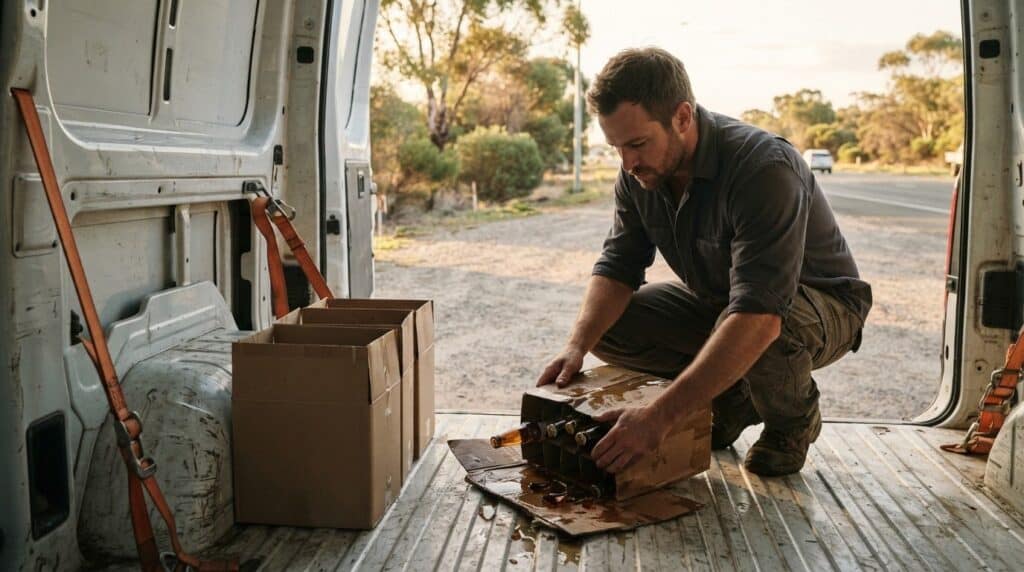
What if the delivery truck has already left the brewery? Transit insurance for craft beer distribution doesn’t automatically cover a shipment just because it’s on the road. When cover begins depends on the policy wording. For goods other than specified vehicles, trailers and trailered boats, cover can begin when the goods are first moved for loading onto the conveyance for transit outside the premises.
That timing matters if a delivery is delayed, damaged or never arrives. If beer leaks, packaging fails or the brewer and carrier disagree about responsibility, working out what to do next can feel anything but straightforward.
This guide explains what to consider when goods are already in transit, how delivery claims work, and how damage, packaging failures and responsibility disputes are handled. It also covers factors that can affect the scope of cover, helping you make a more informed decision about protecting beer on its way to customers, distributors or retailers.
Key Takeaways
- Find out when transit cover starts and ends, and how dispatch timing can affect a delivery already on the road.
- Learn how vehicle incidents, damaged goods and non-delivery can shape a claim, and where broker advocacy can help.
- See how packaging failures and temperature changes can affect beer quality and create damage beyond the shipment.
- Understand how transit cover can help clarify responsibility when a brewer and carrier disagree over a loss.
Transit coverage for direct-to-consumer beer deliveries
For direct-to-consumer beer delivery, cover timing depends on the policy wording, not simply the dispatch scan. Goods-in-transit cover generally addresses land journeys, while marine cargo cover can apply to sea transport. In Australia, inadequate age verification in online alcohol sales can lead to regulatory violations, fines and licence suspension. Transit cover addresses shipment risks, not that compliance exposure.
Land and sea transit cover
For a road delivery to a customer or retailer, goods-in-transit cover may protect beer while it’s being transported off-site. Marine cargo cover may apply when beer travels by sea. Check how the wording treats the actual route, conveyance and insured events, such as accidents, theft or environmental damage. If a shipment uses both road and sea, the terms need to address each leg.
Finished beer and inventory protection
Transit cover and property cover apply at different stages: one concerns goods moving between locations, while the other can protect brewery property and inventory. Finished beer stored before dispatch still needs to be considered under the property cover. For an insured claim, settlement is the lesser of invoice value, market value or the cost to repair or reinstate the goods. The policy schedule shows any excess.
Brewery delivery vehicle cover
Commercial auto cover can address liability from delivery vehicle accidents and may cover damage to the brewery’s fleet. It’s separate from cover for beer carried in the vehicle. For example, a driver reversing into a parked car could lead to a vehicle liability claim, while broken bottles could result in a separate cargo loss. Years of brewery experience don’t remove road risks, so consider vehicles, routes and delivery schedules.
Single-transit cargo within Australia
For a specific Australian delivery, set out the consignment, route and conveyance so the cover can be matched to that journey. Policy timing matters: goods other than specified vehicles, trailers and trailered boats are covered from when first moved for loading onto the conveyance for transit outside the premises. For other insured goods, cover ends no later than seventy two (72) hours after unloading from the final conveyance if delivery to the final warehouse has not occurred. Include freight, GST and duties in the declared sum insured.
How can a broker help with a claim for damaged or missing goods?
A broker can help identify which policy may respond, organise claim details and advocate throughout the process. The person insured under the policy may need to be involved in making a claim. If a beer shipment goes missing, a broker can help clarify whether the issue involves cargo loss, a vehicle accident or a dispute over delivery responsibility.
Useful claim details include the delivery record, the goods affected, when the loss was noticed and what happened during transport. For vehicle incidents, commercial auto cover may address accident liability and damage to the delivery fleet. A collision involving a parked car and a separate shipment of broken bottles may involve different policies and claims.
Business interruption cover can help with lost income, wages and ongoing expenses after operations are disrupted by a covered event, such as fire or equipment breakdown. Professional liability is different: it concerns claims linked to professional services or advice. The policy wording and the event itself determine which cover is relevant.
For taproom tastings or brewery events, liquor liability can address claims related to alcohol sales or service, including incidents involving intoxicated customers. Public and product liability can address claims alleging personal injury or property damage caused by brewery products or operations. A broker can help connect the incident to the relevant policy wording.
Online orders bring other exposures. A brewery handling customer payment details, email lists or shipping addresses may face cyber liability from a data breach or cyberattack. Cyber cover may help with related losses, while transit cover concerns the physical beer being delivered. Keeping these claim types distinct helps avoid confusion.
Product quality matters, too. Temperature changes can affect beer quality, while accidental contamination or spoilage may create losses beyond a damaged parcel. Product liability addresses claims of harm or property damage caused by a product. A broker can help assess how a claim fits the policy and whether quality-control records, such as tank inspections or tasting checks, support the account of events.
That’s the practical value of specialist brewery business insurance support: clearer cover distinctions, steadier claims handling and more peace of mind while you keep brewing.
Product damage and packaging failures in transit
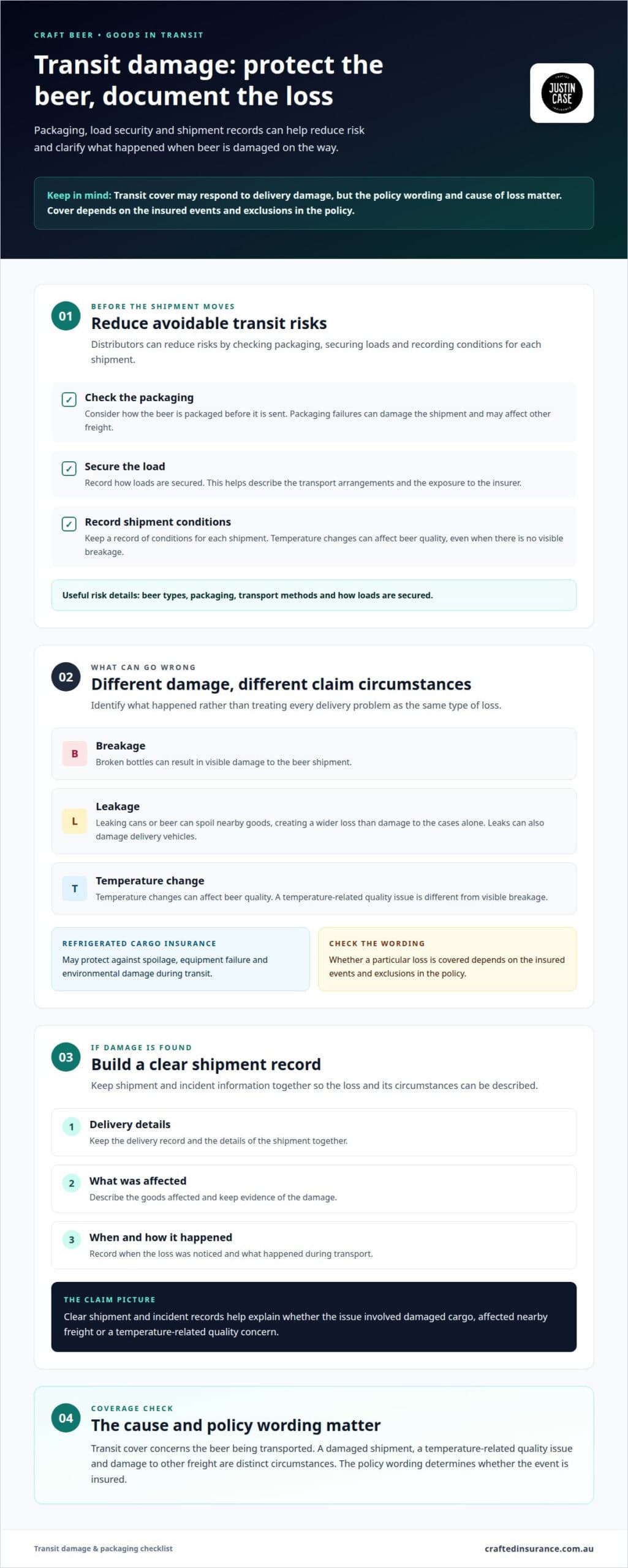
Transit cover may respond to beer damaged during delivery, but the policy wording and cause of loss matter. Distributors can reduce risks by checking packaging, securing loads and recording conditions for each shipment.
Breakage, leakage and temperature damage
Broken bottles, leaking cans and temperature changes can compromise a shipment or affect beer quality. Refrigerated cargo insurance may protect against spoilage, equipment failure and environmental damage during transit. Whether a particular loss is covered depends on the insured events and exclusions in the policy. A temperature-related quality issue and visible breakage are different claim circumstances.
Packaging failures can damage other freight or delivery vehicles, too. For example, leaking beer that spoils nearby goods creates a wider loss than damage to the cases alone. Good risk information helps insurers assess the exposure: describe beer types, packaging, transport methods and how loads are secured. Keep shipment and incident records together, including delivery details and evidence of damage.
Contamination, spoilage and recalls
Transit damage isn’t the same as contamination during production. Contamination and spoilage cover may protect against financial losses from accidental contamination, spoiled beer or batches that must be discarded. Product recall cover may help with the costs of removing defective or contaminated beer, including logistics and public relations expenses. These covers address different parts of a loss, so distinguish affected stock from any recall activity.
A packaging error can trigger a recall or product withdrawal, even if the beer itself is sound. Product recall cover may protect against income loss caused by a packaging error, while withdrawal expense cover can address the cost of removing products from shelves. Keep batch, packaging and distribution records linked so the affected beer can be identified.
Equipment breakdown is another potential interruption. Cover for sudden, accidental equipment breakdown may address damage to brewery machinery, while business interruption cover can help with lost income and ongoing expenses after a covered event. Explain how production, storage and delivery depend on that equipment. Clear details help insurers understand the risks across brewery operations, vehicles and stock, rather than treating every incident as a liquor liability claim.
Carrier and brewer responsibility disputes
A lost pallet can leave a brewery and carrier arguing over who bears the loss. Goods-in-transit cover can protect beer during transport while responsibility is being sorted out.
Goods-in-transit cover for breweries
Goods-in-transit insurance can protect beer moving from a production facility to retailers. Without transit cover, a loss may turn into a contract dispute between the brewer and carrier. The policyholder makes the claim under their policy, so a broker can help connect the shipment details, delivery records and circumstances of the loss to the relevant cover.
To arrange cover for a shipment, provide the beer type and packaging, declared value, route, transport method and delivery details. Include the carrier’s role and whether the shipment travels by road, sea or both. These details help a broker understand the cargo and its exposure, rather than treating every consignment as identical.
Exclusions for beer shipments
Exclusions depend on the policy wording. Wear-and-tear losses are often excluded because they develop over time rather than result from a sudden accident. A claim for gradual deterioration may therefore be treated differently from beer damaged in a collision. Read the wording for exclusions that apply to the goods, journey, packaging and cause of loss.
Contamination, spoilage and recall costs also need to be distinguished. Transit cover concerns goods moving between locations, while product contamination or recall cover may address different losses. A damaged shipment doesn’t automatically mean every resulting cost falls under one policy. Clear records of the affected batch, dispatch condition and delivery events help establish what happened.
A brewery insurance package can bring together relevant covers for stock, vehicles, liability and interruptions to operations. The right mix depends on the brewery’s deliveries, transport arrangements and insured exposures. A specialist insurance broker can help map those risks to policy wording, including where carrier responsibility remains disputed. Discuss brewery transit cover to bring the shipment and responsibility questions into focus.
Crafted Insurance
Crafted Insurance helps Australian breweries make sense of cover for beer in transit, delivery vehicles and wider business risks. As a specialist insurance broker, Crafted assesses how your routes, cargo and operations fit together, then sources cover suited to those exposures through its Insurance on Tap™ packages.
If a shipment is damaged or missing, Crafted Insurance provides claim advocacy to help you work through the policy response and paperwork. Its free insurance risk audit and ongoing risk management can also help identify vulnerabilities before a delivery leaves the brewery.
Whether you run a nano brewery, micro distillery, brewpub or local craft brewery, the useful next step is a conversation about how your beer moves and where responsibility sits if something goes wrong. Contact Crafted Insurance to discuss your brewery’s transit and claims needs.
Make your next delivery decision with confidence
Your distribution model can shift as online orders grow, delivery routes change or new packaging enters production. That makes insurance a working part of your operations, not a set-and-forget decision. The right transit insurance for craft beer distribution should reflect how your beer actually moves, who carries it and where responsibility can change hands.
Use your next policy review to bring those moving parts into one conversation. Map the shipment journey, the stock being carried and each carrier’s role. Then consider how transit cover fits alongside vehicle and broader business protection. Clearer alignment can make it easier to understand your cover before a claim puts it under pressure.
Crafted Insurance works with Australian craft breweries and related businesses on tailored insurance packages, risk audits, claims advocacy and ongoing risk management. Discuss your brewery’s delivery risks with Crafted Insurance, and take a considered next step for your business.
Frequently Asked Questions
Can I buy cover if the goods are already in transit?
Don’t assume a shipment is covered just because a policy is bought after dispatch. Transit cover has a defined start point: for goods other than specified vehicles, trailers and trailered boats, cover begins when they’re first moved for loading onto the conveyance for transit outside the premises. The policy has a 21-day cooling-off period, but can’t be cancelled once transit has commenced.
Does this cover import/export?
Import or export journeys need policy wording that includes the international route and relevant transport legs. Marine cargo cover may protect beer travelling over open water, but that alone doesn’t establish cover for the entire journey. The policy needs to address movement from brewery to port, sea transit and onward delivery, including transfer points and applicable exclusions.
How much should I insure the goods for?
Set the declared value against the actual consignment, not just the beer’s production cost. Include the invoice value and relevant freight, GST and duties. Keep the figures linked to each dispatch so a mixed order of packaged beer and other goods can be identified. The policy schedule and settlement terms explain how the amount payable for an insured claim is assessed.
What documents will I need to provide?
Have the shipment invoice, packing list, dispatch record, carrier booking and delivery confirmation ready. For a loss, gather photos of damaged cartons, notes on when the issue was found, correspondence with the carrier, and any available temperature or handling records. These documents show what was shipped, its condition at handover and where the journey changed, helping establish the circumstances of the claim.
What is Inland Transit Insurance?
Inland transit insurance generally refers to cover for goods while they’re transported overland, rather than stored at a fixed premises. For a brewery, that could mean packaged beer travelling by truck from the production site to a retailer or customer. Policy wording sets the journey boundaries, insured events and treatment of loading, unloading and temporary stops.
What does transit insurance cover for craft beer distribution in Australia?
Transit insurance for craft beer distribution can protect beer or raw materials while they move to customers, distributors or suppliers. Depending on the policy, insured losses may include accidental damage, theft or environmental damage during transport. It doesn’t automatically cover every issue: temperature spoilage, packaging failure, vehicle damage and alcohol liability can involve different covers. The route, transport method and policy wording shape the protection.