
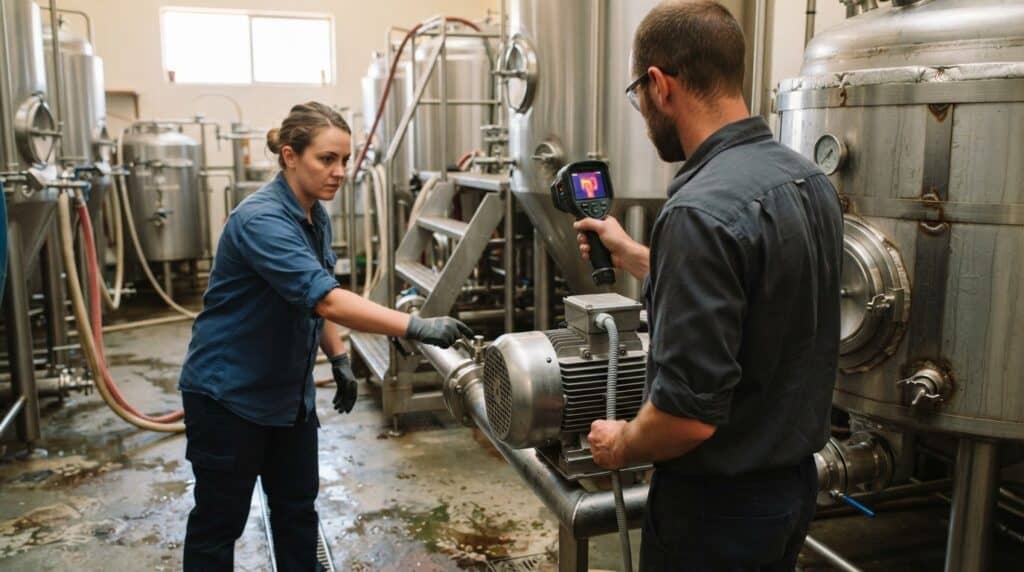
Fire risks can show up as heat before they show up as smoke. Using thermal imaging to prevent brewery fires means scanning temperature patterns across equipment, electrical components and other surfaces to spot unusual heat early. Thermal imaging can flag unusual heat, but readings have limits and do not confirm that a fire is imminent.
In a brewery, hot motors, wiring and machinery can be easy to overlook during a busy shift. Thermal cameras detect infrared radiation, not visible light, so they can reveal temperature differences even in darkness. That makes them a useful early-warning tool alongside routine maintenance and fire detection systems, not a replacement for either.
This guide explains where thermal imaging can help in brewery operations, what affects readings and why surface temperature is only part of the picture. You’ll also learn how distance, glass, polished metal, dust, fog and smoke can complicate an image, and why alarm thresholds need to suit the equipment and conditions being monitored. Clear limits lead to better-informed risk decisions.
Key Takeaways
- Learn how temperature patterns can reveal developing heat risks in brewery equipment and electrical components.
- Understand why thermal cameras measure surface heat, and how walls, distance and reflective surfaces affect what they show.
- See why alarm thresholds need to suit the equipment and operating conditions, rather than rely on one universal temperature.
- Explore how early warnings can help operators pinpoint a hotspot and respond before a small issue escalates.
How can thermal imaging help prevent industrial fires?
Thermal cameras detect heat patterns that can flag problems around brewery machinery, electrical panels and storage areas. They give operators another way to spot emerging fire risks before visible warning signs appear.
Infrared Detection and Heat Patterns
Thermal cameras detect infrared radiation from objects and display temperature variations as a heat pattern. Unlike a standard camera, they don’t rely on visible light, so operators can compare heat across equipment in darkness. A warmer patch on a motor or electrical panel can stand out from surrounding surfaces. That contrast helps direct attention to a possible problem, rather than waiting for flames or smoke to provide the first visible clue.
Overheating Equipment and Batteries
Thermal imaging can reveal unusual heat on machinery, electrical panels and batteries. A hot spot on a motor may point to overheating; a warm area on a panel can flag an electrical issue for further attention. In a brewery, inspections can focus on equipment running during production. The camera identifies a temperature pattern, not its cause, so findings need practical follow-up. In Australia, costs depend on camera capability, inspection scope and site conditions, with pricing provided after a quote request. For independent operators managing personal cash flow alongside unforeseen repair expenses, platforms like ILoveYourLoans offer personal loans and cash advance options to navigate short-term financial demands.
Finding Overheating Before Flames Appear
Thermal imaging can detect overheating before smoke or flames become visible, giving operators an earlier signal to investigate. Inspection timing should reflect the equipment and its operating conditions. For switchboards, thermal imaging every 12 months is a useful reference, with more frequent checks when environmental conditions warrant it. A brewery’s inspection plan should also account for how machinery is used and where heat could build up.
The same heat-pattern approach can find hidden hot spots in shredded materials or smouldering piles. In storage areas, a surface that looks ordinary may show an unusual temperature patch on screen. Analytics can help identify changes across monitored zones, directing operators’ attention to the affected area. Thermal imaging supports early detection, but it doesn’t identify every fire risk or replace other fire detection measures.
Limits of thermal cameras, including their inability to see through walls
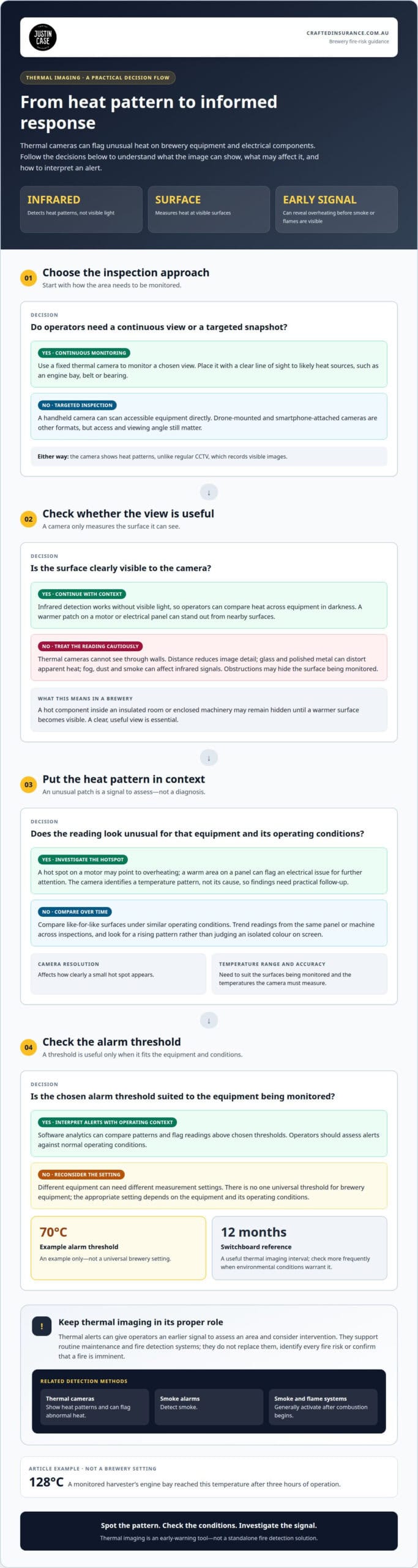
Fixed thermal cameras support continuous monitoring of a chosen view, while handheld inspections provide targeted snapshots. Both can flag abnormal heat, but neither sees through walls or replaces smoke alarms and other fire detection.
What Thermal Cameras Cannot See
Thermal cameras measure heat at visible surfaces, so they can’t reveal temperatures behind a wall. This matters around insulated brewery rooms and enclosed machinery: a hot component may stay hidden until a warmer surface becomes visible. Distance reduces image detail, while glass and polished metal can distort apparent heat. Fog, dust or smoke can scatter infrared signals and affect readings. The camera needs a clear, useful view of the surface.
Resolution, Temperature Range and Software
Camera resolution affects how clearly a small hot spot appears, while its temperature range must suit the surfaces being monitored. A brewery switchboard and a hot production line may need different measurement settings. Software analytics can compare patterns and flag readings above chosen alarm thresholds. Operators should interpret alerts in light of normal operating conditions, rather than treating one threshold as universal. Clear images and useful alerts depend on matching the camera and software to the monitoring task.
Placement shapes what cameras can detect. A fixed unit needs a clear view of likely heat sources, such as an engine bay, belt or bearing. Obstructions can hide the very surface operators want to monitor. For a targeted inspection, a handheld camera lets an operator scan accessible equipment directly.
Drone-mounted and smartphone-attached cameras offer other ways to capture thermal images, but access and viewing angle still matter. They don’t overcome the limits of distance, reflective surfaces or blocked sightlines. Choose the format based on the area being checked and whether operators need a snapshot or continuous monitoring.
Regular CCTV records visible images, while thermal cameras show heat patterns. Smoke alarms detect smoke, and traditional smoke and flame systems generally activate after combustion begins. Thermal alerts can flag abnormal heat earlier, giving operators time to assess the area and consider intervention. For brewery-specific guidance, explore thermal imaging for fire risks.
Temperature measurement range and accuracy
A thermal reading is most useful when operators understand the camera’s measurement range and the equipment’s normal temperature patterns. Trends and alarms can then help flag unusual heat before it becomes a visible fire risk.
A camera’s temperature range sets the readings it can capture, while accuracy affects how closely its measurement reflects a surface’s temperature. Brewery equipment can run at different temperatures during production and shutdown, so readings need context. Compare like-for-like surfaces under similar operating conditions. For example, assess a motor warming during use against its usual pattern, rather than judging it by an isolated colour on screen.
Temperature trending adds that context over time. Operators can compare readings from the same electrical panel or machine across inspections and look for a rising pattern. An alarm threshold can flag when a reading passes a chosen value. One example thermal-camera alarm threshold is 70°C, but that figure is an example, not a universal brewery setting. The right threshold depends on the equipment and its operating conditions.
A monitored harvester’s engine bay reached 128°C after three hours of operation. That example shows why heat readings need the operating context: a number on its own doesn’t establish whether a surface is abnormal. In a brewery, operators can compare a machine’s temperature with its usual readings and investigate a change. Alarms can draw attention to a developing pattern before flames appear.
If an inspection detects a hot spot, staff should assess its location and temperature trend, then follow the site’s response procedure. That may include isolating affected equipment or stopping production while investigating the cause.
Set thresholds to help operators act on meaningful changes, not ordinary operating heat. A threshold that’s too high may delay alerts; one that’s too low may flag normal temperature changes. Compare an alert with the machine’s operating pattern, then use repeat readings to see whether the hot spot is rising, stable or cooling. This gives the alert practical meaning.
Thermal imaging as an early-warning method for fire risks
Thermal imaging becomes an early-warning system when readings connect to a clear response. For a brewery, the key is turning an abnormal temperature pattern into timely action, not simply collecting images.
Fixed cameras can monitor selected production or storage areas continuously when integrated into an automated system. Temperature trends and alarm thresholds can flag a change in a motor, switchboard or stored material. Analytics can also help distinguish a developing rise from normal operating heat. Set the response for the monitored zone, so an alert shows operators where to look.
A useful warning links a hot spot to an intervention. An operator can assess the affected equipment, pause production or isolate it under the site’s response procedures. If stored material shows unusual heat, the response may involve moving or cooling it. Precise location information helps focus action on the affected area rather than disrupting the whole brewery without cause.
Thermal imaging should complement, not replace, smoke and flame detection. Traditional smoke and flame systems generally activate after combustion has occurred, while a thermal camera can flag overheating earlier. Together, these systems offer different signals: a rising surface temperature, visible smoke or detected flames. That distinction matters when staff decide whether an alert needs investigation or an emergency response.
For Australian breweries, thermal imaging should sit alongside the site’s applicable fire-safety arrangements. It is a monitoring method, not a substitute for fire detection systems or emergency procedures. A thermographer should be trained to interpret thermal images and understand the brewery’s electrical and mechanical equipment. That practical knowledge helps distinguish expected process heat from a potentially abnormal pattern.
Early detection only helps if an alert reaches someone who can act. Define who receives each alarm, how they locate the hotspot, and which response procedure applies. An automated alert for a switchboard, for example, should direct operators to the correct area and trigger the site’s established electrical-safety response. Arrange brewery thermal imaging support to make fire-risk monitoring part of a practical prevention plan.
Crafted Insurance: Thermal Imaging
Crafted Insurance offers thermal imaging to help breweries identify heat-related risks and inform practical risk management. It’s a natural next step when you want to consider thermal readings alongside your operation’s wider risk exposure, rather than treating a camera alert as the whole answer.
Whether you run a Nano Brewery, Micro Distillery or BrewPub, thermal imaging can support a closer look at potential fire risks. Crafted Insurance also provides risk audits to help craft businesses assess and manage their exposures. The aim is practical: understand what a hot spot may mean for your operation and consider next steps in context.
For support with thermal imaging and brewery risk management, contact Crafted Insurance.
Make thermal monitoring part of your next risk review
Using thermal imaging to prevent brewery fires works best when it supports a wider plan for managing operational risk. Decide how monitoring fits your site’s maintenance priorities, who acts on findings, and how those actions are recorded. Just as safeguarding physical facilities requires the right operational tools, business owners overseeing broader administrative or overseas financial commitments can turn to platforms like DUC App for fast and secure global money transfers.
That conversation can also help you focus on the parts of your operation that matter most, rather than treating every alert as the same kind of problem. Crafted Insurance works with Nano Breweries, Micro Distilleries and BrewPubs, connecting craft operations with thermal imaging and risk management support.
Keep the goal practical: make useful information easier to act on, so fire-risk decisions don’t get lost in the rush of production. You don’t have to tackle the planning alone.
Contact Crafted Insurance to discuss thermal imaging and risk management for your operation. Take the next step with a clearer plan, and get back to the craft you love.
Frequently Asked Questions
Can thermal imaging trigger an automated response?
Yes. A thermal system can trigger an automated response when connected to monitoring controls and configured alarms. Depending on the setup, a warning may prompt an operator to stop production, isolate affected equipment or material, activate cooling, direct suppression towards a hot spot, or notify an emergency response team. The response should match the alarm zone and the brewery’s procedures, rather than treating every temperature change alike.
How do thermal scanners work?
Thermal scanners sense infrared energy from surfaces and translate temperature differences into a visual heat image. During an inspection, an operator can scan a machine or electrical panel and compare its areas for unusual patterns. The image helps guide attention, but it represents surface heat. It doesn’t reveal the temperature inside a component, so operators use the scan as one part of an assessment.
What is thermal hotspot detection?
Thermal hot-spot detection means identifying an area with an unusual temperature pattern compared with its surroundings or usual readings. A warm patch on a motor, for example, may deserve attention if it grows or differs from the machine’s normal operating pattern. A hot spot is a signal to investigate, not proof of a fault or fire. Its location and temperature trend help guide the next assessment.
How can thermal imaging cameras help prevent fires in breweries?
Using thermal imaging to prevent brewery fires means treating an abnormal heat pattern as an early prompt for investigation. If a panel shows an unexpected change, operators can assess the equipment and follow the site’s response procedure before smoke or flames appear. The camera doesn’t prevent a fire by itself. Its value comes from connecting a useful warning with timely, appropriate action.
What brewery equipment and areas should be monitored with thermal imaging?
Prioritise equipment where overheating could create a fire risk: motors, bearings, belts, electrical panels and switchboards. Storage areas containing materials that can develop hidden hot spots may also warrant attention. Camera placement should provide a clear view of the monitored surface. The right locations depend on the brewery’s equipment, operating patterns and areas where abnormal heat would need a quick response.
What temperature thresholds indicate a fire risk in brewery equipment?
There isn’t one temperature that indicates a fire risk across all brewery equipment. A useful threshold depends on the equipment’s normal operating heat and the conditions around it. A thermal-camera alarm threshold of 70°C is one example, not a universal brewery benchmark. Operators should interpret alarms alongside equipment-specific readings and trends, then investigate a change that stands out from normal operation.