
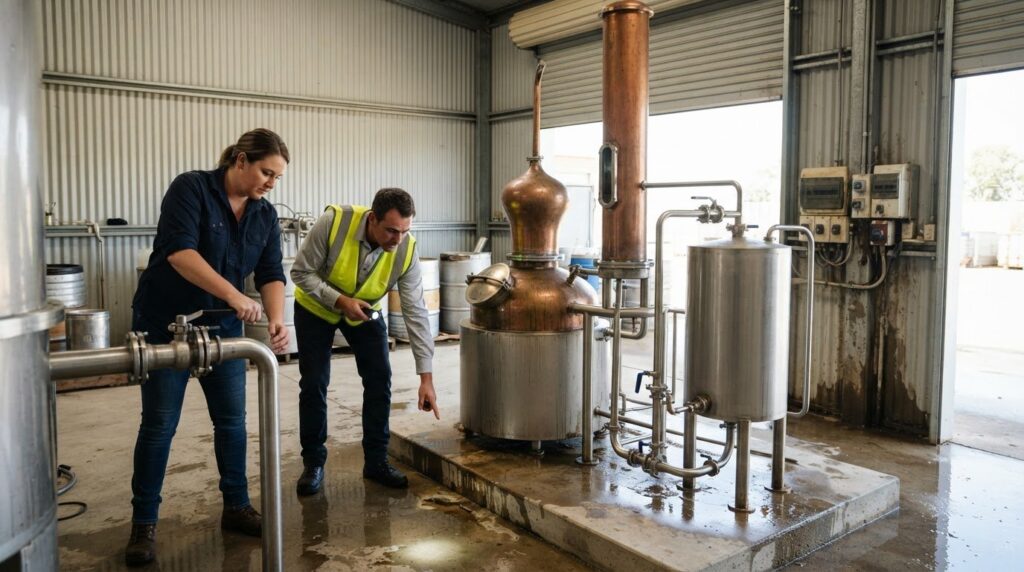
A still can fail, a batch can spoil, or a fire can bring production to a halt. Commercial property insurance for a distillery can cover buildings, stills, tanks, equipment and spirits stock against insured loss or damage, subject to the policy’s limits and terms.
You put care into every stage of production, from the first run to spirits maturing in barrels. But property cover does not automatically include every breakdown, contamination event or interruption to trade. These risks may need specific cover, so the policy details matter.
This guide explains what distillery property insurance can protect, how specialised equipment and spirits stock may be covered, and how contamination, spoilage and business interruption cover can work. It also explains why regularly reviewing insured values matters as stock matures. Use these points to identify questions about your cover and make informed decisions about protecting your operation.
Key Takeaways
- Map the building, fit-out and business contents you rely on, then consider how policy limits apply to each.
- Separate accidental batch spoilage from product recalls: they can involve different cover and costs.
- Review stock values as spirits mature, and account for the full replacement cost of specialised equipment, including freight and installation.
- Look beyond fire cover for stills and tanks; equipment breakdown and tank leakage or collapse may need specific cover.
What Does Distillery Insurance Cover?
Cover can include buildings, fit-out, contents and stock, alongside selected protection for interruptions and equipment failure. Match the insured values and cover sections to the way your distillery operates.
Buildings, Fit-out and Business Contents
Property cover can protect buildings, fit-out, machinery, furniture, raw materials and finished stock against insured damage, such as fire or storm. Limits and exclusions determine what a claim may recover. When comparing quotes, use the same property address, occupancy, construction details and sums insured. An enquiry or quote form alone does not put cover in place.
Terms, limits, exclusions and availability vary by insurer and policy. Check which events are covered and whether particular assets have separate limits.
Business Interruption and Loss of Rent
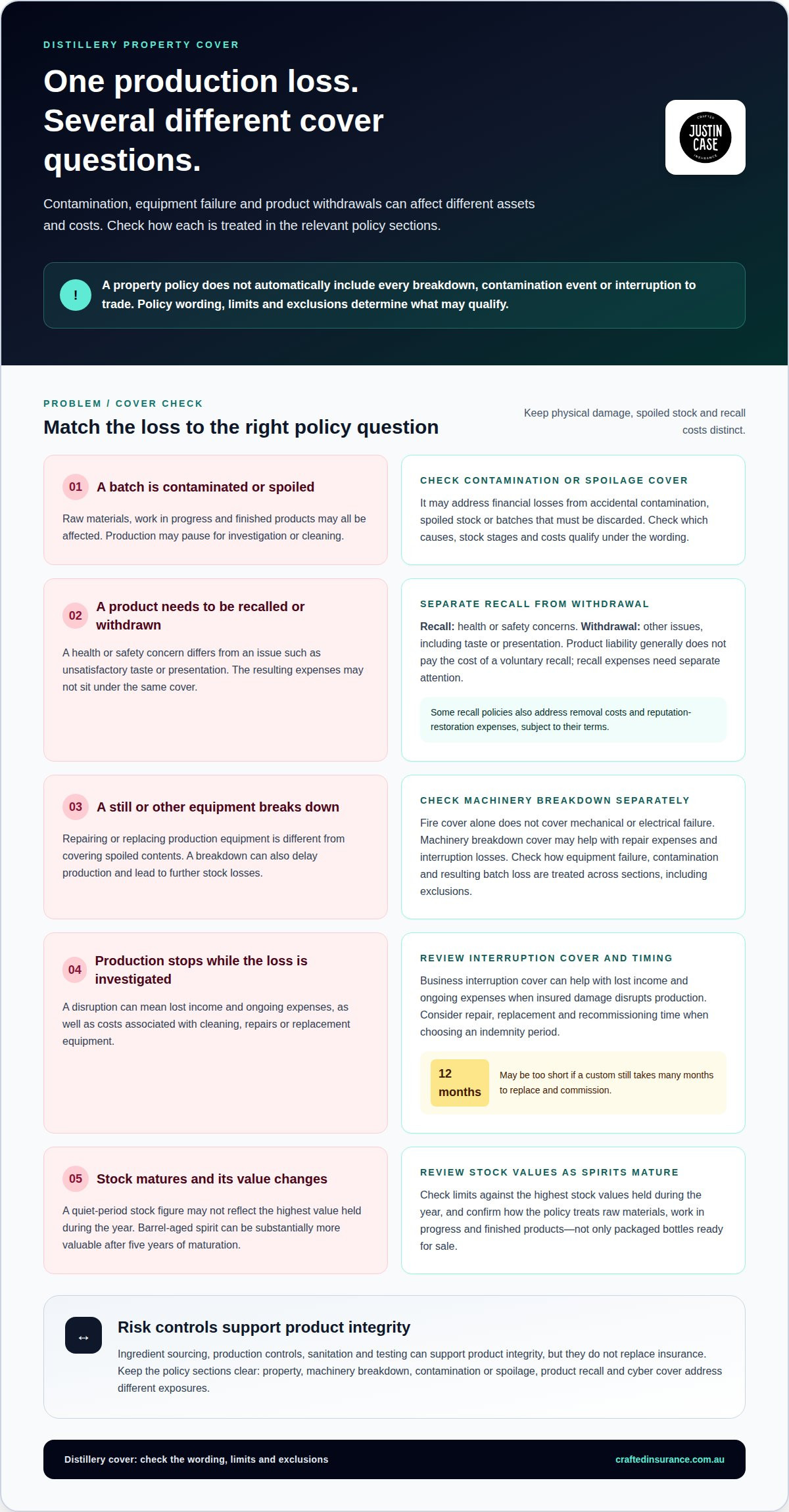
Business interruption cover can help with lost income and ongoing expenses when insured damage disrupts production. Loss of rent cover may also be available where selected. Consider how long repairs, replacement equipment and recommissioning could take before choosing an indemnity period. A period of 12 months may be too short if a custom still takes many months to replace and commission.
Vehicle risks sit outside property cover. If staff use personal vehicles for business, hired and non-owned auto liability may be relevant, while business vehicle cover is a separate consideration. Claims involving vehicle-related injury or property damage need the appropriate policy.
Equipment Breakdown and Production Interruption
Fire cover alone does not cover mechanical or electrical failure. Machinery breakdown is a separate section that may help with repair costs and financial losses if production stops. Fire damage may be covered when it results from an insured event, but explosion and boiler failure depend on the policy wording. Check how each event is treated rather than assuming one section covers every cause.
Fire Safety and Risk Controls
Insurers assess protection measures alongside construction, occupancy, location, insured values and claims history. Practical controls include safe spirit storage, ventilation, separation from ignition sources, and regular equipment servicing. According to Tasmania Fire Service, distilleries handling flammable liquids, including potable spirits, should account for AS 1940 fire-safety provisions. There isn’t one universal checklist for every policy; controls are assessed against the operation’s risks.
Contamination or spoilage of materials and products
A contaminated batch can mean more than lost spirits. Raw materials, work in progress and finished products may all be affected, while production pauses for investigation or cleaning. Contamination or spoilage cover can address financial losses from accidental contamination, spoiled stock or batches that must be discarded. The policy wording defines which causes, stock and costs qualify.
Microbial growth, cross-contamination or improper handling can compromise a batch. Quality-control steps for ingredient sourcing, production, sanitation and testing support product integrity, but do not replace insurance. Property cover may include the value of inventory lost through accidental contamination or spoilage. Check how the policy treats stock at each production stage, not just packaged bottles ready for sale.
Product recall and product withdrawal are different. Recall cover applies to health or safety concerns; withdrawal cover relates to other issues, such as unsatisfactory taste or presentation. A product liability policy generally does not pay the cost of a voluntary recall, so recall expenses need separate attention. Some recall policies also address removal costs and reputation-restoration expenses, subject to their terms.
Stills and production equipment are physical assets, but repairing or replacing them is distinct from covering spoiled contents. A breakdown can delay production and cause further stock losses. Machinery breakdown cover may help with repair expenses and interruption losses. Review how equipment failure, contamination and resulting batch loss are treated across the relevant sections, including exclusions.
Cyber cover is another separate consideration. Property, liquor liability and product recall wording don’t automatically explain protection for a digital incident. Keep the policy sections clear, especially if a system issue affects production records or recall communications. A focused risk review of production exposures can help connect these insurance solutions without blurring the different types of loss.
Distillery property coverage for buildings, equipment and spirits inventory
Property insurance can protect a distillery’s physical assets against covered loss or damage. Australian distilleries can arrange building, contents and stock cover through insurers. The policy wording sets out covered events, limits and exclusions.
Building and Equipment Damage
A fire or storm can damage a production building, still, tank, electrical systems or fit-out. Property cover may help pay to repair or replace insured structures and equipment after a covered event. Insured values matter: an amount based only on an asset’s original purchase price may not reflect its replacement cost.
For imported machinery, include freight and installation in the replacement value. Otherwise, the insured sum may fall short of the full cost of getting equipment back in place. Breweries and distilleries should also distinguish physical property damage from mechanical or electrical failure, which may need separate machinery breakdown cover.
Machinery, Inventory and Stock
Contents and stock cover can include production machinery, packaging, raw ingredients and finished spirits. Review the limit against the highest stock values held during the year, not just a quieter period. Barrel-aged liquor needs particular attention: the value of spirit can be substantially higher after five years of maturation than the cost of new-make spirit.
Updating stock values as barrels age helps the insured amount reflect changing value. Consider where stock is held, including production and storage areas, and how the policy treats damage or theft. Building, contents and stock may be arranged as separate options, so check the schedule to see which assets are covered.
Property insurance addresses physical assets, not every business risk. Liquor liability and product liability relate to different exposures, such as claims involving alcohol service or a product. Keep these protections distinct from property cover, and note any exclusions, sub-limits and conditions that could affect a claim. A clear asset list helps match each building, machine and stock category to its insured value, right down to smaller hospitality items like portable blenders from CraftCart used in tasting rooms or mobile pop-ups.
Coverage for stills, tanks, and specialised equipment
A still failure can halt production, while a leaking tank can spoil raw materials and interrupt distribution. Property and machinery cover can address different parts of these losses, so consider equipment damage separately from spoiled stock and lost income.
List each still, fermenter, tank and control system, then set its insured value against repair or replacement needs. Property cover may respond to physical damage from insured events, while machinery breakdown cover may help with repair or replacement after equipment failure. Fire cover alone does not cover mechanical or electrical failure.
Tank leakage or collapse cover can help reimburse lost raw materials and tank replacement. Contamination or spoilage cover may address unsatisfactory batches. Check how the policy treats damage to the vessel, lost contents and resulting interruption. These losses may have separate limits or exclusions, even when one incident causes them.
For an Australian distillery, tailor the review to its equipment, production and distribution risks. The policy wording, limits and exclusions show how cover applies to each still, tank and process.
Submitting an insurance enquiry or quote form does not itself put cover in place. Read the policy documents for the effective date and time before relying on protection for new equipment or a changed operation.
To connect equipment values, tank risks and production interruption, arrange a distillery risk review.
Crafted Insurance
Crafted Insurance helps Australian craft producers make sense of cover for property, production and stock. If you are considering protection for a still, tanks, maturing spirits or a production site, its specialist brokerage can help bring those exposures into the conversation.
Risk audits and ongoing risk management can help identify vulnerabilities across your operation, while claim advocacy provides support if an insured event leads to a claim. Crafted Insurance works with nano and micro distilleries, local craft businesses and brewpubs, with specialist insurance packages tailored to the operation.
A discussion with Crafted Insurance is a practical next step if you want a clearer view of how property cover fits alongside production and business risks. Contact the team to discuss your distillery’s insurance needs.
Make your next review count
Your insurance needs can change as production shifts, equipment is upgraded or distribution grows. Set a regular review point and include operational changes in the discussion. This helps keep commercial property insurance for a distillery aligned with the business you run now, not just the operation you started with.
Crafted Insurance works with craft businesses, including Nano Brewery, Micro Distillery and BrewPub operations. Its specialist focus can help you understand how insurance and risk management fit your business, while keeping the craft behind it in view.
Ready to take the next step? Contact Crafted Insurance to discuss your operation and insurance needs.
Frequently Asked Questions
How long will a quote take?
There is no fixed turnaround time; it depends on the operation’s risks and the information insurers need. A site with clear asset details may be simpler to assess than one with specialised equipment, barrel storage and several production activities. Accurate construction, occupancy and insured-value details help a broker present the risk clearly and respond to insurer questions without avoidable back-and-forth.
Is my maturing whisky stock covered while it sits in barrels?
Maturing whisky can be insured as stock, but its declared value should reflect its ageing stage. Keep records that distinguish batches, barrel locations and maturation progress. These records help show what stock was held when a loss occurred. The policy wording determines which events are covered and how stock limits, exclusions and any special conditions apply to spirit ageing in barrels.
What does commercial property insurance cover for a distillery in Australia?
Commercial property insurance for a distillery in Australia can cover specified physical assets, such as buildings, fit-out, equipment, contents and stock. The policy schedule identifies the insured property and its limits. For a leased site, distinguish assets your business owns from building features managed by the landlord. This helps clarify which property values belong in your insurance arrangements.
How are alcohol stock, ageing spirits and casks valued and insured?
Valuation should reflect the stock’s production stage and the changing value of ageing spirits. New-make spirit, mature whisky and empty casks are different inventory items. Keep batch and stock records showing quantities, age and ownership. These details help establish the amount at risk, while the policy schedule and wording explain how stock values, limits and covered events apply.
Does property insurance cover business interruption after a distillery fire or equipment failure?
Commercial property insurance for a distillery does not automatically cover every interruption. Business interruption cover can address lost income and ongoing expenses after insured damage, subject to its terms and indemnity period. Equipment failure may need a separate machinery breakdown section. For example, a still that stops production without causing insured property damage may be treated differently from a still damaged in a covered fire.
How do insurers assess a distillery’s location, construction, equipment and production risks?
Insurers weigh the property’s location and construction alongside occupancy, protection measures, insured values and claims history. They also consider how equipment and production processes affect the risk. A distillery with barrel storage and specialised stills presents different exposures from a compact operation with limited stock. Clear descriptions of the site and its activities help insurers assess the full picture.