

A policy can look tidy on paper and still miss how your distillery actually works. If your broker doesn’t understand your production, sales and service activities, important details can get lost between the application and the cover. So how do you choose a specialist distillery insurance broker who sees the whole operation, not just a list of policies?
It’s fair to expect more than general business insurance advice. Distilling involves connected activities, assets and dependencies, and policy terms or exclusions can be difficult to compare without understanding how they relate to your day-to-day work. A useful review should clarify what information matters before you arrange cover, rather than leaving you to discover a mismatch when you make a claim.
This guide offers a practical framework for comparing specialist broking. It covers questions to ask, operational details to prepare, and how risk assessment, ongoing risk management and claim advocacy can support you beyond arranging cover. The aim is a clearer conversation and better-grounded decisions, with more time to focus on the craft.
Key Takeaways
- A specialist distillery insurance broker should understand how production, stock, equipment and customer-facing activities connect.
- Map your assets, people, business dependencies and day-to-day activities before discussing cover.
- Compare brokers on their industry focus, how clearly they explain policy wording, and the support they provide after cover is arranged.
- Prepare a snapshot of your current operations and planned changes to make an insurance review more relevant.
- Risk assessment, ongoing risk management and claim advocacy can support your distillery beyond the initial insurance discussion.
Why a specialist distillery insurance broker matters for Australian operators
Producing spirits takes patience, skill and careful coordination. You’re managing ingredients and processes, valuable equipment, spirits at different stages of production, sales and, in some businesses, visitors tasting products on site. Protecting that operation calls for more detail than a generic business description such as “manufacturer” or “retailer”.
A specialist distillery insurance broker starts with how your business actually runs. Changes to production, sales channels or customer activities can affect the risks an insurer needs to understand. A good review makes those details clear before options are discussed, rather than leaving you to discover a mismatch when something goes wrong.
Distillery fires have been a concern for generations. The historical account of Allman’s Bandon Distillery, for example, records fire damage that was covered by insurance. The lesson isn’t that a modern policy will respond in the same way. It’s that the circumstances and policy wording matter.
What makes distillery insurance different from general business cover?
Production, stock and equipment are connected. A problem affecting a process or piece of machinery could also affect stored spirits, planned production and your ability to keep trading. Explain these links during a review so the broker can assess the exposures to discuss. The policy wording determines what is insured and on what terms. For smaller operators, this micro distillery insurance guide explores how production, storage and sales can shape a cover discussion.
Sales channels bring different considerations, too. Wholesale distribution involves different arrangements from selling directly to customers. Tastings add a visitor-facing activity to the production environment. If you also serve food or host events, include those activities in the discussion. Don’t assume a policy automatically covers every activity just because it’s part of your wider business.
What does a specialist distillery insurance broker do?
A broker gathers information about your operation: how you make and store products, which equipment and assets you rely on, how you sell, and whether customers visit the site. This gives the broker a basis to assess relevant risks and discuss insurance options suited to the operation being presented.
A broker can also explain differences between options, including important conditions, limits and exclusions in the policy documents. Questions about production, distribution and tastings can be considered in context, rather than squeezed into a broad business category.
There’s an important boundary. A broker arranges insurance and supports you through the process. The insurer sets the policy terms and decides whether a claim is covered under those terms. A broker doesn’t underwrite the policy or guarantee a claim outcome. Clear information at the outset helps everyone understand the operation being insured.
How a specialist broker assesses a distillery’s risks and insurance needs
A useful review is a structured conversation, not a quick scan of your business name and turnover. It maps what happens across the operation, what the business relies on, and where a disruption could have flow-on effects. Accurate details help ground the insurance discussion in the way your distillery actually works.
Accurate operational information helps a broker match insurance advice to your distillery. Explain the real setup, including activities that may sit outside production, rather than relying on assumptions about a typical operation.
Which parts of a distillery operation should the review map?
Walk through the operation from inputs to customers. A review may cover production stages, how spirits and ingredients are stored, packaging, and how finished products reach buyers. Include wholesale and direct sales, plus tastings, tours or other visitor activities where relevant. These details build a clearer picture of the business being assessed.
Assets and dependencies matter, too. Discuss premises, equipment, stock, people and services the business relies on to keep operating. If flammable liquids are handled, include that in the risk discussion. AS 1940 is an Australian Standard relating to the storage and handling of flammable and combustible liquids. This reference provides context, not an interpretation of your obligations or a statement about insurance cover.
Be specific about how the operation changes through the year or as the business grows. Adding a tasting area or shifting more sales to direct orders, for example, may change the activities the broker needs to understand. Raise planned changes alongside current arrangements.
How does a broker connect risks with possible cover?
Once the activities and dependencies are mapped, the broker can compare them with available insurance options and their policy terms. Treat examples of possible cover as topics to assess, not automatic inclusions. Whether a particular event or asset is insured depends on the insurer’s wording, conditions and the details of the risk presented.
Ask for the fine print in plain English. Exclusions describe situations a policy may not cover. Limits and sub-limits cap what may be payable for particular losses or items. An excess is the amount you may need to contribute towards a claim. These details affect how useful an option may be for your operation, so compare the wording, not just the policy names.
Risk management belongs in the same conversation, but it isn’t insurance. Practical steps to reduce or manage risks can support a safer operation; they don’t replace insurance or change what a policy says. A broker can discuss risk assessment and management alongside insurance options, while the insurer sets the terms and assesses any claim.
To map your operation’s exposures, distillery risk assessment support can help structure the discussion around how your business runs.
How to compare specialist distillery insurance brokers
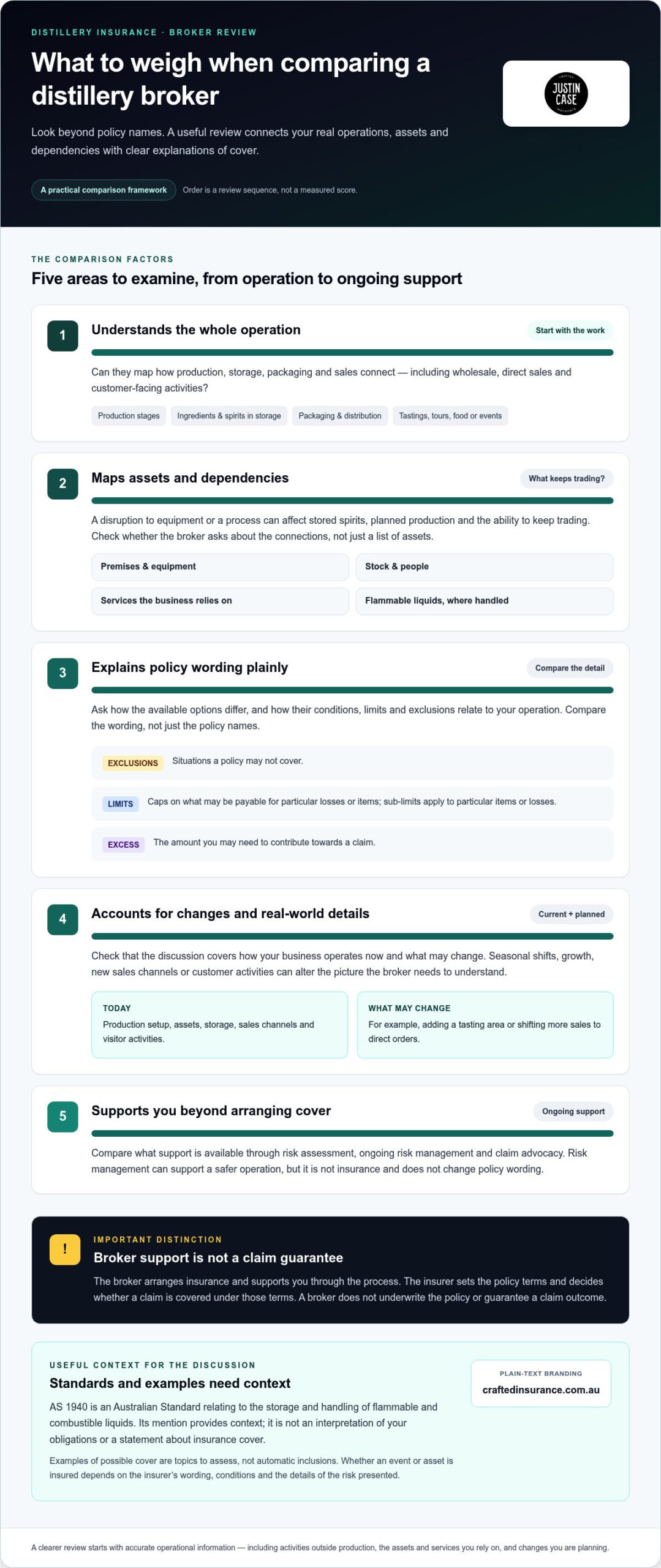
A useful comparison looks beyond the quote. You’re choosing how your operation will be represented, how policy details will be explained, and what support continues after insurance is arranged. Use the same basic information about your business in each discussion so differences in advice and proposed terms are easier to spot.
Use this framework to assess the quality of the discussion, not just the confidence of the sales pitch.
| What to compare | What useful support looks like | What to look for |
|---|---|---|
| Industry focus | The broker understands distillery and craft beverage operations. | Do discussions reflect your production stages, scale and business model? |
| Risk review | The broker explores activities, assets, people and dependencies. | Are distribution and customer-facing activities considered where relevant? |
| Policy explanation | Options are explained in plain English, including relevant limits and exclusions. | Can you understand the differences in scope and conditions? |
| Support after placement | There’s a clear picture of review, risk-management and claims support. | Does the discussion cover more than arranging insurance? |
Does the broker understand distillery operations?
Relevant experience should show up in the details. A broker should make room for how your distillery produces, stores, packages and sells spirits, rather than treating every business as the same kind of manufacturer. The conversation should suit your stage of operation, whether you’re building an emerging business or managing established production and distribution.
Clear explanations matter more than broad claims of specialist expertise. You should be able to follow how the broker’s review connects your activities with the insurance options being discussed. A specialist distillery insurance broker should make your operation central to the conversation.
What should you compare beyond the quote?
Look closely at the proposed scope and policy wording. Compare exclusions, key conditions, limits and any sub-limits that apply to particular situations or items. A lower premium on its own doesn’t show whether an option fits your operation. Compare what each option says it covers and the terms that shape how it responds.
Also consider what happens after placement. Risk reviews can help keep the picture of your operation current as it changes. Ongoing advice and claim advocacy can provide support beyond arranging insurance, without promising a particular claim outcome. Crafted Insurance provides risk assessment, tailored insurance broking, ongoing risk management and claim advocacy for Australian distilleries at different stages.
See how Crafted supports Australian distilleries.
What to prepare before a distillery insurance review
A little preparation can make an insurance review more useful. You don’t need a perfect spreadsheet or a stack of technical reports. Start by mapping what the distillery does now, what it relies on, and what you expect to change. That gives the broker a clearer basis for assessing relevant exposures and discussing available options.
A useful review starts with a clear picture of how the business operates. Gather what you have, note what you’re unsure about, and flag changes that are still being planned. Accurate, practical information is more useful than a polished but incomplete business summary.
Gather business, premises and production details
Put together a working snapshot of the operation. Include how production runs, where the business operates, how products are stored and packaged, and how they reach customers. Use notes or existing business records. The goal is to help the broker understand the activities behind the business, not create paperwork for its own sake.
- Business activities: List distilling and related activities, such as tastings, tours or serving food, where relevant.
- Premises and production: Describe the premises arrangements and outline the main production and storage stages.
- Sales and distribution: Note wholesale, direct sales, online sales and distribution arrangements that apply.
- Assets and stock: Gather current information on equipment, premises, ingredients and finished stock where available.
- People and visitors: Summarise the roles of employees and contractors, and whether customers or other visitors attend the site.
Don’t worry if you don’t have every figure to hand. Mark estimates clearly and identify anything that needs follow-up. Detailed fire-risk and equipment guidance can sit in dedicated supporting resources. For this discussion, focus on giving the broker a useful overview of your setup and dependencies.
Record changes, controls and existing insurance details
Insurance discussions should reflect where the business is heading as well as how it operates today. A new product line, higher planned capacity, different sales channel or visitor activity could change the picture. Note what’s proposed, what’s already underway and when you expect the change to happen, if known.
Also gather a brief summary of current safety procedures and risk-management measures. These help explain how you manage exposures, but they don’t guarantee cover or determine how a claim will be decided. Bring existing policy documents, schedules and renewal information so the broker can review the actual wording, conditions and limits rather than relying on memory.
A folder with operational notes, asset information, planned changes and current insurance documents is a strong starting point. Start a distillery insurance risk review with a clear snapshot of how your business runs.
How Crafted Insurance supports distilleries from review to claims
Crafted Insurance is an Australian specialist broker supporting distilleries at different stages, from emerging operations to national brands. The starting point is your business, not a one-size-fits-all profile. Production, sales and service activities help shape the risk assessment and insurance options discussed.
Crafted advertises a free insurance risk audit as a practical way to begin reviewing exposures. The audit can help organise the conversation around how your distillery operates and what has changed. Any insurance options remain subject to the insurer’s terms, conditions and assessment.
A review grounded in your actual distillery
A useful review looks at the activities behind the business and how they fit together. That may include production, storage, distribution, direct sales and visitor experiences where relevant. The aim is to understand the operation’s risk profile, then assess insurance needs against the information available.
As a specialist distillery insurance broker, Crafted can source and explain insurance options suited to the operation. The review doesn’t mean every exposure can be insured or that every risk can be eliminated. It gives you a clearer basis for discussing possible cover, policy wording and practical risk-management steps.
Support that continues beyond arranging cover
Distilleries change. You might add a product, adjust production, open a tasting area or shift how you sell. Ongoing risk-management support can help revisit exposures as the operation evolves, so the discussion doesn’t end when insurance is arranged. Risk controls remain valuable, but they don’t replace cover or alter policy terms.
If something goes wrong, claim advocacy can support you through the claims process. That may include helping you understand what information is relevant and how the claim is progressing. The insurer makes the claim decision under the policy wording, so no broker can promise a particular outcome.
Whether you’re preparing for a first review or reassessing an established operation, start with an honest picture of what the business does and what’s changing. You don’t need to have every answer neatly packaged. A straightforward conversation can help identify the details worth exploring.
Request your free insurance risk audit to start a practical discussion about your distillery’s operation and risk profile.
Make your next review a clearer one
Your distillery won’t stand still. New products, changing sales channels and growth plans can all reshape the operation over time. Treat insurance as part of that ongoing picture, not a document to file away and forget. A regular review gives you a chance to bring the discussion back to what’s happening on the ground.
Choose a specialist distillery insurance broker who listens closely, explains the options plainly and helps you understand where questions remain. Crafted Insurance states it brings a decade of experience supporting craft beverage businesses. That perspective can help make a complex conversation more manageable, while the insurer remains responsible for setting policy terms and deciding claims.
If a review is your next step, start with the information you already have. A clear account of your operation is enough to open a useful conversation, even if every detail isn’t neatly organised yet.
Request your free insurance risk audit and take the first step towards a more informed review. Your craft deserves support that keeps pace with the business you’re building.
Frequently Asked Questions
Why should a distillery use a specialist insurance broker?
A specialist broker can bring distillery-specific activities into the insurance discussion, rather than relying on assumptions drawn from a generic business description. For example, a producer selling wholesale and hosting tastings has different activities to explain from one selling only through distributors. Specialist knowledge can help make those differences clearer, though it can’t ensure every exposure can be insured or remove the risks of running the business.
How do I compare distillery insurance brokers in Australia?
Compare how each broker learns about your operation, explains policy wording and supports you after arranging insurance. Ask for a plain-English explanation of a key exclusion or condition in a proposal, then consider whether the answer addresses your business rather than relying on broad assurances. Also compare the proposed scope and terms side by side. A quote alone won’t show how well the option fits.
What information does a distillery insurance broker need?
A broker will generally need a clear account of your business activities, premises, production, assets, stock, sales channels and customer-facing services. Existing policy documents can help show what terms are currently in place. Include changes under consideration, such as adding a product or expanding direct sales. If you don’t have every figure ready, label estimates and explain what’s still being worked out rather than leaving gaps unexplained.
Can an insurance broker help with a distillery insurance claim?
Yes. A broker can provide claim advocacy, helping you understand the process and organise relevant information for the insurer. Keep records such as invoices, stock information, maintenance documents and a timeline of what happened, where available. The insurer assesses the claim against the policy wording and makes the decision. Broker support can help you navigate the process, but it can’t guarantee that a claim will be accepted or paid.
How much does a specialist distillery insurance broker cost?
There isn’t one standard broker cost for every distillery. Remuneration may involve commission, broking fees or both, depending on the arrangement. Crafted Insurance doesn’t publish commission rates or broking fees. Its website advertises a free insurance risk audit, which is distinct from any insurance placement or other risk-management work. Before proceeding, make sure you understand how the broker is remunerated and what any fee relates to.
Does a specialist broker guarantee that a distillery claim will be paid?
No. A broker can’t guarantee a claim will be paid. The insurer decides whether a claim is covered by considering the circumstances and the policy terms, including relevant exclusions, conditions and limits. A broker may advocate for you and help explain or present information during the process. That support matters, but it doesn’t replace the insurer’s decision or change the wording of the policy.