
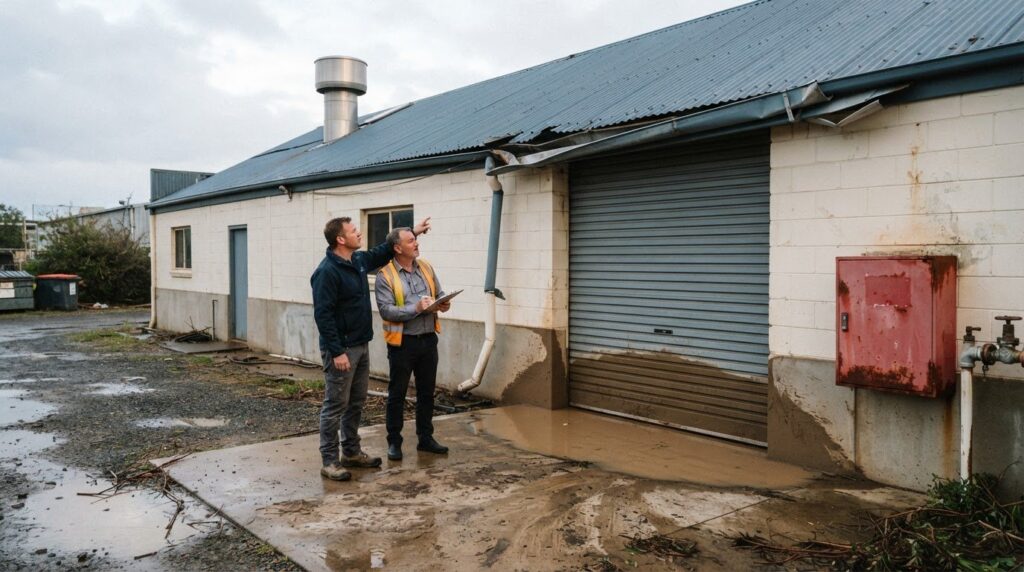
Could floodwater leave your brewery building exposed even when fire and storm are covered? Insuring a brewery building against fire and storm can protect the structure from damage caused by insured events, but the policy wording determines what is covered. Flood cover isn’t automatic, so check the definitions and exclusions against your property’s exposure.
That’s a real concern when your building houses the gear and spaces that keep production moving. This guide explains what building cover may include, how local fire, storm and flood risks can affect protection, and how security and fire safeguards may influence costs. You’ll also see where building cover ends and why considering the brewery’s other assets and operational risks can help build a clearer picture.
Key Takeaways
- Commercial building cover may respond to fire or storm damage, but policy wording and conditions shape what’s covered.
- Flood protection can vary with local exposure, so understand how your site’s natural disaster risks affect cover.
- Fire safeguards, property security and how the brewery operates can all influence how insurers assess risk and costs.
- Separate building cover from protection for brewing equipment, stock and income, so gaps are easier to spot.
What is building insurance?
Commercial building insurance may cover damage to a brewery structure caused by insured events such as fire or storm. The policy wording sets the limits, exclusions and conditions.
Cover for commercial structures
Building insurance covers the insured commercial structure, such as a brewery’s production building, after a covered event. Rebuilding walls, roofs and fixed parts can be costly and disrupt production. Compare policies by checking the insured building value, covered events, excesses and exclusions. Set the limit against the cost of repairing or rebuilding the premises, not its sale value. If the limit is too low, a serious claim could leave a shortfall.
Brewery insurance distinctions
Commercial brewery insurance considers the building alongside brewing operations and their specific risks. A commercial kitchen brings fire hazards from cooking equipment, while boilers and refrigeration units present machinery breakdown risks. Building cover does not automatically replace damaged brewing equipment, pay liability claims or cover lost income. Business interruption cover may help with lost income and ongoing costs if a covered property event, such as fire, temporarily stops brewing. These covers address different losses, so their limits and terms matter.
Commercial property cover
Commercial property insurance may protect a brewery’s building, contents, plant, stock and raw materials against covered events. Brewing ingredients such as hops, malt and yeast, as well as finished beer, may need stock cover rather than building cover. Protection for equipment, contents and stock depends on the relevant policy terms and limits. In Australia, fire cover generally does not cover heat-related scorching or melting, or smoke, ash and soot damage. Storm and flood cover also depend on policy definitions and exclusions, so water damage is not a single category.
When comparing policies, match each limit to the asset being insured: the building, machinery, contents or stock. If you need to make a claim, contact the insurer and preserve evidence such as photographs, repair records and purchase documents. The insurer’s requirements and policy terms determine what evidence supports its assessment.
After fire or storm damage, business interruption cover may help with lost income and ongoing costs if a covered property event temporarily shuts the brewery. It does not replace building insurance or automatically cover every shutdown.
Checking local natural disaster risks
A brewery’s location shapes its exposure to flood, bushfire, severe storms and other natural hazards. Insuring a brewery building against fire and storm starts with understanding which events could affect the site and how the policy defines them. Two breweries in different locations may face very different risks, even if their buildings are similar.
Flood deserves a close look. Policies may treat floodwater and rainwater differently, and the wording determines which damage an insured event covers. For home insurance, Australian flood cover may cost more or be excluded for a property at high flood risk. Commercial policies have their own terms, so a home policy’s definition or decision doesn’t establish how a brewery’s premises are covered.
Severe weather can cause several problems at once. Storms may damage roofs, let rain into production areas or interrupt power. Floodwater can reach stock, contents and machinery, while a breakdown or outage may spoil beer. Property cover, stock protection and business interruption address different losses, subject to their terms. Injury to a visitor is also distinct from damage to the building.
Australia’s disaster history shows how varied the exposure can be. In the six months between September 2021 and March 2022, the country experienced an earthquake and severe hailstorm in Victoria, major bushfires in Western Australia, and catastrophic flooding in Queensland and New South Wales. These events illustrate why location matters when considering possible damage and operational disruption.
For a brewery, assess nearby waterways, storm exposure, surrounding vegetation and access routes. Then consider whether the policy covers relevant events, what exclusions apply, and whether the insured amount reflects potential damage and interruption. Insuring a brewery building against fire and storm means relating those policy details to the site’s actual risks and setup.
A local risk assessment can connect those details to the operation. For a clearer view of brewery-specific exposures, explore brewery risk management alongside the property cover.
Property security and insurance costs
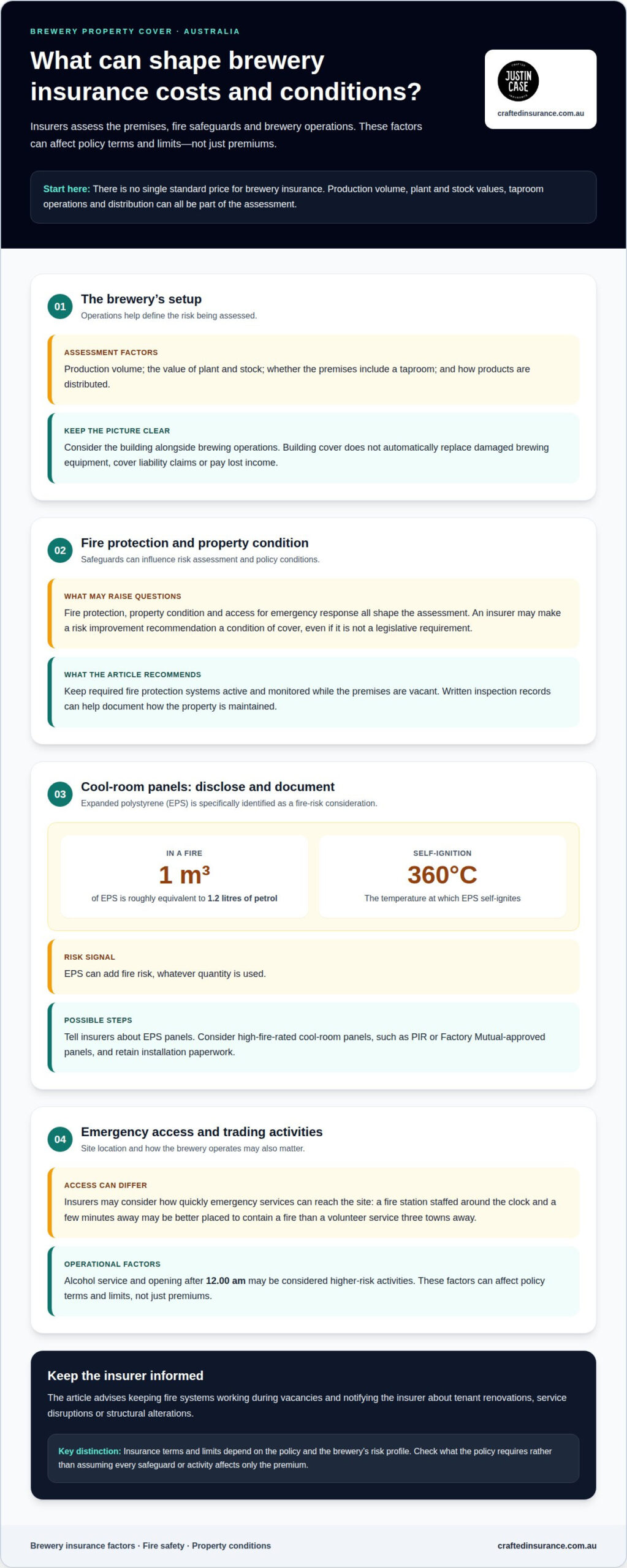
In Australia, brewery insurance premiums have no single standard price. Insurers consider production volume, plant and stock values, whether the premises include a taproom, and how products are distributed. Fire protection, property condition and access for emergency response also shape the risk assessment.
Fire safety affects both the risk assessment and the policy’s conditions. Insurers may make risk improvement recommendations a condition of cover, even when they aren’t legislative requirements. For example, a policy may require fire protection systems to remain active and monitored while the premises are vacant. Written inspection records can help document how the property is maintained.
Cool-room construction deserves attention. Expanded polystyrene (EPS) can add fire risk: one cubic metre is roughly equivalent to 1.2 litres of petrol in a fire, and EPS self-ignites at 360°C. Tell insurers about EPS panels, regardless of how much is used. Consider high-fire-rated cool-room panels, such as PIR or Factory Mutual-approved panels, and retain installation paperwork.
Insurers may also weigh how quickly emergency services can reach the site. A fire station staffed around the clock and a few minutes away may be better placed to contain a fire than a volunteer service three towns away. Alcohol service and opening after 12.00 am may also be considered higher-risk activities. These factors can affect terms and limits, not just premiums.
Keep fire systems working during vacancies, and notify the insurer about tenant renovations, service disruptions or structural alterations. These changes can affect how a fire or storm incident is assessed and whether damage during the work falls within cover. Exclusions and maintenance conditions can determine whether repairs are covered and whether limits are enough to replace damaged building components. Describe the brewery’s operations and safeguards accurately when arranging cover.
What does commercial property insurance cover for Australian breweries?
Commercial property insurance can protect a brewery’s physical assets against accidental loss or damage from covered events. Cover may include the building, contents, plant, stock and raw materials. Fire and storm damage are common examples, but the policy terms determine which assets and events are insured.
Building cover applies to the insured structure, while contents cover can protect equipment inside it. This distinction matters if a storm damages the roof and rain also ruins brewing controls or refrigeration units. The building and contents losses involve different property, and each may have its own limit, excess and conditions. An up-to-date asset list helps identify what needs protection.
Stock cover can apply to ingredients and finished products, including hops, malt, yeast and packaged beer. Depending on the policy terms, it may also respond to stock loss from contamination, spoilage or theft. For example, a power outage could affect chilled beer, while fire could damage stored ingredients. Stock values can shift as production moves from raw materials to finished batches.
Other covers address different consequences. Machinery breakdown insurance can help with repair or replacement when essential plant, such as a boiler or refrigeration unit, fails unexpectedly. Business interruption cover may help with lost income and ongoing expenses after a covered property event temporarily stops brewing. These protections are separate from physical damage cover, so check which event triggers each one.
Liability cover is also distinct from property insurance. Public liability can respond to third-party injury claims involving visitors at a taproom or brewery tour. Product liability can address claims linked to injury or illness from beer after it leaves the premises. Neither replaces cover for the building, stock or equipment.
Map the building, contents, machinery and stock separately when reviewing limits. Then consider how a shutdown could affect income and expenses, alongside visitor and product risks. For help shaping brewery-specific protection, explore tailored brewery insurance.
Crafted Insurance
Crafted Insurance helps Australian breweries understand property risks and how building cover fits alongside the rest of the operation. If you’re weighing fire, storm or flood exposure, its specialist brokerage can assess your brewery’s needs and arrange an insurance package suited to the business.
Crafted Insurance provides risk audits, claims advocacy and ongoing risk management. A brewery with a taproom, production plant and stored ingredients faces different exposures across its premises, so understanding those details helps focus the insurance conversation. Crafted Insurance works with Nano Brewery, Micro Brewery, Local Craft Brewery and BrewPub businesses.
For help with your brewery’s insurance needs, start a conversation with Crafted Insurance.
Make your next cover review count
Use your next insurance review to bring the brewery’s property details together. Note who owns the building, what would need replacing after serious damage, and which parts of the business rely on the site to keep operating. This creates a practical starting point and keeps important details from getting scattered across old records.
A considered approach to insuring a brewery building against fire and storm also looks beyond the structure. Your operation’s layout, production setup and future plans can shape the cover discussion. Crafted Insurance works with Nano Brewery, Micro Distillery and BrewPub businesses, bringing specialist knowledge of craft operations to the conversation.
If you’re ready to discuss how cover could fit your brewery, contact Crafted Insurance to discuss cover. Take the next step with a clearer view of what your business needs to protect, and get back to the work you love.
Frequently Asked Questions
Is flood covered?
Flood can be covered under a brewery property policy, but the wording determines whether it is. Check how the policy defines flood, along with any flood exclusions or limits and the applicable excess. Also distinguish floodwater from rain entering through a damaged roof or opening. These causes may be treated differently, affecting how damage to the brewery’s floor, stock or equipment is assessed.
What insurances should a brewery have?
A brewery should consider cover for its building, contents, stock, machinery, business interruption and liability exposures. The right mix depends on what happens on site. A taproom serving visitors brings public liability considerations, while selling packaged beer raises product liability exposure. A brewery that relies on refrigeration may also consider machinery breakdown and stock deterioration cover. Match each risk to the relevant policy rather than assuming one policy handles every loss.
What is considered storm damage?
Storm damage is physical loss or damage caused by a storm event, as defined by the policy. Examples include hail denting a roof, strong winds damaging cladding, or rain entering through storm-damaged roofing. Some policies also address lightning or cyclone damage. The cause matters: rain entering through an existing opening may be treated differently from water entering after storm damage, so check the wording and exclusions.
What can impact the cost of my insurance?
Insurance costs depend on the brewery’s risk profile and the cover selected. Insurers may consider the building’s location and condition, construction materials, fire safeguards, plant and stock values, production volume, distribution arrangements and whether customers visit a taproom. The policy’s limits, excesses and insured events also affect the premium. Adding a public tasting area or altering the building can change the risk being insured.
What insurance covers fire and storm damage to a brewery building in Australia?
Commercial building insurance is designed to protect the insured structure against fire and storm damage. The policy must include the relevant event, and its terms set the limits, exclusions and claim conditions. A storm-damaged roof may fall under building cover, while damaged brewing equipment or beer may need separate contents or stock protection. Read the schedule alongside the policy wording to see which property is insured.
How do insurers calculate the replacement value of a brewery building and its equipment?
Replacement values reflect the cost of restoring insured assets, not simply their sale value. For a building, relevant details include its size, construction and fixed features. If your site incorporates clean energy infrastructure from a solar specialist such as SolariQ, the panels, inverters and structural mounting systems also need to be factored in. Equipment values depend on the plant being insured and the cost of replacing it with suitable equipment. Brewing systems may also involve delivery, installation and commissioning. Keep asset descriptions and purchase records current so declared values reflect the operation.