
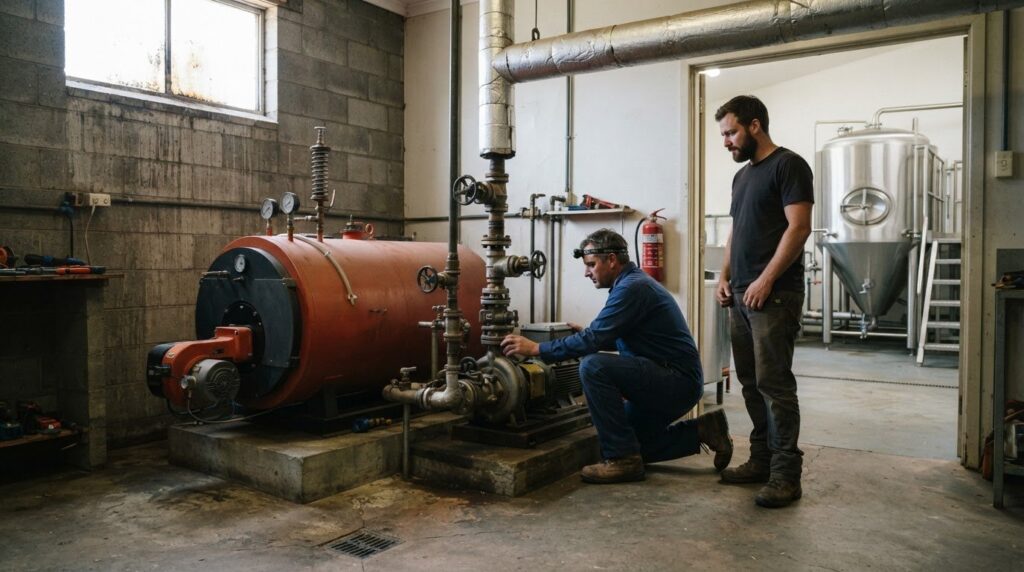
A boiler breakdown can stop a brew day and put costly equipment at risk. Insurance for brewery boilers and pressure vessels may cover sudden, accidental physical damage, subject to the policy terms and the equipment insured.
It’s sensible to look beyond the repair bill. The deductible, insured value, equipment age and maintenance history all affect how cover works and may influence the premium.
This guide explains what boiler and machinery cover may include, how a breakdown claim is assessed, and what to consider when setting deductibles and equipment values. It also covers how age and maintenance can affect the risk, helping you make more informed decisions about protecting essential plant at your Australian brewery.
Key Takeaways
- Understand why sudden, accidental physical damage is central to boiler and machinery cover, and where gradual wear may leave a gap.
- See what affects the pace of a breakdown claim, from clear damage records to losses involving interrupted production.
- Learn why the deductible and accurate replacement values matter when a claim is settled.
- Identify how equipment age, inspection and maintenance can shape the risk picture and influence premiums.
Boiler and machinery coverage scope
Boiler and machinery cover may protect scheduled equipment against sudden, accidental physical damage. The policy wording sets out the insured items, covered causes and claim limits.
Plant and Machinery Cover
This cover applies to specified breakdown damage to insured brewery equipment, not every fault or resulting production loss. For example, a sudden boiler failure that physically damages the boiler may fit the insured event described in the policy.
Some policies also cover damage to other insured property caused by a breakdown. Operator error may result in a covered event if it causes sudden, accidental physical damage, but the policy terms and exclusions determine how the incident is treated.
Australian breweries can arrange plant and machinery cover through commercial insurance brokers, including brokers who specialise in brewery risks. The policy schedule is important: it identifies which boiler, pressure vessel or other plant is insured. An item not listed may not receive the same protection.
Compulsory Plant Insurance
Statutory plant inspection and insurance are separate matters. An inspection requirement does not, by itself, mean a brewery must insure its boiler.
For an Australian brewery, statutory obligations depend on the rules that apply to the equipment and its location. Insurance is not a substitute for required inspection or safe operation. The policy may also require scheduled equipment to meet inspection conditions, making inspection records relevant when a breakdown claim is assessed.
In practice, establish the relevant state or territory requirements for the plant, then consider insurance separately. This helps distinguish safety obligations from financial protection after equipment damage.
Exclusions and Insured Risks
Exclusions define losses the policy won’t cover, even when a boiler or vessel is involved. Gradual corrosion, erosion, deterioration and wear and tear may be excluded unless a sudden, accidental breakdown also occurs.
Some policy wordings exclude loss caused by testing above the maximum pressure permitted by the inspecting authority. They may also exclude lost income from a work stoppage, even when physical damage to insured equipment is covered.
Read the schedule and exclusions together. A sudden pressure-vessel failure, for example, could physically damage equipment, spoil product and stop brewing. These are distinct losses, and the policy may treat each differently. The listed equipment, cause of damage and relevant exclusions all affect the outcome.
Breakdown claims and settlement timelines
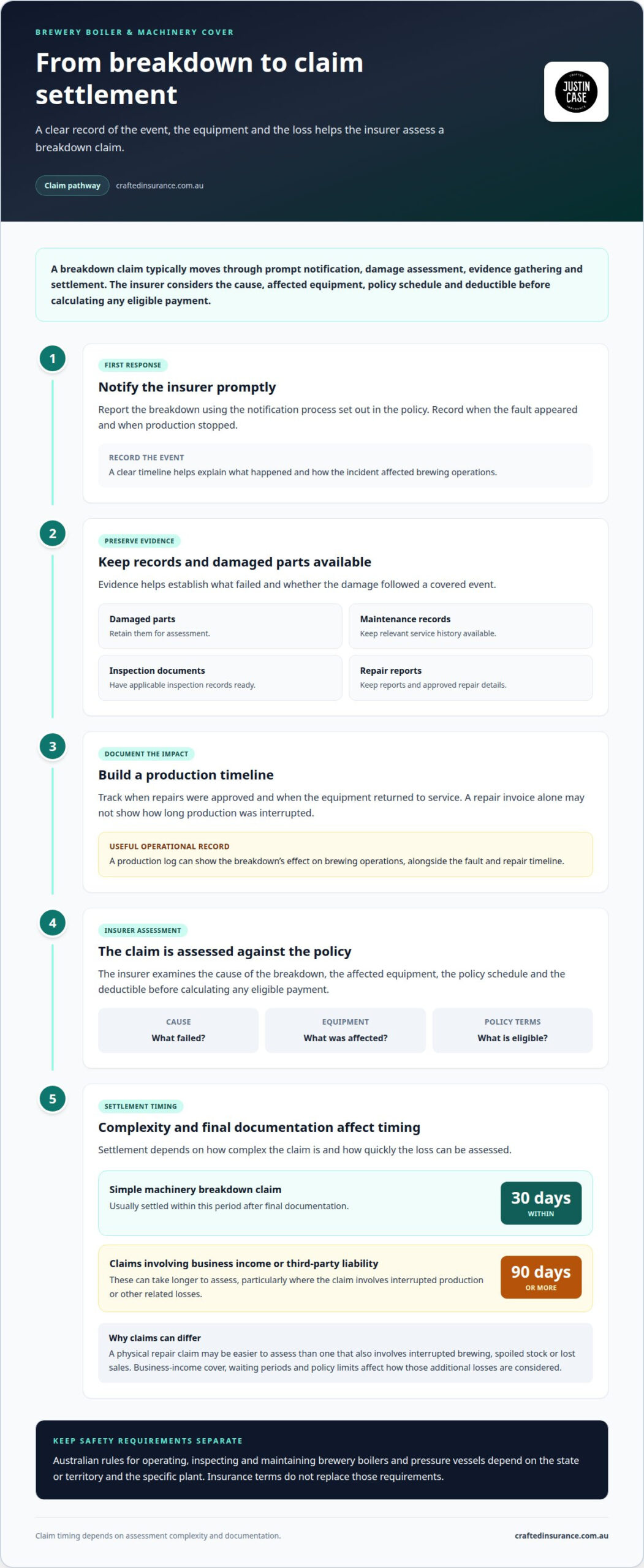
A breakdown claim typically involves prompt notification, damage assessment, evidence gathering and settlement. The insurer examines the cause, affected equipment, policy schedule and deductible before calculating any eligible payment.
Australian laws and standards for brewery boilers and pressure vessels depend on the relevant state or territory and the specific plant. Insurance terms do not replace the rules for operating, inspecting or maintaining equipment.
Classification and registration requirements also vary by jurisdiction and equipment details, including type and use. There is no single classification that applies to every brewery vessel across Australia; local plant-safety requirements determine the relevant pathway.
For a claim, report the breakdown promptly through the notification process in the policy. Keep the damaged parts, maintenance records, inspection documents and repair reports available for assessment. This evidence helps establish what failed and whether the damage followed a covered event.
Settlement timing depends on the claim’s complexity and how quickly the loss can be assessed. Simple machinery breakdown claims are usually settled within 30 days of final documentation. Claims involving business income or third-party liability can take 90 days or more.
That distinction matters to a brewery relying on a boiler to maintain production. A physical repair claim may be easier to assess than one that also involves interrupted brewing, spoiled stock or lost sales. Business-income cover, waiting periods and policy limits affect how those additional losses are considered.
Keep a clear timeline: when the fault appeared, when production stopped, what repairs were approved and when the equipment returned to service. A repair invoice alone, for example, may not explain how long production was interrupted. A production log can show the breakdown’s impact on brewing operations.
For help connecting brewery operations with the right cover structure, explore brewery insurance support.
Deductibles and equipment valuation
The deductible and insured value affect what a brewery may recover after equipment damage. A boiler or pressure vessel should be insured for the replacement cost of a new item of the same kind and capacity.
Value the equipment against a new equivalent, rather than relying only on its age or original purchase price. For example, an older vessel may still need a replacement value based on a new vessel with matching capacity.
Underinsurance can reduce a claim payment. If the insured amount covers only part of the required replacement value, the insurer may pay the claim in the same proportion. A shortfall can therefore affect the settlement even when the breakdown is covered.
The deductible, also called an excess in Australia, is the amount the brewery pays before the insurer pays an eligible claim. A higher deductible leaves the business carrying more of each loss; a lower one shifts more of that cost to the insurer, subject to the policy terms.
For example, if repair costs after a breakdown are below the policy excess, the business may need to pay the bill itself. If the covered loss exceeds the excess, the insurer assesses the eligible amount after applying it. The deductible and insured value work together, but serve different purposes.
Review the equipment schedule whenever the plant changes. A new boiler, replacement pressure vessel or change in capacity can make an existing value inaccurate. Record each item’s description and replacement value so the schedule reflects the current plant.
When comparing cover, consider how much loss the brewery could absorb and whether each listed item is valued as a new equivalent. The right balance depends on the business’s cash reserves, equipment replacement value and policy deductible. Accurate figures help avoid a mismatch between the scheduled value and the cost of replacing essential plant.
Equipment age, maintenance and premium factors
A boiler’s age gives insurers useful context, but its condition and maintenance history also help describe the risk. Two vessels of similar age may present different risk profiles if one has consistent servicing records and the other has recurring faults.
Premium assessments may consider the insured equipment, its value, age, condition, use and maintenance. Inspection history and the brewery’s approach to equipment risk management also help explain how the plant is operated and cared for.
Scheduled plant must be inspected within statutory periods by inspectors authorised by the relevant authorities. Keep inspection reports and maintenance records together. They show when equipment was assessed, what work was completed and whether any issues remain unresolved.
Predictive maintenance can help identify developing faults before they become breakdowns. A Washington State University study reported that facilities adopting predictive maintenance reduced machinery-related downtime by 39% on average. That figure concerns downtime, not a promised reduction in insurance premiums.
Useful information for a quote includes the boiler and vessel types, their age, capacity, replacement value and operating role. Details of inspections, servicing, repairs and known faults help build a clearer picture of each item and its condition.
Include the brewery’s production activities and how plant failure could affect operations. For example, explain whether a boiler supports a critical brewing stage or serves other equipment. This context helps insurers assess the plant’s role, not just its nameplate.
Accurate records also matter at renewal. If equipment is repaired, replaced or materially changed, update its details to keep the insurance information aligned with the plant in use. A clear maintenance history also makes practical risk controls easier to explain.
Bring your brewery’s plant details and maintenance picture together with specialist brewery insurance support.
Crafted Insurance
Crafted Insurance helps Australian breweries understand cover for boilers, pressure vessels and other production risks. If you’re weighing equipment values, maintenance records, deductibles or breakdown protection, its specialist broking service can bring those details together and show how they fit into your insurance arrangements.
Crafted Insurance works with nano, micro, local craft and national craft breweries, as well as brewpubs. Its risk management support helps you consider equipment exposures alongside the practicalities of brewing, serving and selling beer. If a breakdown leads to a claim, Crafted also provides claim advocacy.
Ready to talk through your brewery’s equipment risks? Contact Crafted Insurance.
Make your next move a practical one
A considered approach to insurance for brewery boilers and pressure vessels starts with understanding how your plant supports the work. Look beyond the equipment itself: consider what a breakdown could disrupt, which records explain the plant’s condition, and how much risk your business can comfortably retain.
That gives you a clearer basis for discussing cover. Focus on the details that matter to your operation rather than treating every policy feature as equally important. Revisit them as your equipment, production needs or maintenance practices change.
Crafted Insurance can help you work through brewery-specific considerations and explore practical risk management. Its Insurance on Tap™ packages are tailored to breweries and brewpubs, with support to help you protect the business you’ve worked hard to build and get back to making great beer.
Discuss your brewery’s coverage with Crafted Insurance, and take the next step with confidence.
Frequently Asked Questions
What insurance covers brewery boilers and pressure vessels in Australia?
Commercial plant and machinery or machinery breakdown cover may insure brewery boilers and pressure vessels, depending on the policy schedule and wording. Insurance for brewery boilers and pressure vessels responds to the stated breakdown triggers, limits, excess and exclusions. Consider whether stock, liability or lost income also needs protection: insuring the boiler alone does not automatically cover every resulting loss.
What does boiler and pressure vessel insurance typically cover, including breakdown and business interruption?
Cover may apply to physical damage to insured equipment following a covered breakdown, subject to the policy terms. Business interruption is a separate consideration. A damaged boiler may need repairs while brewing stops, but equipment damage and lost trading income are different parts of the loss. Check the wording for how each is treated, including any waiting period, limit or exclusion.
How much does boiler and pressure vessel insurance cost for an Australian brewery?
The premium depends on the brewery’s circumstances and is provided after a quote request. Insurers may consider the equipment insured, its replacement value, age, condition, maintenance and inspection history, as well as the chosen deductible and cover limits. A brewery with several vessels or a critical boiler may present a different risk profile from one with different plant and production needs. There is no single price for every brewery.
How can a brewery reduce insurance premiums and prevent boiler or pressure vessel claims?
Focus on practical risk controls, not a promised premium discount. Keep servicing and inspection records organised, address maintenance issues, and document plant repairs or changes. For example, recording a recurring fault and the action taken gives a clearer picture of equipment care. Thermal imaging may help identify areas of abnormal heat for investigation. Good risk management can support safer operations, but does not guarantee fewer claims or lower premiums.