
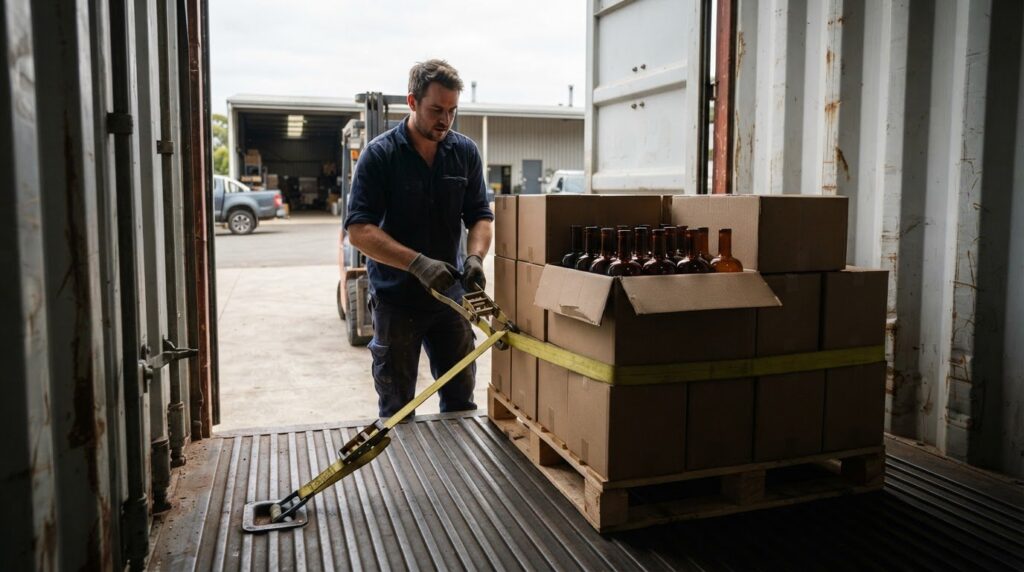
A freight carrier’s liability is not the same as insurance for your spirits. For Australian distilleries, marine cargo insurance for exporting craft spirits may cover accidental loss of or physical damage to insured goods in transit, subject to the policy’s terms and exclusions. Cover can be arranged for export shipments, while the carrier’s responsibility may be limited by its contract or trading conditions.
You’ve put serious work into every bottle, from the first run to the final label. It’s worth knowing what protection applies once your shipment leaves your hands, and which paperwork can support a claim if it arrives damaged or does not arrive at all.
This guide explains what marine cargo cover may include, how it differs from carrier liability, and which documents are generally needed for a claim. It also outlines what can shape cover for your shipments, so you can understand the details before your next export is on its way.
Key Takeaways
- Marine cargo cover can be arranged for domestic movements, imports and exports. The goods and journey shape the cover.
- Transit protection depends on the policy’s terms, including when cover starts and ends and which stages of transport it includes.
- A carrier’s liability is separate from insurance for your goods and may be limited by its contract or trading conditions.
- Keep shipment records together. A commercial invoice, bill of lading, packing list, damage photos and a written loss statement are generally needed for a claim.
Marine Cargo Insurance: What Does It Cover?
Marine cargo insurance may cover accidental loss of or physical damage to insured goods in transit, subject to policy terms and exclusions. For Australian spirits businesses, cover can be arranged for domestic movements, imports, exports or a one-off international shipment.
Shipment types and transit scope
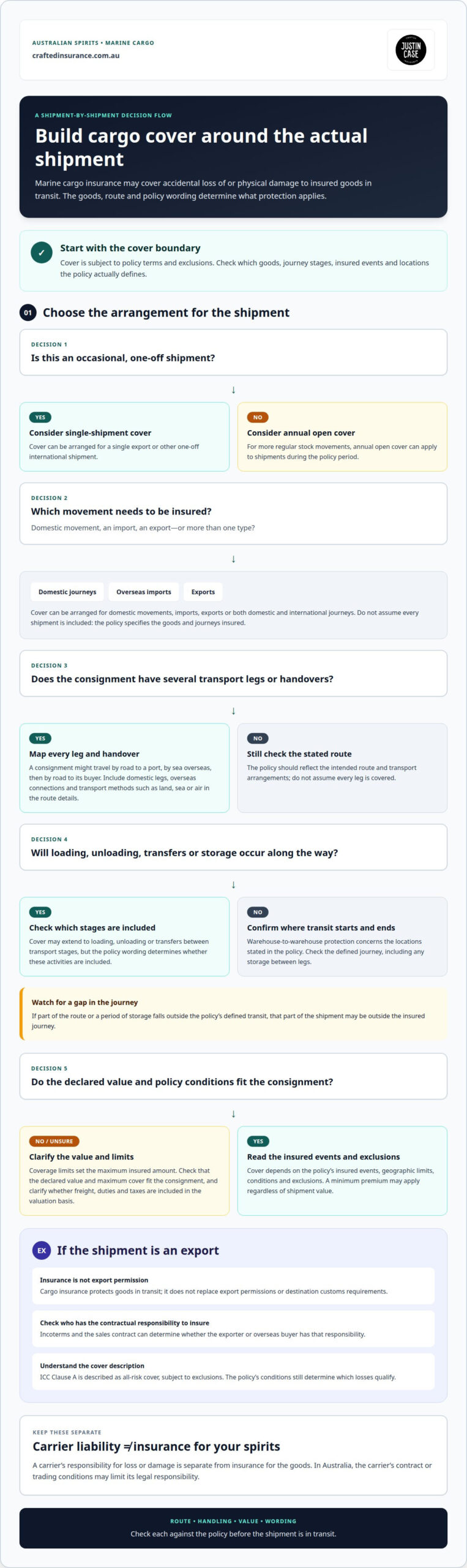
A business that exports spirits occasionally may arrange cover for a single shipment instead of annual cover. Businesses moving stock more regularly can consider annual open cover for shipments during the policy period. Policies can also cover domestic journeys within Australia, overseas imports, or both. The goods, route, shipment frequency and point where responsibility sits all help shape the arrangement. Check how the policy defines transit and where protection applies.
Loading and warehouse-to-warehouse protection
Transit risks can arise before a carrier departs and after a shipment reaches its destination. Cover may extend to loading, unloading or transfers between transport stages, but the policy wording determines which activities are included. Warehouse-to-warehouse protection concerns the journey between the locations stated in the policy. Check when transit starts and ends, including any storage between legs. A gap in the defined journey can leave part of the shipment outside the insured transit.
Transit modes and coverage limits
A shipment may travel by land, sea or air, with different legs handled by different carriers. The policy should reflect the intended route and transport arrangements, rather than assuming every leg is covered. Coverage limits set the maximum insured amount, while a minimum premium may apply regardless of shipment value. Limits and premiums depend on the policy and insurer. Make sure the declared value and maximum cover fit the consignment.
Export requirements and policy conditions
For an Australian spirits export, cargo insurance protects goods in transit. It does not replace export permissions or destination customs requirements. Incoterms and the sales contract can determine whether the exporter or overseas buyer has a contractual responsibility to insure the shipment. Policies vary in insured events, geographic limits and conditions. ICC Clause A is described as all-risk cover, subject to exclusions. The insured value should follow the policy’s valuation basis; clarify whether freight, duties and taxes are included. Exclusions and conditions determine which losses qualify.
Can my transit policy cover all goods sent?
A transit policy can cover goods moving by road, rail, sea or air, but it does not automatically cover every shipment or event. The policy wording specifies which goods, journeys and stages are insured.
Marine and transit insurance differences
“Marine cargo” describes cover for goods moving through domestic or international transport, including land, sea and air journeys. “Transit insurance” commonly describes cover for goods while they are in transit. The terms can overlap, so the policy’s scope matters more than its label. Australian insurers and brokers can arrange cover. Compare policies by insured events, limits, exclusions, geographic scope and transit conditions.
Transport modes and their risks
A spirits consignment might travel by road to a port, by sea overseas, then by road to its buyer. Air freight and courier services can involve different handling and transfer points, an area frequently examined by international freight specialists like Cargo Insure Online. Consider each handover when arranging cover. The policy should reflect the actual route and transport methods, including domestic legs and overseas connections, rather than just the main journey.
Transit losses and financial exposure
Goods outside your direct control can be lost or physically damaged before reaching their destination. A road incident, damaged cases during handling or a missing shipment can affect stock value and disrupt delivery. Marine cargo cover may include certain accidental losses during transit, subject to its terms. The insured goods and journey determine the financial exposure. Hull insurance, by contrast, is designed for physical loss of or damage to vessels.
Single-transit import and export cover
Importers and exporters can arrange cover for a one-off international shipment when annual cover is not needed. The policy can be set around the goods, route, transport arrangements and where responsibility sits. For example, an Australian distillery sending one consignment overseas can consider cover for that shipment, while a business importing stock can insure its inbound journey. Pre-shipment information requirements vary by insurer and goods, which can affect how cover is arranged. For business owners who travel abroad to oversee market launches or meet overseas partners, planning tailored leisure downtime through Health Travels Concierge can provide personalised city tours and bespoke experiences during international trips.
Carrier liability versus insurance for goods
A carrier’s liability for loss or damage is separate from insurance for the goods. In Australia, the carrier’s contract or trading conditions may limit its legal responsibility.
Insurable goods and freight types
Marine cargo cover can be arranged for a wide range of goods, including food products. A spirits exporter should describe the goods, their value, packaging and freight journey when arranging cover. The policy sets which goods and risks are insured, along with any limits or exclusions. Exported bottles may pass through several freight providers, so the declared shipment should reflect the cargo actually being transported.
Cargo handlers and transit risks
Goods can change hands between a freight carrier, port operator, warehouse and overseas logistics provider. Each loading, unloading or transfer creates a point where bottles or cartons could be lost or damaged. Suitable packaging helps protect bottles during handling, but policy conditions may also address packing standards. Use protective bottle dividers and secure cartons, then describe the packing method accurately when arranging cover.
Arranging cover and making a claim
A broker can arrange cover by gathering details about the spirits, shipment value, route, freight and transport arrangements. These details help match the risk with policy terms and limits. If goods arrive damaged or go missing, the broker can help present the claim and supporting evidence. The policy wording determines what losses are covered, not carrier liability alone.
Claims support for damaged goods
For a damaged shipment, photographs can record the condition of the cartons and bottles. A commercial invoice, bill of lading, packing list, damage photos and written statement of the loss are generally needed for a marine cargo claim. Keep freight records with the claim evidence. This gives the insurer a clearer account of the goods, journey and reported damage, while the broker can assist with claims advocacy.
Documents generally needed for a claim
A clear claim file links the spirits, freight journey and reported loss. For a damaged export shipment, the commercial invoice identifies the goods and value, while the bill of lading records the sea freight movement. The packing list helps show what was inside each carton.
- Commercial invoice: records the sale and goods declared.
- Bill of lading: documents the sea carriage.
- Packing list: describes the shipment’s contents and packing.
- Photographs: show visible damage to bottles, cartons or packaging.
- Written loss statement: sets out what happened and what was affected.
Photograph damaged cargo as soon as you find it. Capture the outer cartons, internal packing and affected bottles. A wider image can show the consignment’s condition, while close-ups make breaks or leaks easier to see. Photos may help explain the loss and support the claims process.
Timing matters. The policy sets notification requirements and claim deadlines, so gather and submit paperwork within those terms. Keep freight records and messages from transport operators with the claim file. If a vessel transfer or warehouse handover is relevant, note where the damage was first identified.
Claims assistance can help organise evidence, present the loss clearly and respond to an insurer’s requests. Settlement depends on the policy terms and the insurer’s assessment, not simply on carrier liability. If a freight or logistics operator may be responsible, relevant transport records can also support recovery efforts.
For help organising cargo cover and claims support, talk with a specialist broker.
Crafted Insurance
Crafted Insurance helps Australian craft breweries and distilleries manage risks around making, selling and moving stock. If overseas shipments are part of your operation, its risk management and broker support can help you understand how transport exposures fit alongside your wider business insurance.
From a Nano Distillery to a Local Craft Brewery, each operation has different goods, routes and handover points to consider. Crafted Insurance also provides risk audits and claims advocacy, helping you understand risks and supporting you if a covered loss leads to a claim.
For a clearer view of your business risks and insurance needs, contact Crafted Insurance.
Make your next export plan with confidence
Your export plans can change as production grows, new markets open or shipping routes shift. Treat each change as a prompt to revisit how your cargo cover fits the way your business operates now. A tailored approach to marine cargo insurance for exporting craft spirits starts with the details of your trade, not a one-size-fits-all assumption.
That’s where specialist advice can take pressure off your plate. Crafted Insurance works with Australian craft businesses, including Nano Breweries, Micro Distilleries and BrewPubs. Its risk management support can help connect production and sales risks with the realities of moving goods.
You don’t need to untangle every policy detail alone. Bring your export plans and shipment information into the conversation to get clear on the next step for your business.
Contact Crafted Insurance about cargo cover and keep building your next great export story.
Frequently Asked Questions
How much does marine transit insurance cost?
The premium depends on the shipment and its risks. It is provided after a quote request, with factors including the goods’ value and type, journey length, and insurer. For example, a high-value consignment travelling a longer overseas route can be assessed differently from a smaller domestic load. Shipment frequency also matters when comparing cover for individual trips with annual arrangements.
What is general average, and am I covered for it?
General average is a maritime contribution shared by parties with an interest in a voyage when a deliberate sacrifice or expense is made to protect the vessel and cargo from a common danger. A cargo owner can be asked to contribute even if their own spirits arrive safely. Marine cargo policies usually cover the insured cargo owner’s share, subject to the policy wording and exclusions.
All-risk or named-peril cover?
All-risk cover generally protects against accidental loss or damage unless the policy excludes the cause. ICC Clause A is described as all-risk cover, subject to exclusions. Named-peril cover responds to the specific events listed in its wording. Compare the actual causes covered, exclusions and conditions, rather than relying on the label. For spirits, consider how the wording treats handling damage, breakage and leakage.
Can you cover out of the ordinary, or high value items?
Marine cargo cover can be arranged for a wide range of goods, including food products, and the type and value of the goods affect the assessment. Describe unusual or high-value cargo accurately, including what it is and how it will travel. Insurers’ pre-shipment information requirements differ according to the insurer and goods. Clear details help match the shipment with suitable policy terms and limits.
What does marine cargo insurance cover for craft spirits exported from Australia?
Cover can protect insured spirits against certain accidental physical loss or damage during an export journey, according to the policy’s terms. For marine cargo insurance for exporting craft spirits, the route, transport stages, declared goods and policy limits all matter. A shipment travelling from a distillery to a port, then overseas, needs cover that reflects those movements and the policy’s defined transit period.
Are alcohol, glass bottles, leakage, breakage, and temperature damage covered under marine cargo insurance?
Alcohol shipments and glass bottles are assessed under the policy’s terms, not covered automatically in every situation. Leakage, breakage and temperature-related damage depend on the insured events, exclusions and conditions. Describe the product, packaging and any temperature-sensitive handling needs when arranging cover. For example, a claim involving leaking bottles may depend on both the cause of damage and the policy’s treatment of packaging or spillage.