
A spoiled batch can stop more than brewing. Brewery production insurance can combine stock and deterioration cover for beer spoiled by an insured equipment failure or power outage, machinery breakdown cover, and business interruption cover for lost income and ongoing costs after a covered shutdown. Product recall or withdrawal cover may also help with related expenses, subject to policy terms.
You’ve put serious work into every batch, and the right cover should reflect how your brewery runs. A policy that protects the building but overlooks stock, specialist equipment or the time needed to restore production can leave important gaps.
This guide explains cover to consider for spoiled batches, machinery breakdowns, product recalls and production interruptions. It also covers property, liability, distribution and the details that shape a policy, helping you assess what suits your operation.
Key Takeaways
- Match stock and deterioration cover to the risks that can spoil a batch, including equipment failure and power outages.
- Separate public liability for visitors from product liability for beer that causes illness or injury after leaving your premises.
- Set the business interruption indemnity period with long equipment replacement times in mind, which can extend well beyond 12 months.
- Know the difference between a health-and-safety recall and a withdrawal for issues such as taste or presentation.
- Review pressure equipment and refrigeration risks, and keep inspection and maintenance records ready.
Does brewery insurance cover a batch of beer that spoils?
It can, if the policy covers the cause of the loss. For an Australian brewery, separate stock, machinery breakdown and business interruption cover can address different parts of a production stoppage.
Spoilage in Tanks and Packages
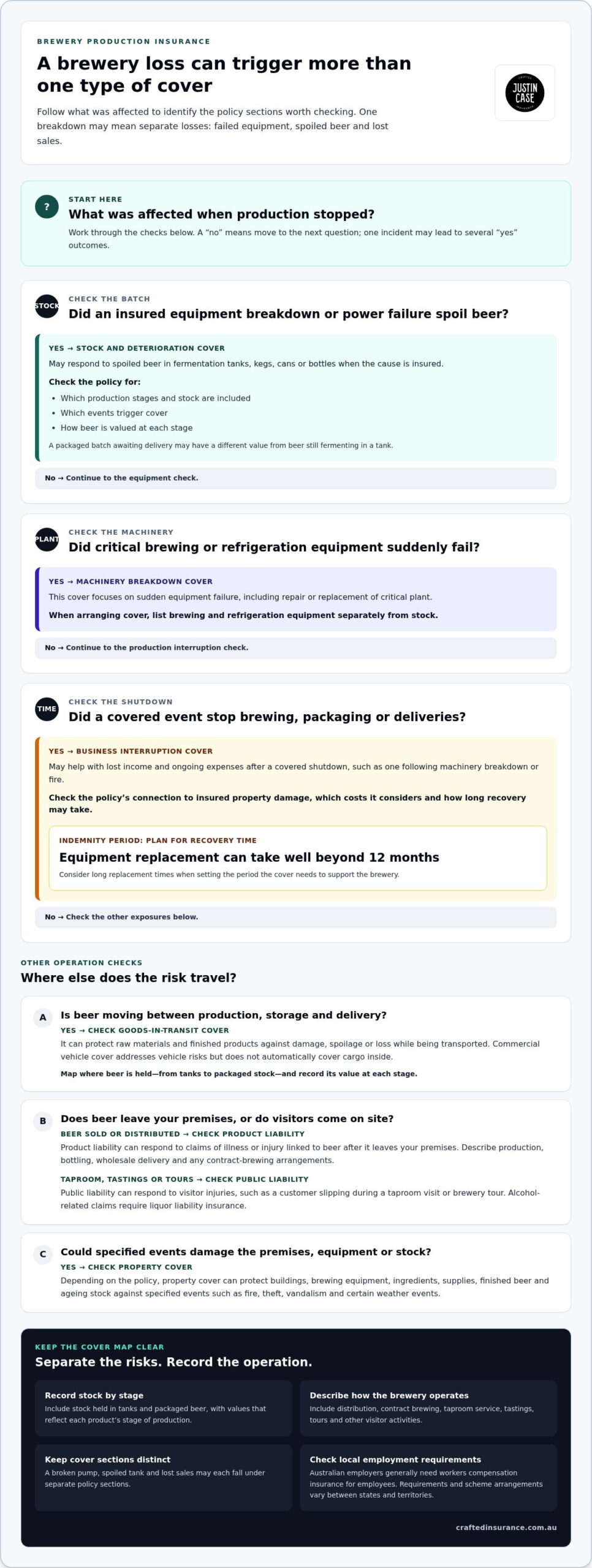
Stock and deterioration cover can respond when an insured breakdown or power failure spoils beer in fermentation tanks, kegs, cans or bottles. Check the policy wording for which stock stages are included, which events trigger cover and how beer is valued at each stage. A packaged batch awaiting delivery may have a different value from beer still fermenting in a tank.
Brewing Equipment and Stock
Property cover can protect brewery premises, brewing equipment, ingredients, supplies, finished beer and ageing stock against specified events such as fire, theft, vandalism and certain weather events. Machinery breakdown cover focuses on sudden equipment failure, including repair or replacement of critical plant. When arranging cover, list brewing and refrigeration equipment separately from stock, then set stock values to reflect what you hold and each product’s stage of production.
Production Downtime and Lost Revenue
A failed refrigeration unit can spoil stock and stop brewing, packaging or deliveries. Business interruption cover can help with lost income and ongoing expenses after a covered event, such as a machinery breakdown or fire. Check how the policy connects the interruption to insured property damage, which costs it considers and how long the cover can support the recovery. Equipment replacement can take well beyond 12 months, so the indemnity period needs careful thought.
What does brewery production insurance cover, including equipment breakdown and stock? Depending on the policy, it can combine property, machinery breakdown, stock and deterioration, and business interruption cover. Each responds to different losses, so a broken pump, spoiled tank and lost sales may fall under separate policy sections.
What workers compensation insurance requirements apply to brewery businesses in Australia? Australian employers generally need workers compensation insurance for employees. Requirements and scheme arrangements vary between states and territories, so the brewery’s location and employment arrangements matter.
How can breweries insure beer during production, storage and transport? Map where beer is held, from tanks through to packaged stock, and record its value at each stage. Goods-in-transit cover can protect raw materials and finished products against damage, spoilage or loss while being transported. Commercial vehicle cover addresses vehicle risks, but does not automatically cover the cargo inside.
How can a brewery get an insurance quote in Australia, and what information is needed? Prepare details about brewing activities, premises, equipment, stock values, vehicles, transport routes, production volume, claims history and any taproom operations. Accurate values and a clear account of how beer moves from production to delivery help shape suitable cover.
What insurance should I consider for my craft brewery?
Start with liability cover that reflects how you make, sell and serve beer. A packaged beer brand, production site and taproom each bring different exposures.
Product Liability for Beer
Product liability can respond to claims of illness or injury linked to beer after it leaves your premises. For packaged and distributed beer, map its journey from production and bottling to wholesale delivery, then describe each activity when arranging cover. A contamination allegation involving a keg at a venue differs from a claim involving packaged beer sold to customers.
Contract-Brewed Brand Liability
Using a contract brewery doesn’t remove a brand owner’s need to consider product liability. In one contract-brewed alcohol brand enquiry, the brand outsourced manufacturing and bottling to two breweries, then served 30ml tasting samples at promotional events. That example shows why a clear description of production partners, packaging and tastings matters when brokers assess the risk.
Injury and Property Damage
Liability claims can involve bodily injury or property damage. Examples include a customer slipping in a taproom or an allegation that contaminated beer caused food poisoning. Consider where visitors go, what activities they take part in and whether you host brewery tours. Match cover to these real interactions, not just the brewing work behind the scenes.
A taproom adds public-facing risks that a manufacturing-only policy may not address. Public liability cover can respond to visitor injuries during a taproom visit or brewery tour. General liability does not address alcohol-related claims, which require liquor liability insurance.
What insurance covers brewery equipment, buildings and business interruption? Property insurance can protect buildings, machinery and stock against specified events. Machinery breakdown cover addresses insured equipment failure, while business interruption cover can help with lost income and ongoing costs after a covered shutdown.
Before arranging cover, write down your business activities and where each one happens:
- List packaged beer, distribution and contract-brewing arrangements.
- Describe taproom service, tastings, tours and other visitor activities.
- Separate property and machinery risks from public and product liability exposures.
That detail helps specialist brokers assess the connection between production, sales and public service. For a policy shaped around a brewery’s operations, explore brewery insurance options.
Business interruption and restoring production
A brewery shutdown can affect income long after the initial damage. Business interruption cover links a covered event to lost revenue and ongoing expenses during recovery.
Business Interruption Cover
For an Australian brewery, business interruption insurance can help replace lost revenue when a covered breakdown or fire stops brewing. It can also help with ongoing costs such as payroll, loan and lease obligations, and operating expenses. A refrigeration failure that halts production, for example, may affect both sales and bills.
Review the policy’s trigger and covered expenses alongside your business insurance. Machinery failure, for instance, can stop packaging even if the brewing vessels remain undamaged. Consider which income disappears during that pause, which regular costs continue, and whether temporary operating adjustments could keep orders moving. These details clarify your financial exposure.
Indemnity Periods
The indemnity period is the time business interruption cover can support the brewery’s recovery after an insured event. Set it against the time needed to repair or replace critical equipment, then restart production and rebuild sales. Equipment replacement can take well beyond 12 months, so a shorter period could end before normal brewing resumes.
Map recovery in practical stages: repair or replacement, installation, testing, brewing and return to supply. A damaged refrigeration plant, for example, can require more than a repair before chilled stock and production are back on track. Review the interruption period against those steps, not just the expected repair date. Include the time needed to restore income after production restarts.
Lost Revenue and Property Cover
Business interruption cover addresses financial losses after a covered shutdown. Property insurance addresses physical assets, including buildings, brewing equipment and stock, against specified events such as fire, theft, vandalism and certain weather events. The distinction matters: repairing damaged plant and replacing spoiled stock are different costs from lost income while production is paused.
For a practical review, list each key asset and its role in production, including refrigeration plant, brewing equipment, ingredients and finished beer. Then consider how damage to each could interrupt orders, sales and ongoing expenses. Accurate business and asset values help align property cover with your operation, while the interruption section should reflect your income and recovery needs.
Keep the claims process grounded in records. Maintain asset details, stock values, sales information and records of ongoing expenses so you can show what was affected and how the interruption changed your finances. Production records, for example, can connect a refrigeration loss with spoiled stock and delayed orders. Clear records support an account of both physical damage and business interruption losses.
Product contamination, spoilage and recalls
A contaminated batch can create costs beyond discarded beer. For Australian breweries, product cover can address spoilage, contamination and expenses involved in withdrawing or recalling affected stock.
Contamination and Process Errors
A process error can affect a batch before it reaches a keg, can or bottle. Contamination during brewing or packaging, for example, may make finished beer unsuitable for sale and prompt customer complaints. Review how the policy treats manufacturing-related contamination, including which products and stages are covered.
Keep batch and distribution records that identify affected stock and where it went. These details help trace whether an issue involves one tank, a packaging run or beer already delivered to venues. Clear records of production dates, batches and recipients can help determine the scale of a withdrawal or recall.
Spoilage and Leakage
Spoilage cover may respond when equipment failure or a power outage affects beer quality. Check whether cover applies to stock in tanks as well as packaged products, and how the policy treats the cause of the loss. Refrigeration failure, for instance, could affect stored beer even when the brewing process itself ran as planned.
Leakage can create a separate loss: damaged packaging may waste beer and damage nearby stock or property. Cover for bursting barrels and bottles can address incidents that cause costly waste or injury. Consider how the policy describes these events, alongside stock values for beer at different production and storage stages.
Product Recall Costs
Recall and withdrawal cover address different problems. In Australia, product recall cover applies for health and safety reasons, while product withdrawal cover applies to issues unrelated to health and safety, such as taste or presentation. A contamination concern may prompt a recall, while a batch with an unexpected flavour may require withdrawal.
Policy cover may include customer notification, product disposal and potential lost profits. Identify which costs are included and how the policy responds when beer has reached distributors or venues. A keg already delivered to a pub may require different notifications and collection steps from packaged stock still held at the brewery.
Keep a response plan alongside your insurance details. Record who can identify affected batches, locate distribution records and coordinate customer communications. If a packaging issue affects one run, these steps help define the products involved and the expenses that may follow. Retain invoices and disposal records to document the loss and related costs.
Separate product liability from recall costs. A claim alleging illness or injury after consumption concerns liability, while tracing, notifying customers and disposing of stock are recall expenses. One contamination event can involve both, so review the relevant policy sections and their triggers together before a problem occurs.
Is insurance for machinery breakdown really necessary to consider?
A failed pump, centrifuge or refrigeration plant can bring brewing, packaging or storage to a halt. Machinery breakdown cover can help with repair or replacement of critical plant, while business interruption cover can address losses during a covered production stoppage.
For Australian breweries, exposure depends on which equipment keeps each stage moving. A centrifuge failure may interrupt processing, while refrigeration breakdown can affect stored beer and delay the next brew. If packaging relies on a single line, a fault can hold up finished products even when fermentation continues.
The repair bill can be substantial. That illustrates why specialised machinery values matter when setting insurance cover. Consider each machine’s repair or replacement needs, its role in production and what happens to operations if it stops.
Machinery breakdown cover can extend to pressure vessels and refrigeration plant. Insurers will ask about inspection and maintenance records for equipment under pressure. Keep records organised by asset, with equipment details and maintenance history easy to find. These records help describe the plant and its upkeep when arranging cover.
Think through the production chain, not just the largest machine. A pump breakdown can interrupt brewing. A failed chiller can affect stored stock. A packaging fault can delay orders and leave finished beer waiting. Mapping these links helps identify failures that could lead to repair costs, spoilage or business interruption losses.
Machinery breakdown cover and property insurance address different risks. Property cover can protect brewery equipment against specified events such as fire or theft. Machinery breakdown cover focuses on equipment failure. Business interruption cover can help with lost income and ongoing costs when a covered breakdown stops production. Review how these sections work together, including which events trigger each response.
Start your review with an equipment list. Include brewing vessels, pumps, centrifuges, pressure equipment, refrigeration and packaging machinery. Note which assets are essential, which production stage depends on each, and whether maintenance and inspection records are current. Then consider how long production could be affected while repairs or replacement are arranged.
That practical picture helps connect equipment risks with the wider brewery operation. To review cover for specialised brewery machinery and production interruption, discuss brewery insurance cover.
Crafted Insurance: Nano Brewery
Crafted Insurance helps Australian breweries bring production, sales and public-facing risks into one insurance conversation. Its NANO BREWERY package is tailored to small-scale operations, with cover considered for equipment, stock, spoiled batches and production interruptions.
As your brewery grows, changes to production methods, distribution and taproom activity can shift the risks that need attention. Crafted Insurance provides tailored insurance packages, risk audits, claim advocacy and ongoing risk management for craft breweries. This support can help you review how your cover fits the way you brew, store and sell beer.
If you’re weighing cover for a nano brewery or reviewing your current setup, contact Crafted Insurance to discuss your operation.
Make your next insurance review count
Your brewery changes as it grows. New equipment, distribution arrangements or taproom activity can shift the risks your cover needs to address. Use your next review to describe how the business operates now, not just how it began. That gives your brewery production insurance a clearer connection to the work on the floor and the beer moving out the door.
Crafted Insurance works with Australian craft businesses through packages including NANO BREWERY, MICRO DISTILLERY and BREWPUB. A conversation can help you organise the details of your operation and consider how insurance fits its current shape.
Ready to take the next step? Contact Crafted Insurance to discuss cover. Keep building your brewery with a clearer plan for the risks around it.
Frequently Asked Questions
Do I need product liability for beer I sell in cans or kegs?
Product liability is important to consider when you sell beer beyond your brewery, including cans through retailers or kegs supplied to venues. A claim could arise after a customer alleges illness or injury linked to a product. Keep batch identifiers and distribution records so you can trace where stock went. If another business makes or packages the beer, document each party’s role.
What risks can Breweries Insurance Protect against?
Brewery insurance can address different exposures across production, sales and service. These may include fire or theft affecting property, equipment failure, spoiled stock, interruption to income, product claims, visitor injuries and goods damaged in transit. Some policies may also address cyber events, such as a payment system disruption. The relevant cover depends on your activities, from production-only operations to a brewery with a public taproom.
What should I look for in comparing policies and quotes?
Compare the policy wording and Product Disclosure Statement, not just the premium. Look for exclusions, limits, excesses and how each policy defines insured events. Check that your activities, stock values and equipment are described accurately. A lower premium may come with more exclusions. For example, compare how policies treat beer held by a distributor rather than assuming the cover is identical.
Why Choose Specialised Brewery Insurance?
A specialist broker can understand how production, packaging, distribution and taproom service connect, then help match cover to those activities. That matters if your business combines brewing with public tastings or uses contract manufacturers. Give the broker a clear picture of each operation and its assets. This helps avoid describing a brewery as a straightforward manufacturer when sales and visitor activities create other exposures.
What insurance cover do Australian breweries need?
Consider property, machinery breakdown, stock deterioration, business interruption, product liability and public liability. Add goods-in-transit cover if ingredients or finished beer travel between sites or to customers. A brewery with a taproom or tours has different public-facing risks from a production-only site. Build cover around what you make, where you store it, how you sell it and who visits.
How much does brewery insurance cost in Australia?
There is no single standard price for brewery insurance. The price depends on the business and is provided after a quote request. Factors include production volume, plant and stock values, taproom operations, distribution methods, location, claims history, risk exposures and the level of cover selected. Accurate business and asset values help align a quote with the operation you need to insure.
What factors affect brewery insurance premiums in Australia?
Premiums can reflect the brewery’s size, activities, location, claims history, risk exposures and selected cover. According to Marsh, these are among the factors that can affect brewery insurance costs. Production volume, plant and stock values, taproom service and distribution methods also shape the risk picture. For example, a brewery shipping packaged beer has different exposures from one selling only on-site.
Is public and product liability insurance mandatory for Australian breweries?
Don’t assume liability cover is legally compulsory for every brewery, or optional for every setup. Requirements can depend on your activities and agreements with landlords, venues, event organisers or distribution partners. A taproom, brewery tour or beer festival may bring conditions that differ from production alone. Review the requirements attached to your premises and contracts, then match cover to those obligations and risks.